


 русский
 Español
How Can Bathroom Brackets Last Longer and Work Better
2026-03-09
How to Pick, Install, and Maintain Bathroom Brackets — A Practical Field Guide
Brackets look small. Their problems grow big.
Get the wrong bracket and you get leaks, noise, and repeat service calls. Choose the right one and a plumbing run stays quiet and maintenance-free for years.
Why a bracket matters
You stack a system from pipes, valves, and equipment. Brackets decide how loads move through that stack. A poor bracket lets motion spread. Motion becomes vibration. Vibration loosens bolts. Loose bolts lead to leaks. Leaks lead to callbacks.
A good support does five things:
- Carry the load without bending.
- Allow thermal motion where needed.
- Isolate vibration where required.
- Keep valves and instruments accessible.
- Resist the local environment — moisture, chemicals, or salt.
If a bracket does those well, the piping system behaves predictably. That reduces downtime and cost.
Before you buy: five essential numbers
Don’t guess. Measure and document.
- Static load — the weight of pipe, fluid, valves, and attachments. Calculate the filled weight.
- Dynamic allowance — pumps, compressors, and flow surges create extra forces. Add 25–40% for general cases. Use higher margins where vibration is known.
- Span length — the distance between supports. This controls deflection and bending.
- Substrate type — concrete, steel beam, pre-cast, or thin partition wall. Anchors differ by substrate.
- Environment — interior dry room, washdown area, rooftop, or corrosive plant. This decides material and finish.
A small table on site saves big money later. Fill it before you call the supplier.
Materials: pick what fits the environment
Material determines life and maintenance.
- Carbon steel + coating — cheap and strong for dry, indoor areas. Needs good surface prep and coating.
- Galvanized steel — for mild outdoor exposure. Zinc helps, but scratched areas will corrode.
- Aluminum — light but softer; not ideal for heavy loads. Use only for light fixtures or where weight matters.
If you can’t access the bracket easily later, favor stainless. Cost in exchange for peace of mind often pays back.
Design features that save time on site
Tiny details matter. They save hours.
- Slotted holes instead of fixed holes. They allow field alignment without redrilling.
- Reinforced bearing plates where bolts clamp. Thin plates bow.
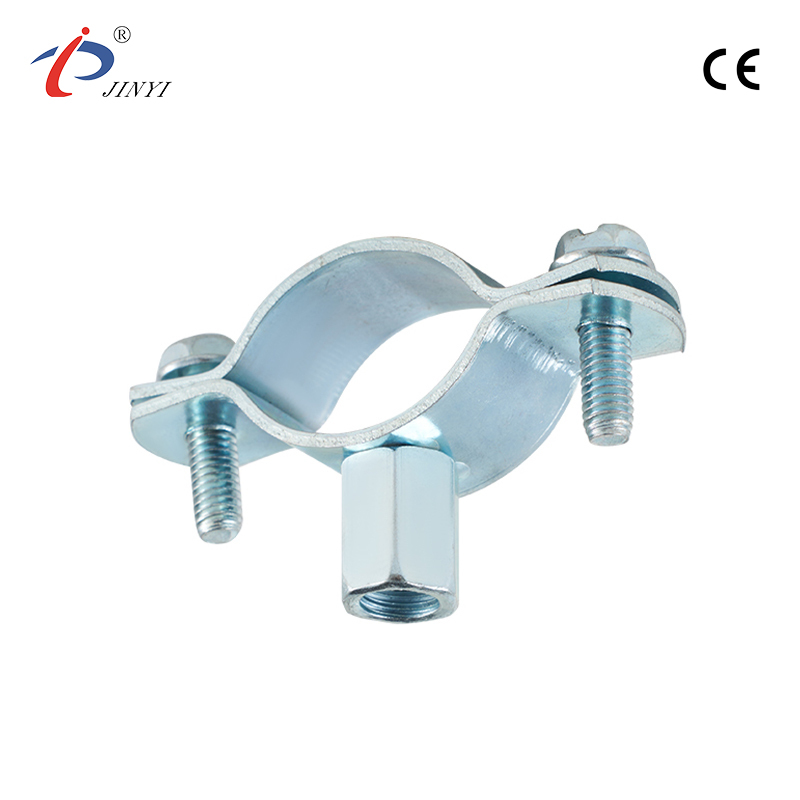
- Split saddles or open clamps let you place the pipe without flipping the whole manifold.
- Integrated isolation pads to reduce vibration.
- Service clearance built in so valves and actuators can be removed without disassembling the bracket.
Ask for these features on your drawing. If they won't include them, ask why.
Anchors and fasteners: match to the substrate
One anchor type does not fit all.
- Concrete: mechanical expansion anchors for static loads. Chemical anchors for high dynamic loads.
- Steel beam: through bolts with washers and locknuts. Through-bolting spreads the load best.
- Thin sheet or hollow block: use backing plates or sleeve anchors that spread force.
- Precast: confirm embedment depth and use proper inserts or adhesive anchors.
Always specify torque values. Record them at handover. Hand-tight is not quality control.
Support spacing and geometry
How far apart you place supports affects deflection and fatigue.
- Near elbows, tees, and valves: place supports closer. Local bending moments spike here.
- Avoid single-point suspension for long runs. Use at least two or three supports to distribute load.
If you must span long distances, add a carrier beam or truss to move the load to the structure.
Thermal expansion: allow motion, don't fight it
Pipes expand and contract. If you clamp them rigidly, stress builds up and finds the weakest point — usually a flange or weld.
Two practical approaches:
- Sliding supports — use low-friction pads so the pipe can move axially.
- Guided supports + fixed anchors — fix one point and allow guided sliding elsewhere. That controls where stress concentrates.
Draw a thermal movement map for all lines longer than a few meters. Mark fixed points and sliding areas on the as-built.
Vibration control: small fixes, big results
Vibration causes fatigue and noise. It also loosens screws and nuts.
- Use neoprene or elastomer pads under bearing plates. Cheap and effective.
- Install flexible connectors on pump lines to break vibration paths.
- Consider spring isolators for heavy vibrating assemblies.
Don't isolate everything. You still need positive location in at least two axes. Isolation reduces transmission; it does not remove the need for alignment.
Coating and surface protection
Finish matters for life and appearance.
- Powder coating — durable and neat for indoor brackets.
- Hot-dip galvanizing — thicker zinc layer, good for outdoor exposure.
- Epoxy or marine coatings — for aggressive chemical or coastal sites.
Surface prep is vital. Poor cleaning before coating leads to early failure. If the job is spot-painted, expect trouble sooner.
Common installation mistakes and how to avoid them
These are recurring problems on projects. Prevent them early.
- Wrong anchor type — use the anchor appropriate for the substrate and dynamic loading.
- No thermal plan — fails happen when thermal movement is not allowed.
- Blocking access — design must preserve valve and instrument access.
- Thin plates in high-load spots — add ribs or thicker plates where loads concentrate.
- Mismatched holes — dry-fit before drilling. Slotted holes help.
Mock-up the assembly with straps or clamps before drilling or welding. It saves rework.
Commissioning checklist you can use
Make installers sign this. Keep the record.
- Confirm load calculations with installed assemblies.
- Torque all anchors to specified values and record them.
- Verify level and alignment within tolerance.
- Verify sliding supports move freely.
- Check isolation pads are seated correctly.
- Inspect coating for damage.
- Confirm valves and gauges are accessible.
A signed checklist stops "it looks okay" from becoming a warranty problem.
Inspection and maintenance schedule
Routine checks stop failure. Use a simple calendar.
- Weekly: visual check for loose bolts, heavy corrosion, or visible movement.
- Quarterly: torque test critical bolts, inspect isolation pads for hardness or cracking.
- Annually: remove and inspect welds and plates, check coating condition, and measure any deformation.
Record each check. Trends show problems before they break.
When to repair and when to replace
Repair when surface rust or minor deformation is present. Replace when:
- Structural plate has permanent deformation.
- Weld cracks are visible.
- Coating has failed to the point of deep corrosion.
- Bolts repeatedly loosen even after proper torque — indicates fatigue.
Plan replacements during low-use windows. Prefabricate replacement pieces to cut shutdown time.
Procurement checklist for buyers
When you order brackets, include these in the purchase specs:
- Exact pipe diameters and weights.
- Expected dynamic allowances and safety factors.
- Base material of substrate and its characteristics.
- Coating type, thickness, and prep standard.
- Required adjustability (slots, removable clamps).
- Delivery schedule and spare parts availability.
- Test and inspection documentation required on delivery.
Ask for fabrication drawings and a small sample if the order is large.
Field tips installers swear by
- Dry-fit the bracket before cutting holes. Temporary straps show real fit.
- Use a torque wrench and record the numbers. It's part of QA.
- Label spare gaskets, bolts and pads by location to simplify later fixes.
- Keep a small field kit of spare bolts, one gasket set and a vibration pad — saves hours.
These small moves reduce calls and keep the crew moving.
Retrofit traps and how to avoid them
Old buildings hide surprises.
- Don't use old anchor holes without testing their pull-out strength.
- Don't assume old runs had thermal allowances. They often didn't.
- Check for embedded utilities before drilling. Coordination with other trades prevents costly mistakes.
When retrofitting, use temporary supports and a clear isolation plan.
Small innovations that pay off
Add these and you cut work later:
- Leveling studs so the bracket comes in exactly at height without shims.
- Wear indicator slots machined into plates — you see when material loss approaches limit.
- Quick-release clamps for maintenance without removing anchors.
These features cost little to add at fabrication but save labor on site.
Safety and compliance basics
Follow local codes and standards.
- Use certified anchors rated for loads.
- Use traceable materials with mill certificates if required.
- Provide installation and commissioning records.
- Keep clearances per code for valves and emergency equipment.
Good documentation protects everyone.
Case study
A mid-sized office building had repeated valve leaks and noise. The cause: thin, poorly coated brackets and no sliding supports. Fix: replaced plates with reinforced units, added sliding pads and neoprene isolation at pump connections. Result: noise dropped, leaks stopped, maintenance visits declined. Payback came inline with typical service savings.
Small change. Big difference.
Checklist before signoff
- Loads verified and recorded.
- Anchors matched to substrate and torqued; records kept.
- Thermal movement planned and tested.
- Vibration isolation installed where specified.
- Service access confirmed.
- Coating inspected and touched up.
- Maintenance schedule handed over.
If all boxes are checked, the bracket will behave. If not, expect a call.
Brackets are small. Their performance is not. Spend a little time on load calculations. Pick the right material. Allow for movement. Fasten correctly. Inspect regularly. Do these and a bracket becomes one less thing to worry about.


- 210 Jinhai Avenue, Lupu Economic Development Zone, Yuhuan City, Taizhou City, Zhejiang Province.
- +86-576-87423248 / +86-576-87499120
- +86-17769979117 / +86-13750801289
- +86-576-87425996
- [email protected] / [email protected]

