


 русский
 Español
How Can China Clamps Meet Industrial Requirements
2026-02-16
China Clamps: A Practical, No-Nonsense Guide for Buyers and Engineers
Sourcing china clamps from China is a routine part of industrial supply chains today. Yet for many teams, what looks like a simple purchase often turns into a week of back-and-forth, a surprise batch failure, or worse — a site delay. That's avoidable. This guide walks you through what matters: real-world buying checks, material choices that actually work, manufacturing traps to watch for, and procurement methods that reduce risk.
If you're short on time: focus on three things — specify material and coating clearly, insist on sample tests, and split big orders into staged deliveries. Now let's dig into the detail.
Why China? Why clamp sourcing here is attractive
There's a reason China dominates clamp production. Large-scale stamping, mature supply chains for fasteners and steel strips, and a vast network of smaller factories able to make custom parts quickly — it's all there. For buyers who need volume, price control, or a custom geometry, China is a natural source.
But scale brings variety. Some factories are meticulous; others cut corners. The difference shows up as either a reliable part that fits first time, or a crate of clamps that need rework. If you treat clamps like low-value commodities, you'll pay for it later. Treat them like engineered components and you'll avoid most headaches.
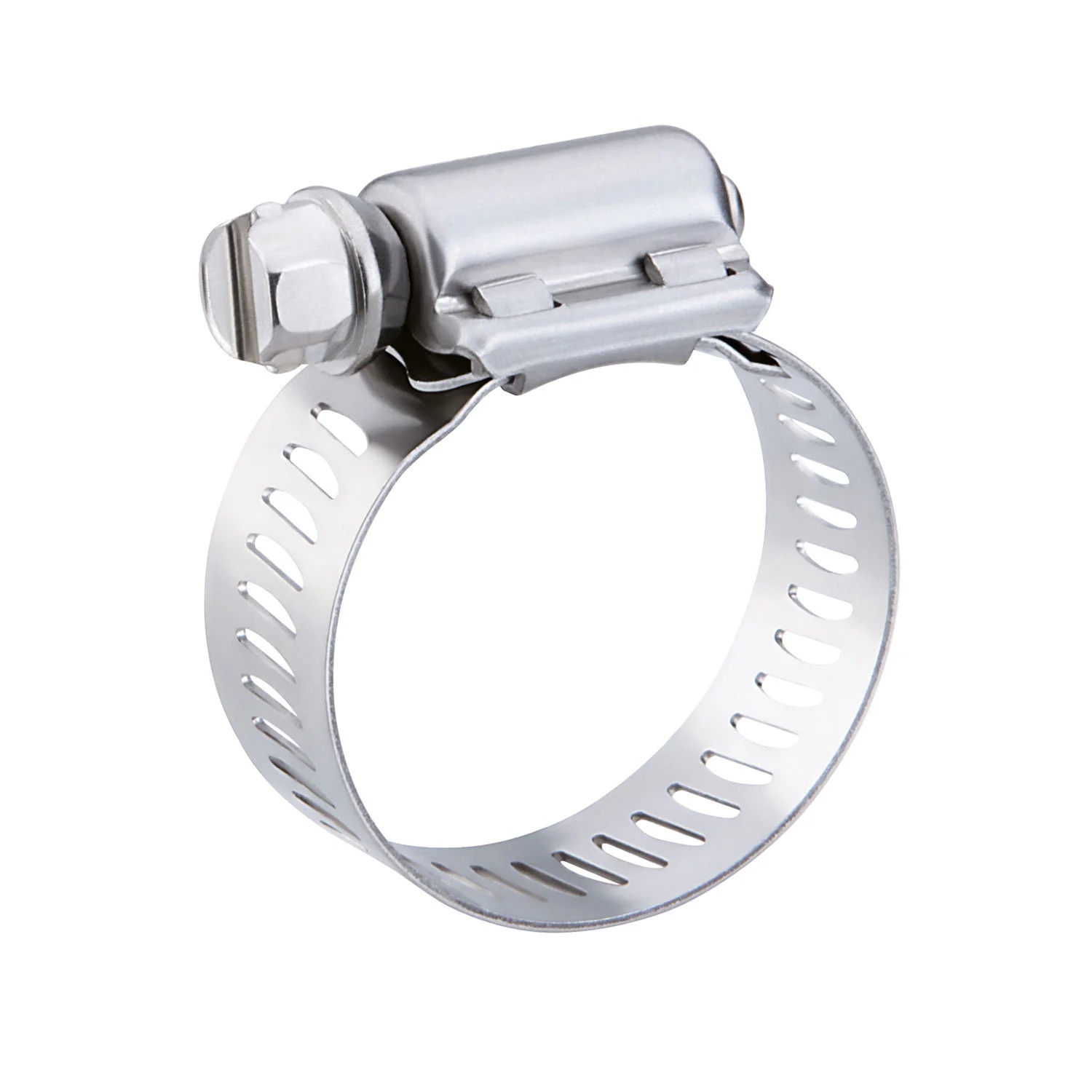
Common clamp types and where they actually belong
| Clamp Type | Typical Materials | Typical Uses | Why Choose It | When Not to Use |
|---|---|---|---|---|
| Worm-gear (hose) clamp | Steel (zinc plated), 304/316 SS | Small hoses, plumbing, low-temp systems | Cheap, flexible, easy fit | High vibration or high temp |
| T-bolt clamp | 304/316 SS, carbon steel | Turbo hoses, high pressure lines | Strong clamp force, resists loosening | Small hoses, tight spaces |
| Ear (Oetiker) clamp | SS | Small dia hoses, tamper-evident | Compact, permanent | If you need re-use or adjustment |
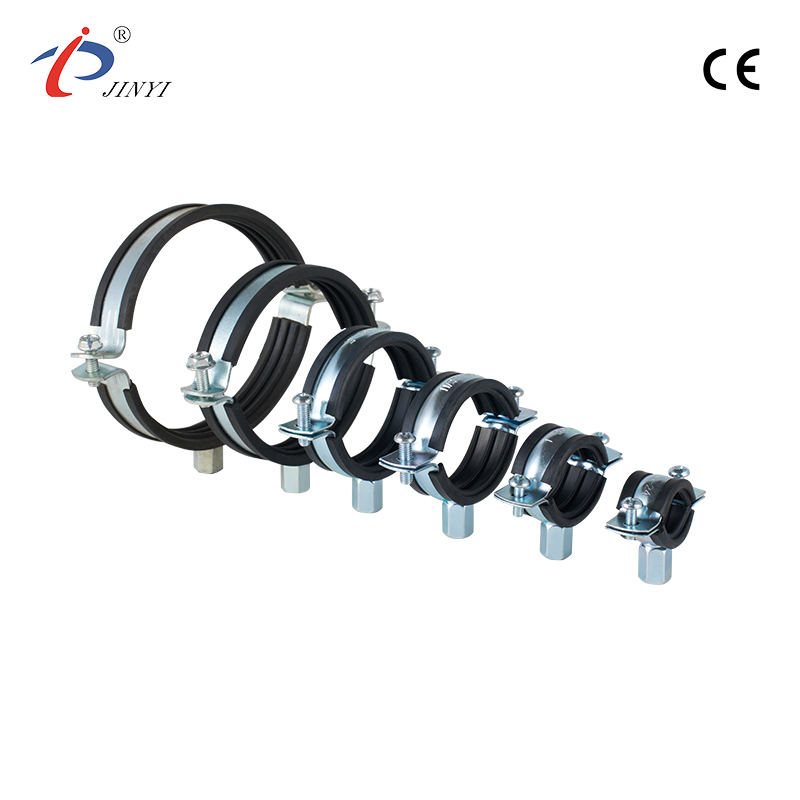
| Rubber-lined pipe clamp | Steel + EPDM/NBR | Vibration-sensitive lines, coated pipes | Protects coating, reduces noise | High temp beyond rubber limits |
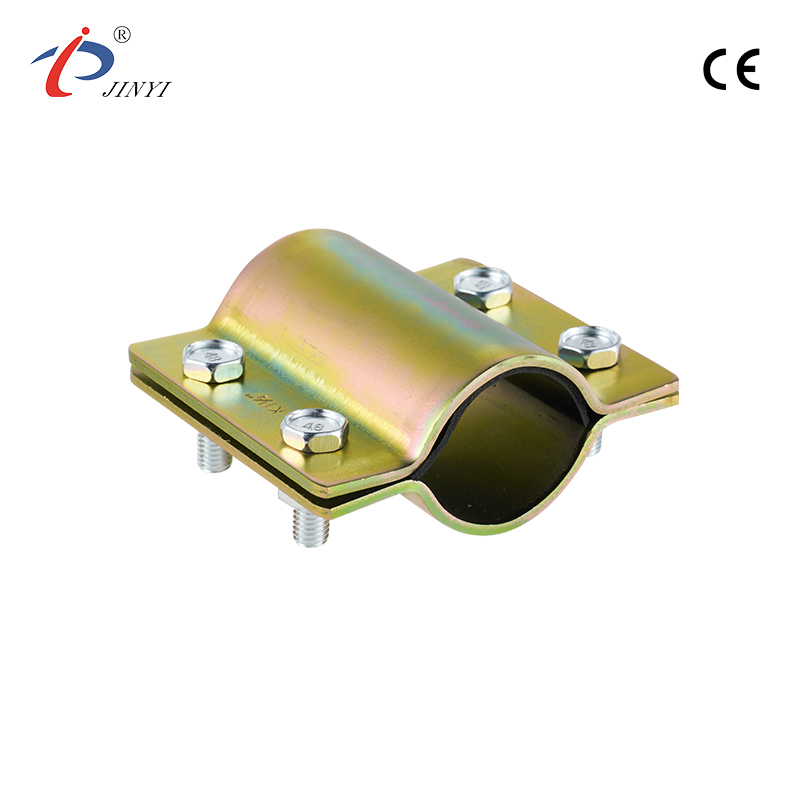
| Repair clamp | Steel + gasket (EPDM) | Emergency repairs on buried pipes | Quick seal, minimal tooling | Permanent solution for high pressure |
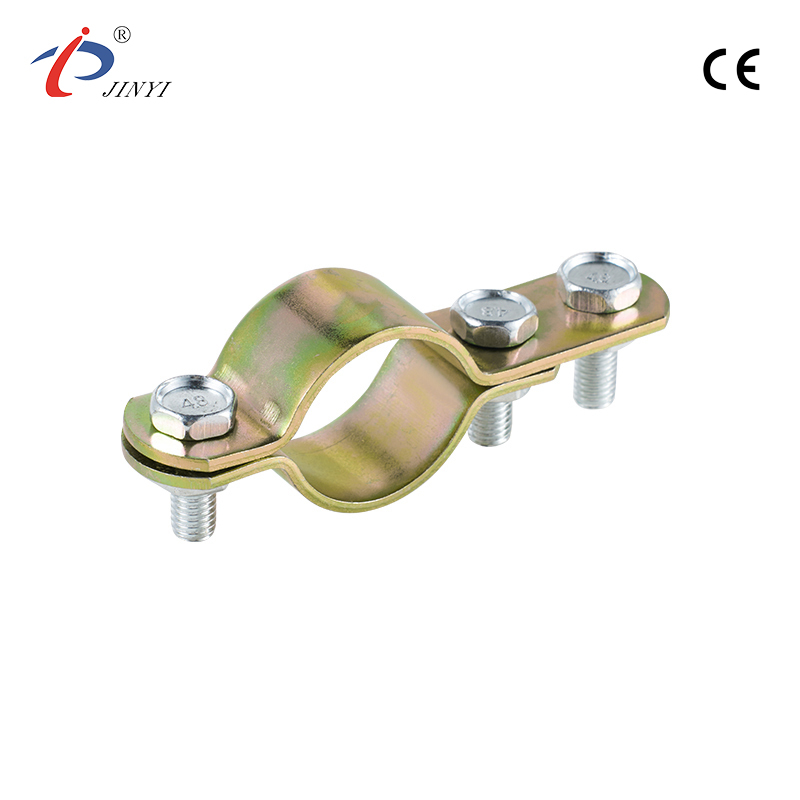
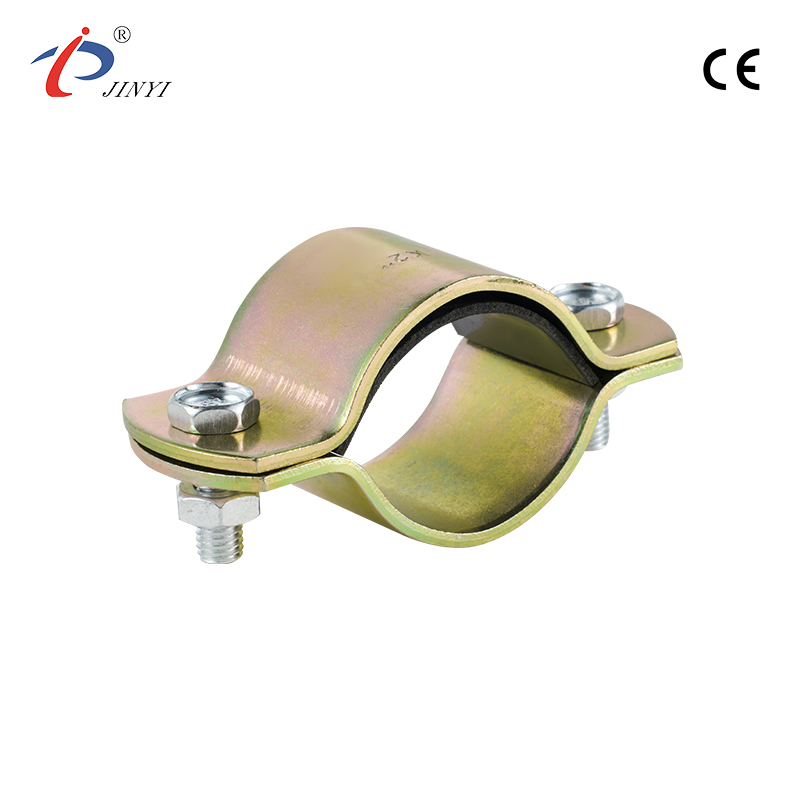
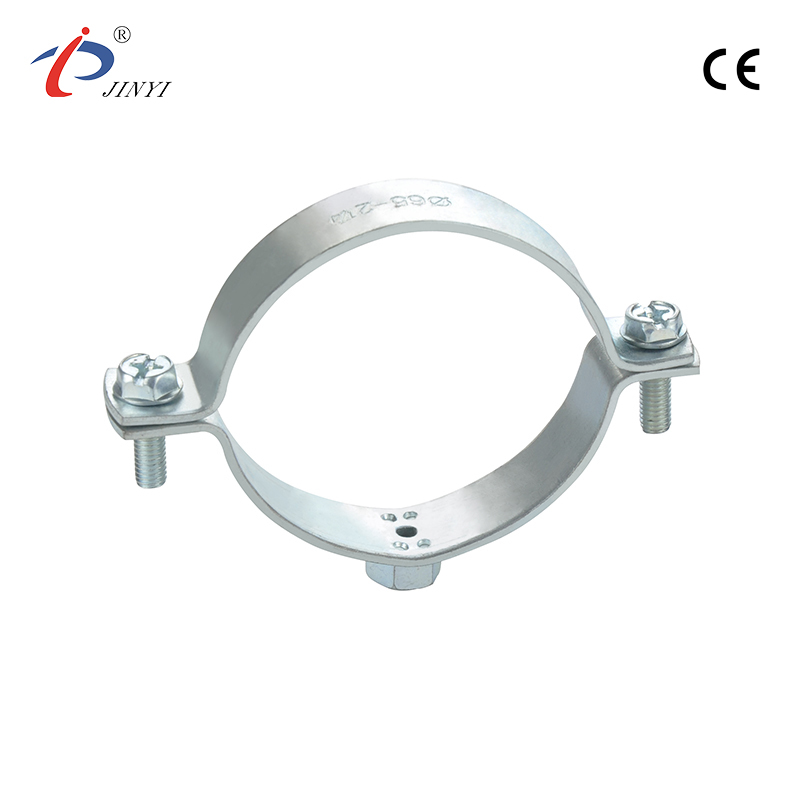
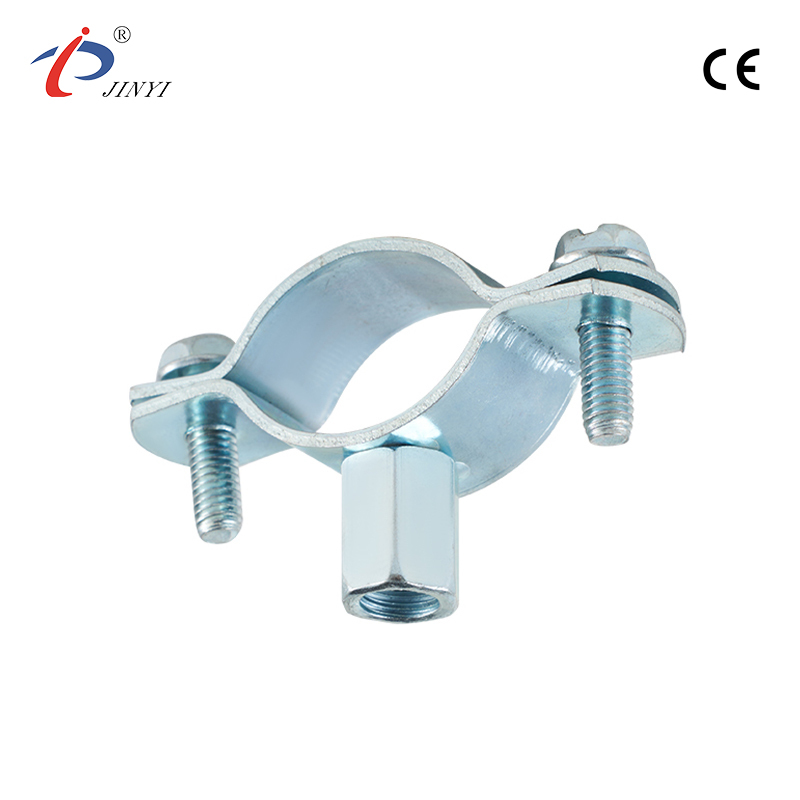
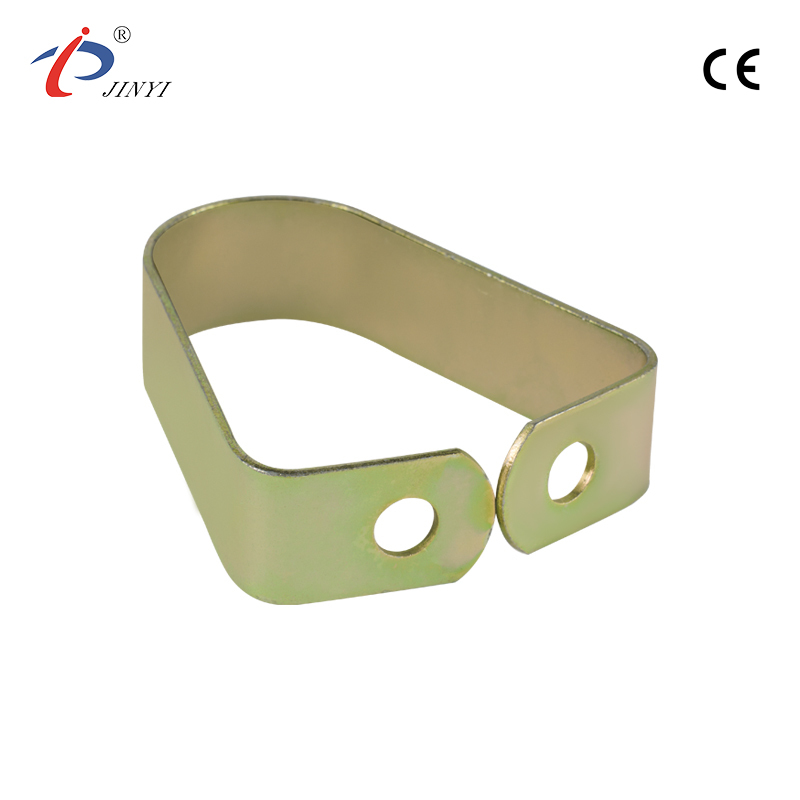
| Pipe support clamp | HDG steel, SS | Suspended pipe, HVAC | Structural support, various mounts | Wrong if load not specified |
Manufacturing realities — where quality slips happen
A clamp looks simple. But manufacturing contains many steps and each one can introduce problems if poorly controlled:
- Raw material inspection — factories should have incoming testing (chemical composition and tensile checks). If they don't, belts and bolts may come from mixed batches.
- Stamping & tooling — worn dies give variable hole patterns and inconsistent diameters. Ask about die life and maintenance frequency.
- Welding and assembly — poor welds are failure points on heavy clamps. Check for undercuts, inconsistent bead, and missing fusion.
- Surface finish — thin plating flakes or patchy galvanizing is common in cheap lots. Salt spray testing logs are your friend.
- Elastomer bonding — rubber pads that come loose or degrade quickly point to poor adhesion or wrong compound. If your clamps include cushions, insist on adhesion test results.
When you inspect a supplier, ask to see evidence at each step. Don't rely on photos emailed at the last minute.
Testing and documentation you should demand
Let me be blunt: if the supplier says "we test everything," ask for proof.
- Material Test Certificates (MTCs) — for every batch. No MTC = no go on critical projects.
- Salt spray test reports — for plated and galvanized clamps, particularly important for outdoor use.
- Dimensional inspection — sample measures against drawing tolerances; request CMM data for close-tolerance parts.
- Torque testing — for worm-gear and T-bolt clamps, torque retention tests show whether a clamp will hold under vibration.
- Batch numbering and traceability — ensure every shipment references batch numbers so you can trace back if an issue arises.
Make these tests contractual. If the supplier balks, treat that as a red flag.
How to run a good supplier evaluation (onsite or remotely)
If you can visit the factory, spend time in production, not just in the meeting room.
- Check tooling and spare dies — a well-organized tool room with maintained dies signals repeatable production.
- Watch an operator run a line — are IPQC checks performed? Is there a torque gauge, a salt bath log?
- Ask for live test reads — have them show a torque test on 5 random clamps, and record the results with you watching.
- Look at plating tanks and records — plating bath chemistry and renewal cycles matter. Ask about thickness readings they take.
- See their QA documentation — incoming inspection logs, IPQC hold points, FQC checklists — are they used or just present?
If you can't go, use third-party inspection firms or request a live video walk with a QA person showing serial numbers and test readouts.
Procurement tactics that actually reduce risk
Buying smart is about process. These are the tactics I've seen work repeatedly:
- Sample first, then pilot batch. Start with small runs. Fit samples into your actual assemblies. Don't just accept bench tests.
- Stage payments to milestones. Hold back a portion of payment until after verified inspection. This gives you leverage.
- Split orders across two suppliers. For critical spares or project runs, dual sourcing prevents single-point failure.
- Specify acceptance tests in the contract. Define sampling plans (e.g., 5% C=0 plan) and rejection criteria. Make the supplier pay for rework if rejected.
- Keep a safety buffer. Lead times fluctuate — keep a small strategic stock of the most used clamp types.
- Lock in spare parts and packaging specs. Ask for spares and consistent packing to prevent damage in transit.
A pilot run that nails the fit and finish is worth the extra time and cost. It stops a lot of downstream headaches.
Inspection checklist — short, usable at gate or on arrival
When inspection time comes, use this concise list:
- Measure ID and band thickness on a random sample.
- Check bolt threads and nut fit; verify torque range.
- Inspect welds under a bright light for cracks or splatter.
- Check rubber lining adhesion — try a small peel test on a sacrificial item.
- Visually inspect plating; if suspicious, request coating thickness readings.
- Do a functional test: clamp a sample hose and apply an appropriate pressure or vibration test if possible.
Photograph everything. Store those photos with invoice numbers. It's invaluable if disputes occur.
Packaging and shipping: small details that cost you tons later
Clamps get bent and surfaces get scratched in transit. Make sure packaging is not an afterthought:
- Stacking trays or cardboard separators prevent nested deformation.
- Plastic film or wax paper between clamps reduces galvanic pitting during long shipments.
- Labeling: include part number, batch number, material spec on every carton.
- Container load plan: for large orders, ensure crates are well braced to prevent shift.
If the supplier uses flimsy packing, you'll pay later in rework and rusted parts.
Typical field failures and how to avoid them
Here are recurring failures and the prevention measures that actually work:
- Flaking plating and rusting — cause: thin plating or poor surface prep; fix: require hot-dip galvanizing or thicker plating and ask for salt-spray test reports.
- Loose fasteners under vibration — cause: wrong type of clamp or missing locking feature; fix: use T-bolt or vibration-resistant fasteners for those runs.
- Rubber pad detachment — cause: poor bonding or wrong compound; fix: specify the elastomer and require peel/adhesion test.
- Over-tightening damage — cause: no torque specs; fix: include recommended torques in documentation and, if necessary, supply torque limiting tools.
Treat these not as surprise issues but as foreseeable risks — and write them into specs.
Lifecycle cost thinking
A cheaper clamp today can cost you more in three ways: increased maintenance, more frequent replacements, or production downtime. A simple lifecycle costing approach:
Total cost = Purchase price + Transport + Installation labor + Expected replacement frequency × replacement cost + Downtime cost per failure
If a stainless clamp lasts five times longer than a plated carbon steel clamp in your environment, the higher initial price is often cheaper in the long run. Build the math into your procurement decisions.
Real procurement language you can paste into RFQs
Here's a short RFQ snippet — drop it into your next inquiry to make specs unambiguous:
- Material: 316 stainless steel band and housing; carbon steel fasteners with pentaphosphate passivation (if carbon steel is accepted). Provide MTC per EN 10204 3.1.
- Coating: Hot-dip galvanized minimum 80 µm (where galvanizing is accepted); provide salt spray test report (ASTM B117, hours).
- Rubber lining: EPDM compound, shore hardness 60 ±5, max continuous temp 120°C; provide adhesion test data.
- Mechanical: Torsion/torque test results attached for worm clamps; tensile test for bolts per ASTM A193.
- Documentation: Batch traceability, packing list, C of C, and pre-shipment inspection report (third-party if requested).
- Packaging: Separated crates with plastic separators, anti-rust paper; label part no. and batch no. on carton.
This kind of language avoids ambiguous "stainless steel" or "quality plating" claims that mean different things to different suppliers.
When to involve third-party inspection
If you're running a critical project, use a trusted inspection provider. They can:
- audit the factory against your checklist,
- perform sample tests and produce an independent report,
- witness functional tests and confirm packaging.
Common providers: SGS, Bureau Veritas, Intertek. Their reports cost money — yes — but they save you from orders that would otherwise arrive non-conforming.
Quick decision flow for engineers (one page)
- Identify environment and stresses (chemicals, salt, temp, vibration).
- Choose clamp family (hose / T-bolt / pipe support / repair).
- Choose material (304, 316, HDG, or special alloy).
- Select rubber grade if needed (EPDM/NBR) and ask for compound spec.
- Run sample test: fit test + torque + visual + salt spray (if needed).
- Approve pilot batch, then stage larger shipments.
This flow keeps projects on schedule and avoids last-minute rework.
Checklist (what to include in your procurement approval)
- Sample acceptance signoff on your company letterhead.
- Pre-shipment testing clause and rejection criteria.
- Packing and labeling detail.
- Batch traceability and MTCs required.
- Spare parts list and guaranteed availability for X years.
- Delivery schedule (staged deliveries for large orders).
- Penalty clause for repeated late delivery (if project critical).
It's not glamorous but it's effective. Put these points into contracts and your procurement team will thank you later.
Practical, not ideological
Buying clamps from China can be straightforward if you approach it with an engineer's checklist rather than a buyer's shortcut. Focus on function and traceability, clarify materials and test requirements up front, run a pilot, and stage the main order. When you do this, the supply chain executes; when you don't, the supply chain surprises you — usually at the worst time.


- 210 Jinhai Avenue, Lupu Economic Development Zone, Yuhuan City, Taizhou City, Zhejiang Province.
- +86-576-87423248 / +86-576-87499120
- +86-17769979117 / +86-13750801289
- +86-576-87425996
- [email protected] / [email protected]

