


 русский
 Español
Hydraulic Separators for HVAC Contractors: Fewer Callbacks, Better System Balance
2026-08-07
Why Contractors Are Adding a Hydraulic Separator to Every Multi-Zone Job
For HVAC contractors, most warranty callbacks on multi-boiler or multi-zone jobs trace back to the same root cause: the primary loop and the secondary loops are fighting each other for flow. A hydraulic separator (also sold as a decoupling tank or low-loss header) breaks that fight by giving each loop its own pump and its own flow path, connected through a common, low-resistance chamber instead of a shared pipe run.
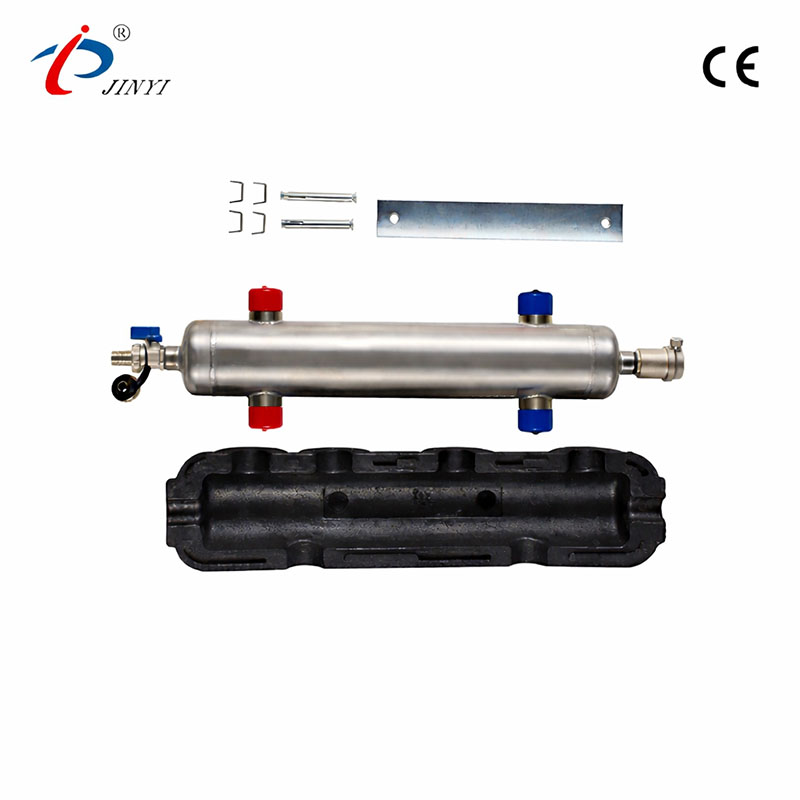
Installed between the boiler or chiller plant and the distribution zones, the tank hydraulically decouples the two sides. The primary circuit keeps a steady flow across the heat source. The secondary circuits — radiators, fan coils, underfloor loops — pull only what they need, whenever they need it, without starving or over-pumping the plant.
What This Solves on the Job Site
Three complaints show up again and again on service tickets: uneven heat between zones, noisy or short-cycling pumps, and sludge or air pockets that keep coming back after a flush. A properly sized hydraulic separator addresses all three at once, because most units combine a low-velocity settling chamber with an air vent and a dirt/magnetic separation point.
- Zone balancing: each secondary pump sees only its own loop resistance, so mixing valves and TRVs behave predictably.
- Air removal: the low-velocity zone lets microbubbles rise and vent instead of collecting in radiators.
- Dirt and magnetite capture: sediment drops out of suspension before it reaches pump seals and heat exchanger plates.
- Simplified commissioning: primary and secondary flow rates can be set independently, cutting balancing time.
Sizing and Installation Notes Contractors Ask About
Selection is driven by the primary flow rate and the connection size of the boiler or chiller plant, not by the total number of zones. Jinyi's JY-6001 through JY-6005 series covers small commercial plant rooms up to larger multi-boiler cascades, in the connection sizes and body materials contractors already spec for clamps, manifolds, and radiator brackets on the same job.
Because Jinyi manufactures decoupling tanks alongside its clamp, manifold bracket, and valve lines, contractors sourcing through Jinyi can often consolidate several plant-room line items — separator, brackets, and manifold hardware — into a single purchase order and shipment.
Frequently Asked Questions
Do I need a hydraulic separator on every boiler installation?
It becomes worthwhile whenever there is more than one circulator on the system, or a variable-flow secondary loop paired with a fixed-flow primary loop — typical of multi-zone residential and light commercial jobs.
Can a hydraulic separator replace a low-loss header?
In most piping arrangements, yes — the two terms describe overlapping designs, and Jinyi's tanks are built to perform the same low-loss header function while adding dirt and air separation.
What sizes does Jinyi offer for contractor and distributor stock orders?
The JY-6001–JY-6005 range covers common plant-room flow rates; custom connection sizes and body materials are available for bulk or project-specific orders.
Ask Jinyi's engineering team for a sizing recommendation based on your project's boiler/chiller flow rate — see the full Decoupling Tank product page.


- 210 Jinhai Avenue, Lupu Economic Development Zone, Yuhuan City, Taizhou City, Zhejiang Province.
- +86-576-87423248 / +86-576-87499120
- +86-17769979117 / +86-13750801289
- +86-576-87425996
- [email protected] / [email protected]

