


 русский
 Español
What Makes a Clamps Manufacturer the Right Choice for You
2026-02-20
How to Source a Reliable Clamps Manufacturer: A Practical Guide for Buyers and Engineers
Small components can cause big problems. Clamps are a case in point: they are inexpensive on a unit basis but they interact directly with piping, hoses, and structural supports. Wrong choices show up as leaks, damaged coatings, frequent replacements, or time-consuming on-site fixes. It focuses on what matters when you source clamps manufacturers: material and finish, manufacturing controls, inspection and testing, logistics and packaging, procurement tactics, and lifecycle cost thinking. A single comparison table helps you match clamp families to typical uses. Use the checklists and RFQ language provided to make supplier responses easier to compare.
Why clamps deserve engineering attention
It's easy to assume clamps are trivial. In practice, they are mechanical interfaces that must resist environmental attack, mechanical load, and installation variation. Three practical consequences of under-specified clamps:
- Installation rework when dimensions don't match pipe fittings or brackets.
- Early corrosion and replacement when the coating or material is inappropriate for the environment.
- Functional failures under vibration or thermal cycling when the clamp family lacks the required design features.
Addressing these risks early — before purchase orders are issued — reduces downtime and prevents cascading project delays.
Understanding clamp families and their typical applications
| Clamp Type | Typical Environments | Typical Materials | Primary Strength | Common Limitations |
|---|---|---|---|---|
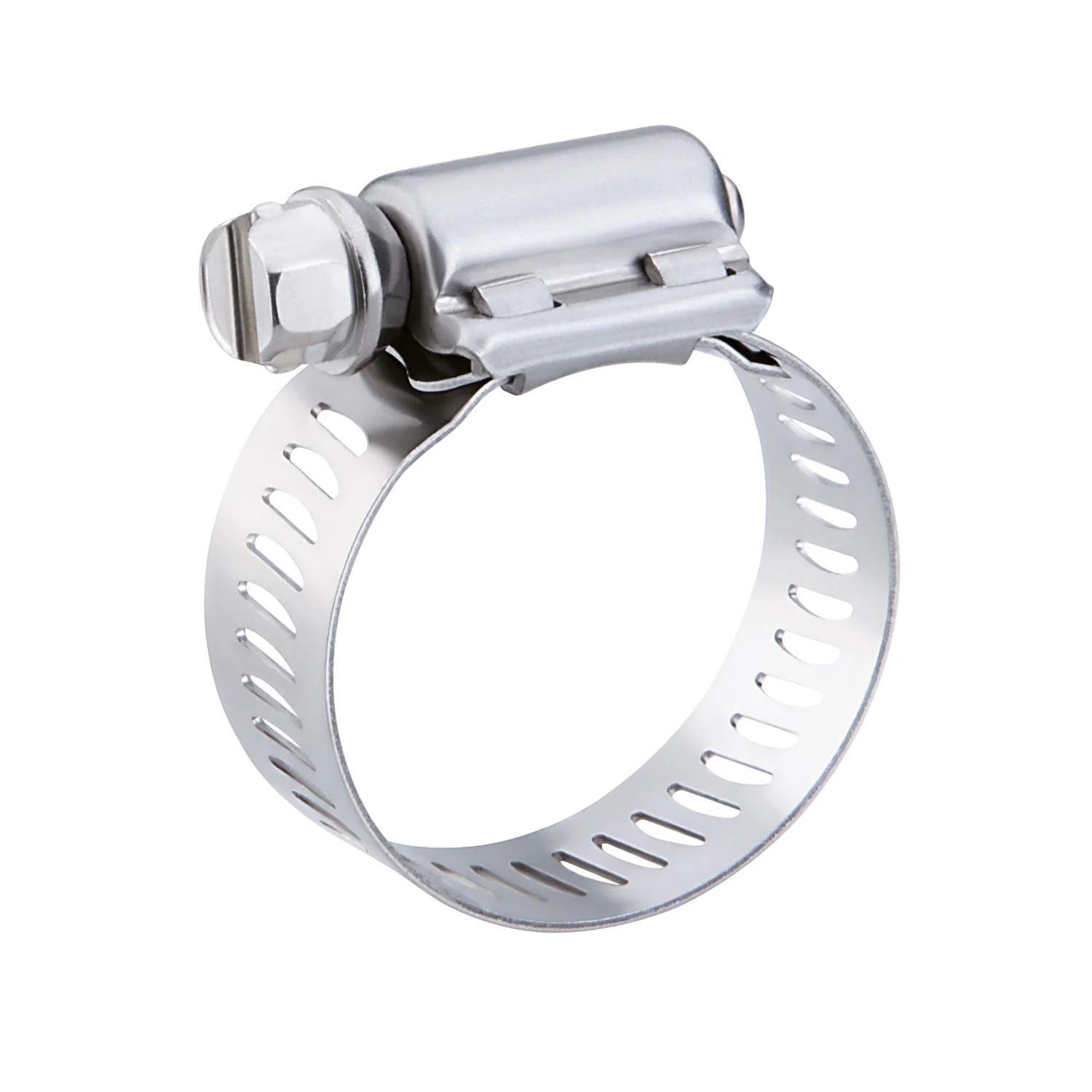
| Worm-gear hose clamp | Plumbing, low-pressure hoses, indoor systems | Zinc-plated steel, 304 stainless | Cost-effective, flexible fit | Not ideal for high vibration or hot, high-chloride environments |
| T-bolt clamp | Heavy-duty hoses, turbo lines, industrial flexible connections | 304/316 stainless, hardened steel | High clamping force, resists loosening | Larger profile and higher cost |
| Ear (Oetiker) clamp | Small diameter hoses, tamper-evident assemblies | Stainless steel | Compact, permanent fit | Single-use; no adjustability |
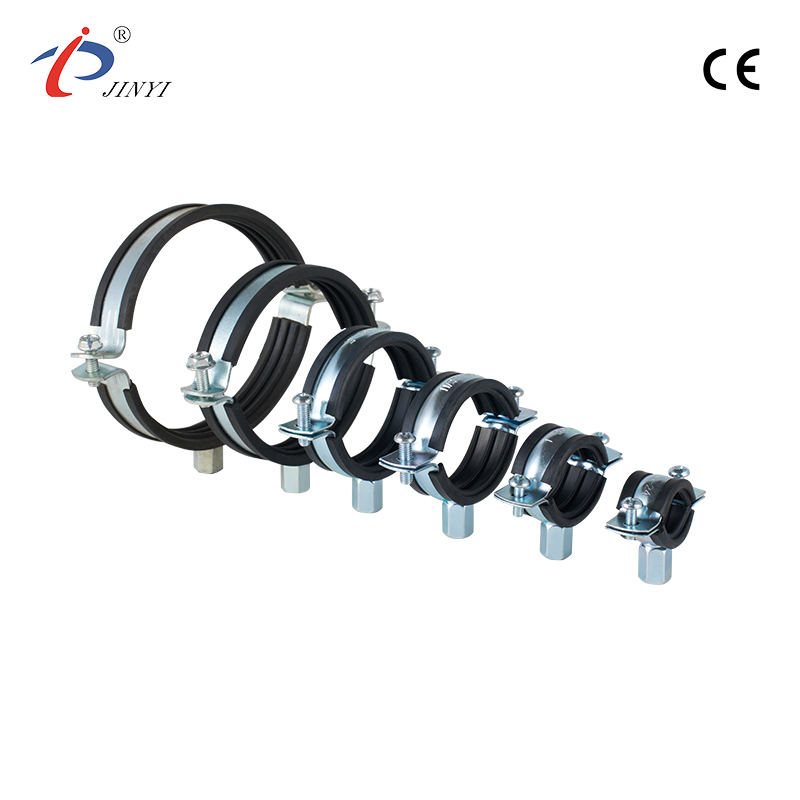
| Rubber-lined pipe clamp | Coated pipes, vibration-prone installations | Steel body + EPDM/NBR lining | Protects coatings, reduces vibration and noise | Elastomer temperature limits require attention |
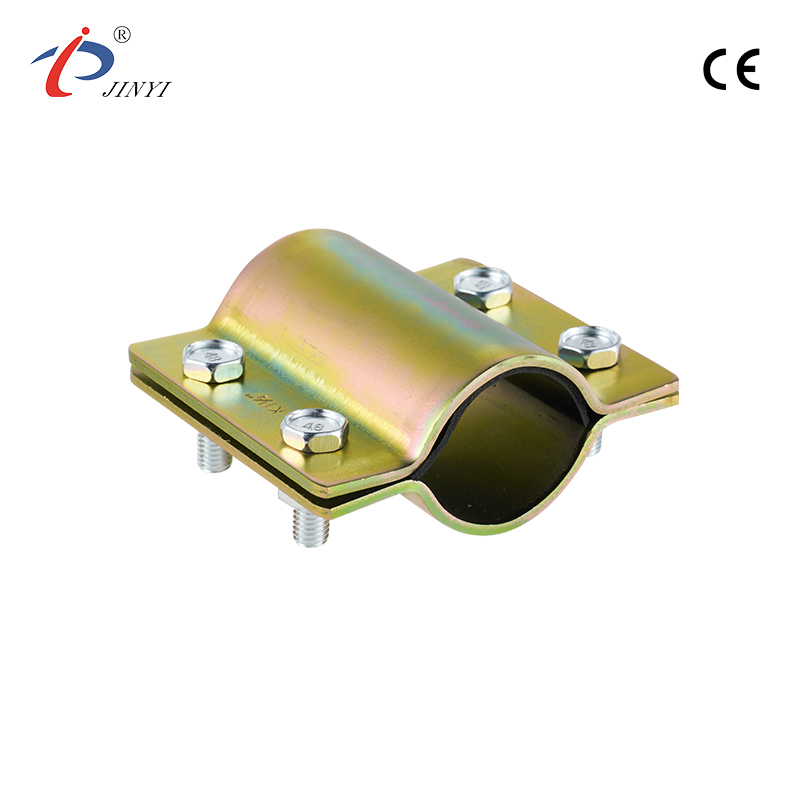
| Repair clamp | Buried or exposed pipeline emergencies | Cast iron, stainless + gasket | Fast leak containment | Often a temporary repair; check pressure rating |
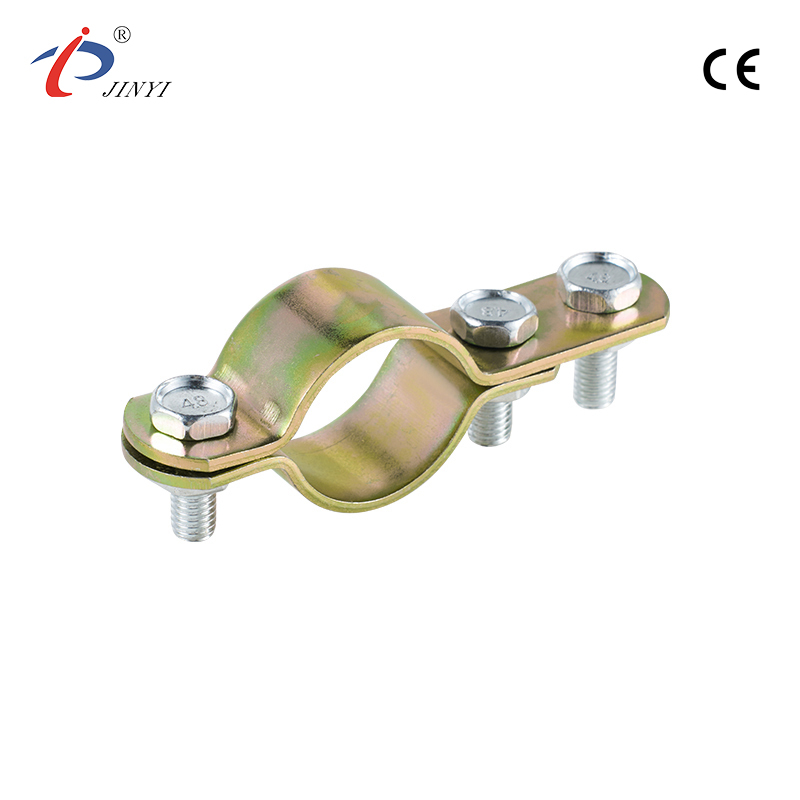
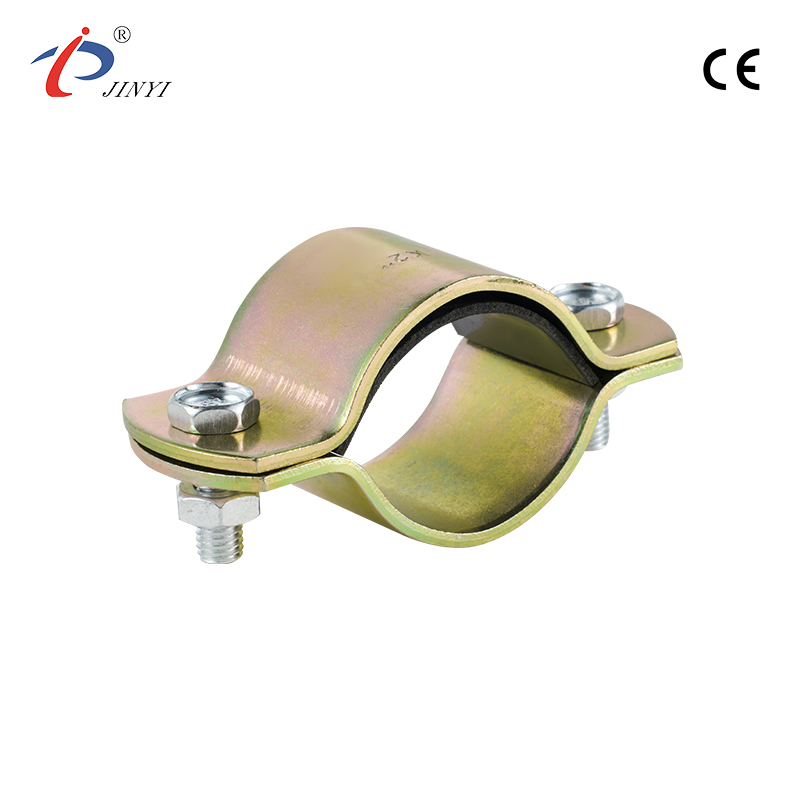
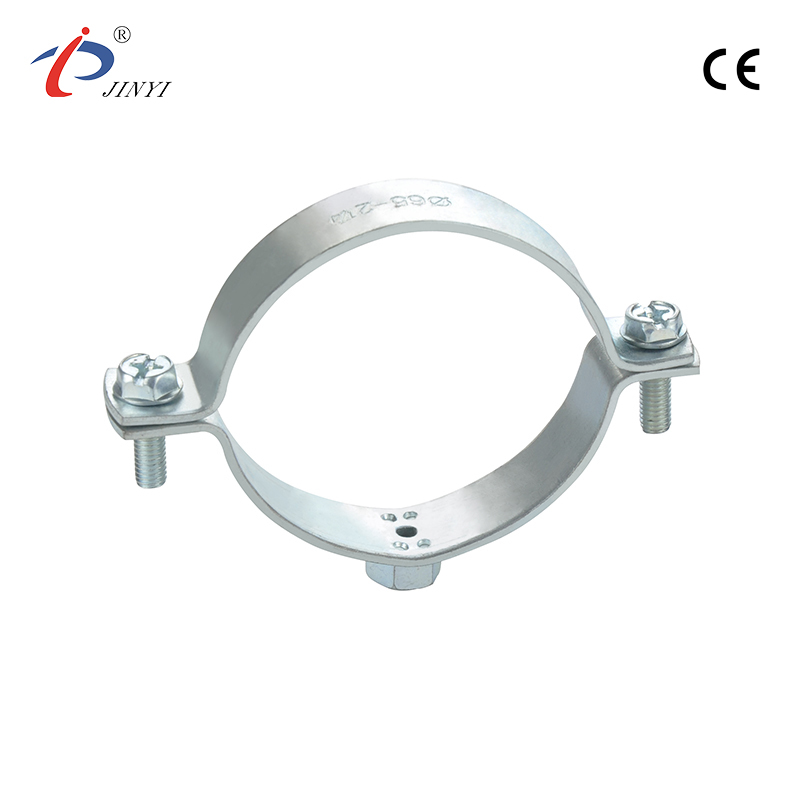
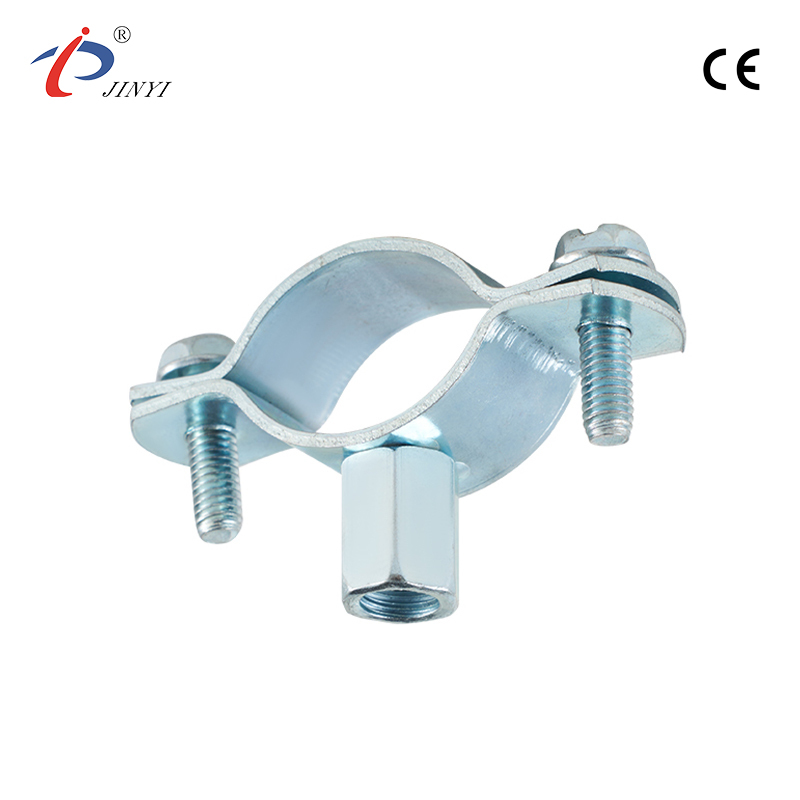
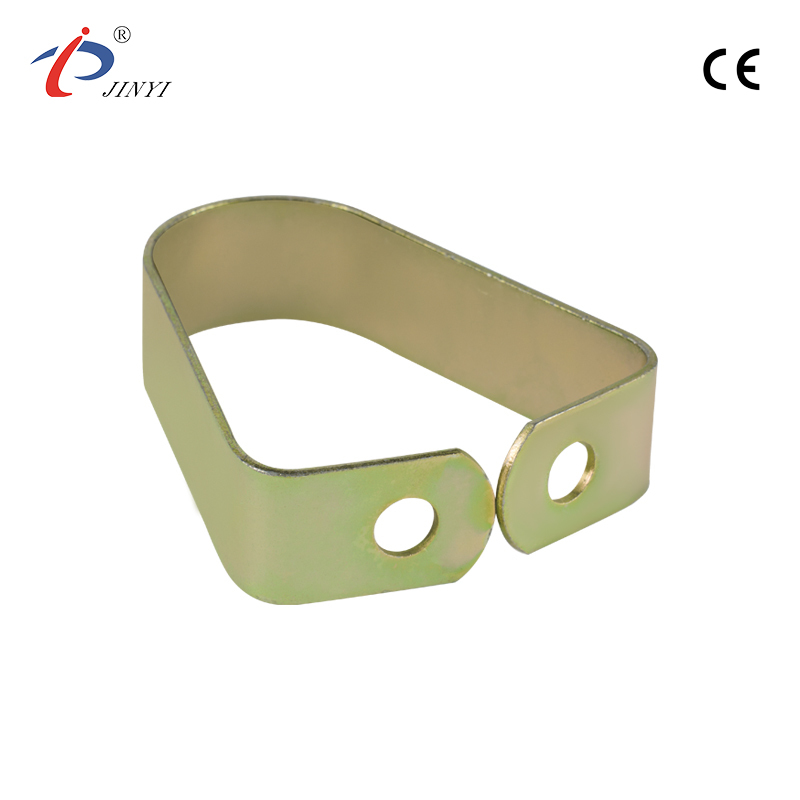
| Pipe support clamp | Suspended piping, HVAC, process lines | Hot-dip galvanized steel, stainless | Structural support for loads and alignment | Must be matched to load and thermal movement requirements |
Material and finish: not all "stainless" or "galvanized" are equal
The material under the surface defines long-term behavior. A generic “stainless” note in an RFQ allows suppliers to substitute grades that look similar but perform differently. Be specific.
What to require in specs
Demand mill/material certificates tied to heat numbers or batch IDs. Specify coating type and minimum coating thickness where relevant. For rubber linings, require compound name, shore hardness range, and maximum continuous service temperature. These details avoid confusion and make supplier offers comparable.
Manufacturing steps where variation commonly appears
Understanding the production flow helps you see where problems arise and what to check in a factory audit.
- Incoming material control — Reliable suppliers test strips and hardware on arrival. Ask for incoming inspection processes and sample documentation.
- Stamping and forming — Tooling precision controls hole spacing, band width, and repeatability. Tool life and maintenance schedules reduce dimensional drift.
- Welding and assembly — Qualified welds and correct heat treatments are critical on heavy-duty clamps and structural supports.
- Surface finishing — Plating, galvanizing, and passivation need proper chemistry and thickness control; require test logs.
- Assembly and testing — Adhesion checks for rubber lining, torque tests for fastening clamps, and packaging control help prevent transit damage.
When problems arise in the field, they often trace back to lapses at one of these production stages.
Quality control and testing: specify what you will accept
Testing must be contractual, not optional. Typical test and documentation items you should require:
- Material certificates (MTCs) referencing specific batch or heat numbers.
- Salt spray testing (ASTM B117 or comparable) for coated parts where corrosion resistance is important.
- Dimensional inspection reports for critical tolerances; CMM reports for tight-dimension parts.
- Torque retention testing for worm and T-bolt clamps, to verify the clamp holds under vibration cycles.
- Elastomer adhesion/peel testing for rubber-lined clamps, with minimum adhesion values.
- Pre-shipment inspection report with photos and sampling records; allow third-party inspection if needed.
Define sampling plans (for example, 5% samples with acceptance criteria), and clearly state who bears remediation costs for nonconforming shipments. Clear acceptance criteria avoid disputes and speed resolution.
Factory audits and remote verification
A factory visit provides direct information; if travel is not feasible, require live video or third-party audits. What to look for:
Onsite indicators of reliability
- Tooling room and spare die inventory — presence of maintenance logs and spare dies signals control of repeatability.
- IPQC checkpoints — in-process quality control stations with logged results show process discipline.
- Plating and finishing lines — control of bath chemistry, drying ovens, and thickness measurement devices.
- Welding station evidence — welding procedure specs and welder qualifications.
- Final inspection reports — evidence that the factory performs and records final checks before packing.
Remote audit approach
- Request a live video walk-through showing the production line and QA documentation with timestamps.
- Ask for recent pre-shipment photos and test results from lots similar to your expected order.
- Use independent inspection firms (e.g., SGS, Bureau Veritas, Intertek) for high-risk orders.
Procurement tactics that reduce risk
Several practical procurement measures help turn a supplier relationship into predictable supply:
Pilot and staged ordering
Start with samples, then a pilot batch, before committing to full-volume production. This allows fit and function testing on actual assemblies.
Multi-sourcing for critical parts
Qualify two suppliers for critical clamp families. Dual sourcing reduces the risk of a single factory disruption halting field work.
Clear contractual acceptance criteria
Spell out pre-shipment inspection, rejection remedies, lead times, and penalties for repeated late deliveries. Hold back a portion of payment until acceptance to incentivize compliance.
Maintain safety stock
Keep a small buffer of frequently used or critical clamps. This guards against shipping delays and production hiccups.
Lock in spares and packaging
Require spare hardware availability for an agreed number of years and firm packaging requirements to protect finish and geometry in transit.
Packaging, labeling and logistics: small items that save time
Transit damages and poor labeling cause unnecessary site work. Agree packaging and labeling requirements up front:
- Use separators between stacked clamps to prevent deformation and scratches.
- Include anti-corrosion papers or VCI packs for long sea voyages.
- Label cartons with part number, batch number, and quantities for fast receiving.
- Pack crates to prevent movement in container transit; specify internal bracing if necessary.
Also confirm HS codes and required export documents with your supplier so customs surprises are minimized.
Common failure modes and how to prevent them
Anticipating failure modes lets you specify features that avoid them:
- Corrosion and coating flake — specify proper material grade or thicker coating and require salt spray evidence.
- Loosening under vibration — choose T-bolt clamps, vibration-resistant fasteners, or include lock features; require torque retention testing.
- Rubber liner delamination — specify compound and adhesion testing; require proper curing and surface prep.
- Dimensional mismatch — require sample fit tests and clear tolerances; demand CMM reports for tight fits.
Failure mode prevention is largely about clarity in specs and confirmation through testing.
Lifecycle cost thinking: beyond the unit price
Unit price is one input; total cost over the life of installed clamps is what matters. Consider:
Total lifecycle cost = purchase price + transport + installation labor + expected replacements × replacement cost + downtime cost per failure
A higher-priced clamp that lasts longer and reduces downtime often has a lower lifecycle cost. Model scenarios for large installations and factor in replacement frequency and labor cost.
Why Choosing the Right Clamps Manufacturer Reduces Maintenance Costs
Small fittings are often overlooked during design and procurement. Yet hardware used to secure piping, hoses, and conduits has a disproportionate effect on service continuity. Selecting an appropriate manufacturer for these components can lower the total cost of ownership by reducing the frequency of repairs, simplifying servicing, and improving operational predictability.
How component sourcing affects long-term expense
At first glance a band or bracket is inexpensive. Over the life of an installation, however, repeated replacements and emergency fixes multiply that initial outlay many times. Several mechanisms explain why:
- Mismatch with operating conditions. Parts built from unsuitable materials or finishes wear faster in corrosive, high-temperature, or abrasive environments.
- Dimensional inconsistency. Poor manufacturing tolerances lead to installation rework and the use of non-standard fasteners or shims, increasing labor hours.
- Frequent loosening or failure. If a component does not hold in vibration-prone systems, it may require recurring tightening or replacement, leading to repeated site visits.
- Damage during transport and storage. Inadequate packing or poor handling instructions can arrive as scratched, bent, or contaminated items, which then need rework before installation.
A thoughtful supplier selection process addresses these sources of recurring cost before the first component is fitted on site.
What to assess in a supplier to limit upkeep demands
Choosing a producer is not just about price and lead time. The following supplier attributes translate most directly into fewer maintenance events:
1. Material sourcing and traceability
A producer with documented material provenance and batch records enables precise matching of component metallurgy to the installation environment. Traceability supports failure analysis and helps avoid repeated use of non-suitable batches.
2. Process control and tooling maintenance
Stable dimensions depend on well-maintained tooling and routine calibration. Factories that schedule die maintenance and log replacements tend to ship parts with consistent geometry, reducing on-site fitting adjustments.
3. Surface treatment discipline
How an item is finished matters more than its raw alloy in many real-world contexts. Consistent application of protective coatings, documented bath chemistry, and drying procedures reduce early corrosion, which otherwise leads to costly replacements.
4. Assembly and functional testing
When components are shipped after functional checks — such as torque retention for screw-type fastenings or adhesion tests for cushioned parts — installers face fewer surprises and system downtime falls.
5. Support and spare availability
A supplier that can supply spare parts quickly or has a clear plan for small-batch reorders helps operations avoid prolonged outages when a part does fail.
Design and specification choices that cut upkeep bills
Procurement teams and engineers can write specifications that make it easier for manufacturers to deliver durable parts and for maintainers to keep systems running smoothly.
- Specify material families rather than generic descriptors. Ask for specific grades and acceptable alternatives tied to the application environment.
- Require documented finishing processes. Stating the type of finish and a qualitative expectation reduces interpretation and ensures consistent protection.
- Define functional acceptance tests. Include simple, non-numeric checks such as the ability to hold a secure clamp under a simulated vibration cycle or a basic adhesion test for linings.
- Include labeling and batch IDs. When cartons and parts include batch identifiers, replacements and corrective actions are quicker and more accurate.
These measures help the supply chain deliver components that meet operational needs rather than cause ongoing maintenance work.
Field experience: common problem areas and supplier-linked remedies
Over many installations, certain failure patterns appear repeatedly. Below are frequent pain points and the supplier-side practices that reduce their incidence.
- Corrosion on exposed parts. Remedy: insist on appropriate material or finish and request recent, documented test evidence for the finish method.
- Fasteners seizing or stripping. Remedy: require compatible fastener grades and pre-shipment torque checks or lubrication where appropriate.
- Rubber lining deterioration. Remedy: specify elastomer family for the expected fluid and temperature exposure and require adhesion or cure records.
- Dimensional mismatches. Remedy: ask for sample fit tests and dimensional inspection reports ahead of large orders.
Having these checks in purchase agreements shifts the burden of performance onto production processes rather than on-site repairs.
| Supplier Attribute | How It Reduces Maintenance Needs | Field Outcome |
|---|---|---|
| Material traceability | Ensures correct alloy use for environment | Fewer corrosion-related replacements |
| Tooling and process control | Promotes dimensional repeatability | Lower installation labor and rework |
| Consistent finishing | Extends surface life against exposure | Reduced frequency of part change-outs |
| Functional pre-tests | Verifies performance before shipment | Fewer emergency call-outs |
| Spare parts planning | Ensures quick replacements | Shorter downtime windows |
Procurement practices that convert supplier quality into savings
Turning capable manufacturing into lower upkeep costs requires actions during purchasing and contract management:
Pilot testing and phased rollouts
Begin with a controlled sample run or short pilot installation. Verify performance under real conditions before scaling up. This prevents systemic issues across broad deployments.
Staged delivery and safety stock
Accept deliveries in stages aligned with installation phases while keeping a modest safety buffer of critical fasteners. This reduces pressure to accept a compromised batch in a hurry.
Warranty and remediation terms
Write clear clauses that require remediation, rework, or replacement when items fail before an agreed service life. While not a substitute for good quality, such clauses incentivize the supplier to meet expectations.
Third-party inspection where risk is high
Independent checks, whether in-process or pre-shipment, add assurance for high-value or mission-critical projects. They also provide documented evidence should warranty or corrective action be needed.
These tactics help avoid the repeated cost of emergency fixes and rework.
The role of communication and technical partnership
A supplier willing to engage technically — reviewing drawings, suggesting minor design adaptations for manufacturability, or advising on alternate finishes — often becomes a partner in reducing long-term expense. That partnership is pragmatic:
- Engineers gain access to production knowledge that avoids design choices known to cause wear.
- Buyers benefit from realistic lead-time and testing plans that align production with installation windows.
- Maintenance teams receive parts and documentation that simplify routine checks and repairs.
Open, detailed communication short-circuits many maintenance drivers by addressing root causes upstream.
Measuring success: metrics procurement teams can track
To see if supplier selection is lowering upkeep costs, monitor a few simple indicators:
- Rate of on-site replacements per 1,000 installed units.
- Average time-to-replace a failed item (minutes or hours).
- Incidence of emergency maintenance calls related to fastening or support hardware.
- Percentage of shipments accepted without rework after pre-shipment inspection.
A downward trend in these measures typically signals that supplier and specification choices are delivering the intended benefits.
Practical checklist: questions to ask before final supplier approval
- Can you provide batch-level material documentation and traceability?
- How do you control tooling wear and dimensional drift?
- What finishing methods do you use and how are they validated?
- Are functional checks performed for each batch and are records retained?
- Can you guarantee availability of spare parts for the expected project lifetime?
- Will you accept staged orders and support pilot testing?
Having affirmative answers — and supporting evidence — from a potential partner places the power to reduce future upkeep costs into the hands of procurement and engineering teams.
Reducing upkeep expense begins long before the first pipe is installed. It starts with supplier selection, clear technical specifications, and contractual terms that make quality measurable and verifiable. By prioritizing material traceability, process discipline, finishing consistency, and practical testing, teams convert a routine procurement decision into a strategic measure that lowers repair frequency, shortens downtime, and improves predictability for operations. The right partner makes maintenance planning simpler and less expensive; the right process makes failures rarer and easier to resolve.
Documentation and traceability: what to demand
Insist on documentation as part of delivery:
- Batch traceability and packing lists mapped to MTCs.
- Coating thickness and salt-spray logs for coated items.
- IPQC and FQC records for production hold points.
- Pre-shipment inspection report and photographs.
- Installation guidance including recommended torque settings and maintenance notes.
Digital certificates (PDFs with batch numbers) and QR-coded carton labels shorten approval and audit cycles.
Quick checklists you can use now
Pre-RFQ checklist
- Define environment, loads, and movement.
- Select clamp family and draft initial material and finish requirements.
- Plan pilot batch and acceptance criteria.
Factory audit quick checklist
- Tooling room and die maintenance records.
- IPQC logs and sample test results.
- Plating/galvanizing line evidence and bath records.
- Final inspection process and packing photos.
On-receipt inspection quick checklist
- Random measurement of critical dimensions vs drawing.
- Visual check of coating and plating thickness measurement.
- Torque check on sample clamps.
- Packaging and batch ID verification.
Use these short lists in RFQs and as a guide for inspectors.
Make clamps predictable parts of your supply chain
Clamps will never be glamorous, but they can be predictable. The difference between frequent site rework and smooth installations often comes down to clear specifications, early sample verification, and contractual test requirements. Require material traceability, insist on practical tests, stage your orders, and maintain a small safety stock. Those steps convert clamps from a potential source of delay into routine supply items.


- 210 Jinhai Avenue, Lupu Economic Development Zone, Yuhuan City, Taizhou City, Zhejiang Province.
- +86-576-87423248 / +86-576-87499120
- +86-17769979117 / +86-13750801289
- +86-576-87425996
- [email protected] / [email protected]

