

 русский
 Español
Why Choose Rubber Lined Pipe Clamp for Piping
2026-01-12
What Every Project Manager Should Know About Rubber Lined Pipe Clamp
Industrial piping systems move everything from water and steam to slurry and chemicals. In many facilities these pipe networks are critical to operations, and their supports deserve as much attention as valves, pumps, and control systems. Choosing the right support and protection for pipework affects reliability, maintenance budgets, safety, and even staff comfort. In this article we explain why a Rubber Lined Pipe Clamp can be a sensible option for many applications, how to pick the best variant for a given environment, and what practical maintenance steps will keep the system running with fewer surprises. All content is presented from a manufacturer's practical viewpoint — the kinds of issues plant engineers and procurement teams actually call about.
Why pipe supports matter now more than ever
Pipelines handle enormous volumes of material every day across chemical plants, refineries, water treatment facilities, HVAC systems, and manufacturing lines. When a support point fails, the consequences can ripple quickly: accelerated wear, leaks, unscheduled shutdowns, loss of production, and increased risk of safety incidents. Common failure modes that begin at supports include abrasion from micro-movement, galvanic corrosion at contact points, vibration-induced fatigue, and uneven load sharing that overstresses pipe sections.
A lined clamp brings two functions together: it supports the pipe mechanically and introduces a protective, usually non-conductive, interface between the pipe and the metal hardware. That interface cushions the pipe, dampens vibration, and isolates dissimilar materials. For procurement and maintenance teams that need predictable lifecycles and fewer emergency repairs, these advantages are often compelling.
What Are the Key Benefits of Using Rubber Lined Pipe Clamps in Industrial Piping
Below are the practical benefits engineers ask us about most often, described in real-world terms.
Vibration damping and noise reduction
Pipes connected to pumps, compressors, or turbulent flow will vibrate. A rubber lining absorbs and dissipates part of that energy, reducing the vibrations transmitted to supports and building structure. That lowers fatigue on welds and joints and helps avoid small, progressive leaks. In occupied areas, the same damping reduces structure-borne noise, improving the working environment without the need for expensive rerouting.
Surface protection and abrasion resistance
Where pipes move slightly against their supports — due to thermal cycling or particulate in the fluid — metal saddles can abrade the pipe surface. A rubber lining isolates the pipe from metal contact, reducing wear. This is especially valuable on thin-walled or coated pipes where surface integrity matters.
Corrosion mitigation at contact points
Dissimilar metals or condensate at contact points can form galvanic pairs and accelerate localized corrosion. A nonconductive lining interrupts that contact and reduces the risk of pitting and localized failure at the support.
Improved sealing and load distribution
Lined clamps conform more closely to pipe curvature, distributing clamp pressure over a wider area. That lowers the chance of point loading that can dent or deform thin-walled pipes, insulation, or liners beneath the clamp.
Reduced maintenance frequency and cost
Because lined clamps protect the pipe surface and cushion against stresses, inspections and spot repairs can be less frequent. For plants with scheduled maintenance windows, this can translate into real savings.
Easier retrofit for mixed-material systems
In retrofits where metal piping sits near FRP, PVC, or other nonmetallic pipes, lined clamps act as a neutral interface that prevents abrasive and electrochemical interactions between dissimilar materials.
How to Choose the Right Rubber Lined Pipe Clamp for Your Project
Choosing a clamp is more than size-matching: consider materials, environment, loads, and how the clamp will be serviced.
Know your pipe material and wall thickness
Thin-walled pipes need wider contact areas or thicker linings to avoid deformation. Nonmetallic pipes (for example FRP or PVC) are more sensitive to concentrated loads; select clamps that spread the load and use compatible lining chemistry.
Size for OD and allow for thermal movement
Always size by pipe outside diameter. If thermal expansion is significant, include clamps that allow axial sliding or provide guided movement at fixed points. Fixed anchors should be arranged so expansion forces do not overstress supports or pipe joints.
Match lining material to the environment
Common lining materials — natural rubber, neoprene, EPDM, nitrile — differ in temperature range and chemical resistance. Nitrile performs well with oils; EPDM resists weathering and some chemicals; neoprene offers balanced properties. For hot runs, confirm the lining retains mechanical strength at operating temperatures.
Pick appropriate hardness and thickness
Shore hardness affects cushioning and load distribution. Softer linings improve damping but compress more; harder linings support higher loads with less deformation. Thickness adds protection but changes clamp height and stiffness. Specify the combination that addresses both mechanical load and abrasion risk.
Calculate loads and safety margins
Include static weight, pipe contents, insulation, dynamic effects (flow-induced forces), and any seismic or wind demands. Choose clamps and attachment hardware rated for these combined loads with sensible safety factors.
Consider clamp geometry and attachment
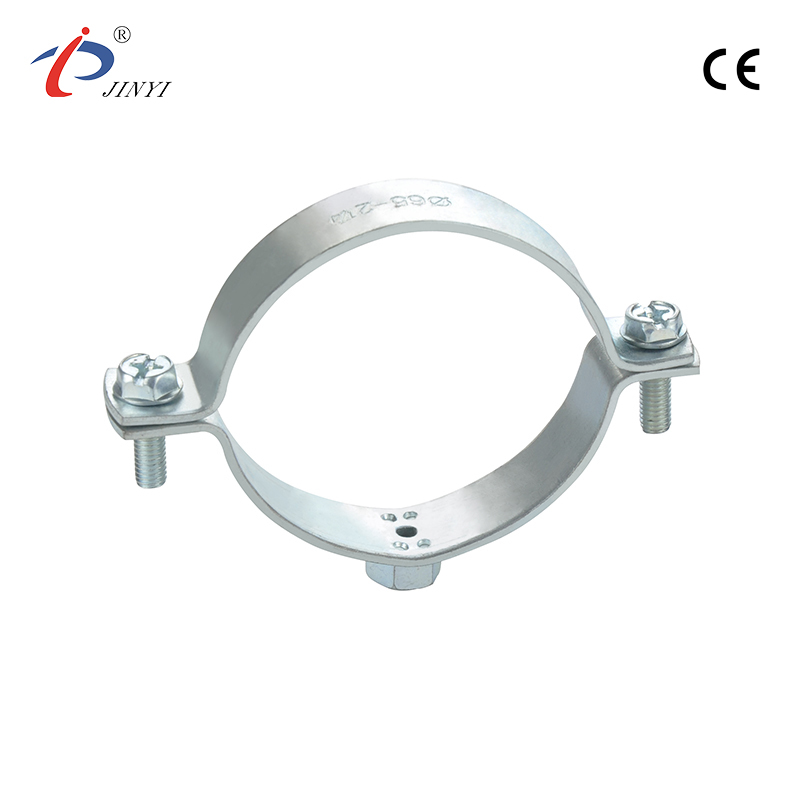
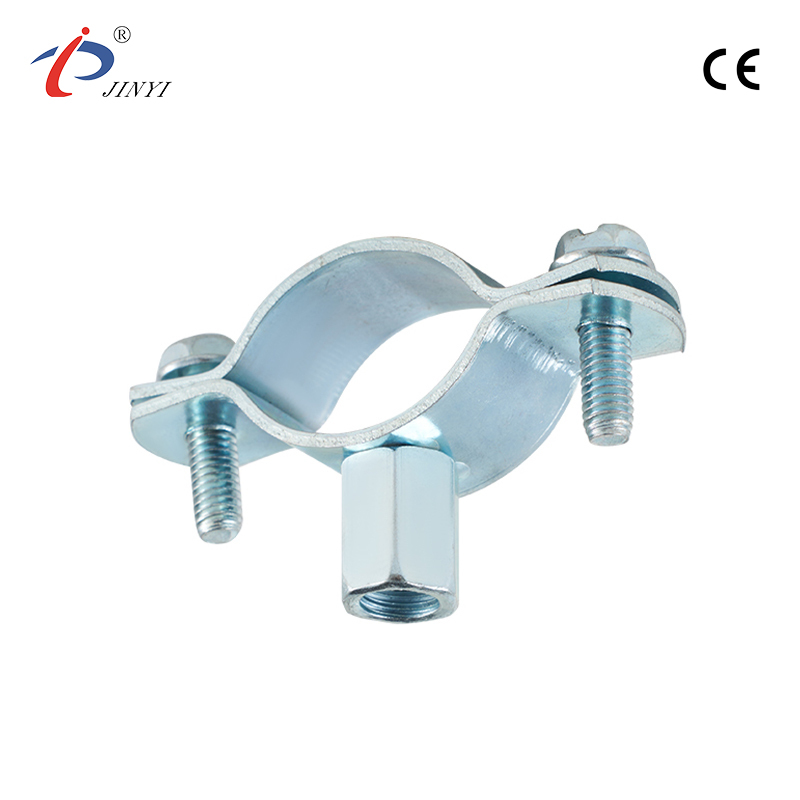
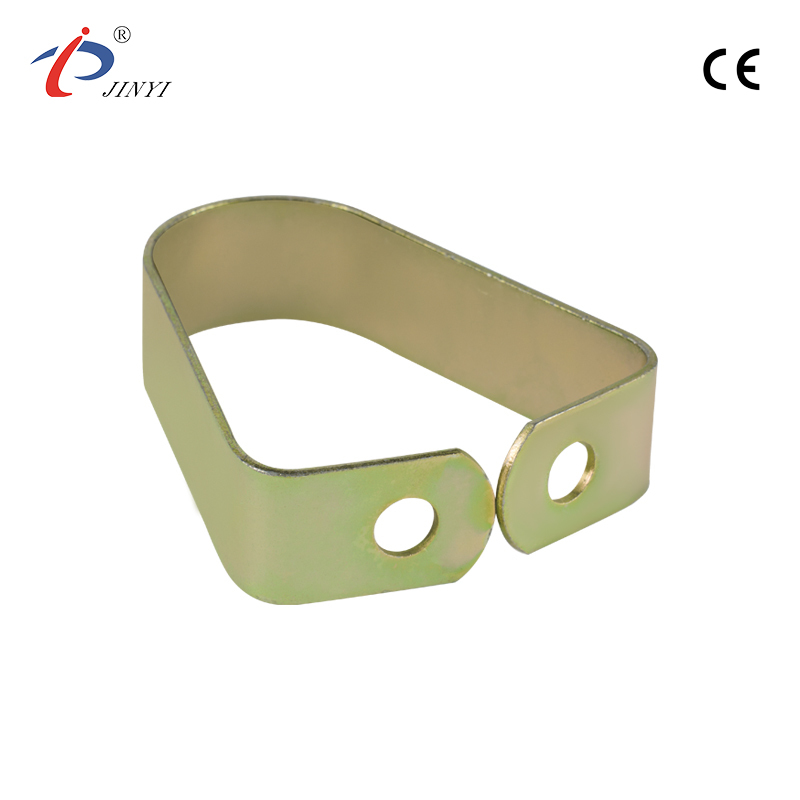
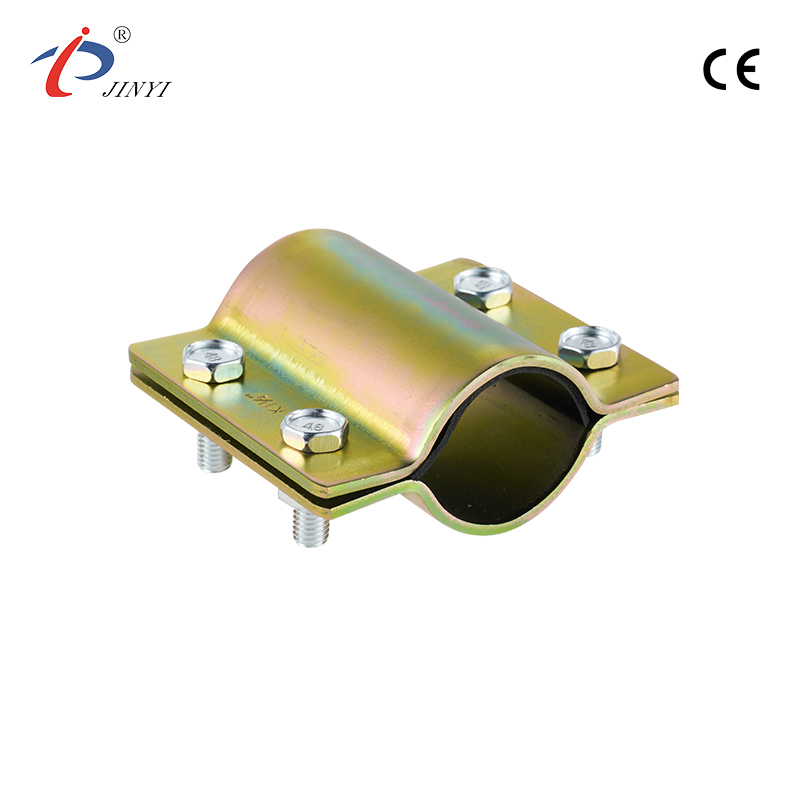
Saddle clamps, split rings, and U-bolts have different use cases. Saddle clamps suit fixed supports and larger-diameter piping; split rings work well in hangers; U-bolts are economical for smaller runs. Ensure the chosen hardware integrates with the existing support structure and mounting details.
Verify compliance and documentation
Where project specs or local codes apply, require material certifications, hardness data, and traceability. For critical projects, request test certificates or sample parts for evaluation.
Think about installation and servicing
Ease of installation reduces labor time and the chance of improper torqueing. Prefer designs with clear torque specs and that allow liner replacement without disassembling adjacent runs.
Tips for Extending the Lifespan of Rubber Lined Pipe Clamps in Harsh Environments
Routine care and good choices at purchase time deliver the best long-term results.
Establish an inspection cadence
Inspect clamps for lining degradation, compression set, cracking, or chemical swelling. Harsh chemical exposure or high temperatures require more frequent checks. Log findings so you can spot trends before failures occur.
Torque correctly and consistently
Follow recommended bolt torque values to avoid over-compression (which flattens the lining) or under-torque (which allows movement and fretting). Use calibrated torque tools and record settings as part of installation QA.
Shield against chemical attack
If solvents, oils, or aggressive cleaners are used nearby, choose a lining with proven resistance or add protective covers. For outdoor exposures, select UV-resistant linings.
Prevent trapped moisture and debris
Avoid clamp designs that trap water, debris, or insulation fibers against the lining — these accelerate both lining wear and metal corrosion. Ensure drainage and include cleaning in routine maintenance.
Replace linings proactively
Replace liners showing significant compression set or cracking before the metal clamp begins to damage the pipe. For critical runs, keep spare liners and kits to limit downtime.
Use appropriate metal finishes
Where corrosion risk is high, plated coatings may not last. Consider stainless steel or heavy-duty coatings depending on the exposure.
Fix vibration at the source
Lined clamps help, but don't rely on them alone. Diagnose excessive vibration and correct rotating equipment balance, misalignment, or pipe restraints as needed.
Practical Installation Guidance Every Technician Should Know
Small installation mistakes cause many field problems. Share these hands-on recommendations with crews.
- Clean the pipe surface before installation to remove scale, rust, or oil that might reduce friction or damage liners.
- Align the clamp carefully; off-center seating concentrates load and wears the lining faster.
- Tighten bolts in stages and use cross-pattern sequences for multi-bolt clamps to get even compression.
- On insulated runs, verify whether the clamp bears directly on the pipe or on the insulation; use support plates or spacers when needed.
- On vertical runs, make sure hangers are specified and installed to handle both axial and lateral loads per the piping code being followed.
Reducing leaks in a slurry process loop
A chemical plant had recurring pinhole leaks near support points on a slurry transfer line. The metal saddles had caused accelerated wear. The plant replaced the saddles with lined clamps, increased the contact area slightly, and added intermediate supports to reduce unsupported spans. Result: fewer leaks, and a noticeable decline in emergency maintenance calls over the next year.
Reducing noise near maintenance walkways
The team swapped a subset of rigid supports to lined clamps at the noisy span and installed a small isolation pad under a neighboring support. Result: measurable reduction in structure-borne sound without re-routing the piping.
Controlled retrofit with mixed materials
During a refurbishment, new metallic pipe runs were installed adjacent to existing FRP lines. The retrofit used nonconductive lined clamps chosen for compatibility with both materials. Result: neutral interfaces reduced the risk of local damage, simplifying inspections and avoiding premature repairs.
Procurement Checklist for Engineers and Buyers
A short checklist that procurement teams can use when preparing specs or comparing quotes.
Specify pipe OD and wall thickness.
State operating temperature range and chemical exposures.
Define loading: static weight, insulation, fluid momentum, and any dynamic or seismic loads.
Identify whether clamps should allow axial sliding or be fixed.
Request material datasheets and lining specifications.
Ask for torque recommendations and installation guidance.
Request certificates and traceability if required by project specs.
Clarify delivery time, minimum order quantities, and spare part availability.
Frequently Asked Questions from Plant Engineers
Here are concise, practical answers to common field questions.
Will a lined clamp completely stop corrosion?
No. Lining reduces direct metal contact and the risk of localized corrosion at the interface, but it does not replace correct material selection, cathodic protection, or appropriate coatings where aggressive corrosion is present.
Can lining be retrofitted to existing clamps?
Sometimes. Retrofit liners or sleeves exist for certain clamp types, but compatibility and consistent pressure distribution must be verified. Often, replacing with purpose-made lined clamps is the safer option.
How long does a lining last?
Service life depends on temperature, chemical exposure, mechanical loading, and UV exposure. Regular inspection and trend logging are the best guides for replacement timing rather than a fixed schedule.
Are there fire safety concerns?
Select lining materials that meet the fire performance needed for the installation. For high-temperature or fire-exposed areas, consult the project's fire safety criteria and choose materials or metal alternatives that meet those demands.
Sustainability and Lifecycle Considerations
When planning long-term, factor in lifecycle impacts.
Durable linings that reduce replacement frequency mean less waste over time.
Discuss material recyclability and end-of-life options with suppliers where sustainability matters.
Smart inventory planning — stocking a small range of common sizes — minimizes emergency shipments and reduces transport-related emissions.
How a Manufacturer Can Support Buyers
A dependable supplier offers more than hardware: documentation, samples, and responsive support matter.
Provide clear material specifications and test certificates.
Share installation guides and recommended torque tables.
Offer sample pieces or pilot quantities for evaluation runs.
Be available for technical support on unusual or custom applications.
Keep spare liners and component kits available for rapid replacement.
Offer custom fabrication for nonstandard sizes or integrated assemblies.
Rubber lined clamps address several common field problems: vibration, abrasion, contact corrosion, and point loading. When selected and installed correctly, they reduce wear, lower inspection burden, and contribute to more predictable system performance. To move forward effectively:
Gather operating parameters including pipe OD, wall thickness, loads, and environmental exposures.
Use the procurement checklist to request comparable quotes.
Ask suppliers for datasheets, installation guidance, and sample parts where feasible.
Schedule inspection points in your maintenance plan and track lining condition over time.

- 210 Jinhai Avenue, Lupu Economic Development Zone, Yuhuan City, Taizhou City, Zhejiang Province.
- +86-576-87423248 / +86-576-87499120
- +86-17769979117 / +86-13750801289
- +86-576-87425996
- [email protected] / [email protected]

