


 русский
 Español
Why Does a Decoupling Tank Matter in Modern HVAC Hydronic Systems?
2026-11-06
As HVAC systems become more complex, maintaining stable water circulation across different heating and cooling circuits requires careful system planning. In commercial buildings, hotels, hospitals, and industrial facilities, primary and secondary circuits may operate with different flow requirements. If these circuits are not properly coordinated, changes in demand can affect pump operation and overall system performance. A Decoupling Tank helps hydraulically separate these circuits, allowing them to operate with greater independence. For overseas HVAC contractors, engineering companies, and equipment buyers, understanding how to select and configure this component is essential when planning a reliable hydronic system.
Understand the Role of Hydraulic Separation
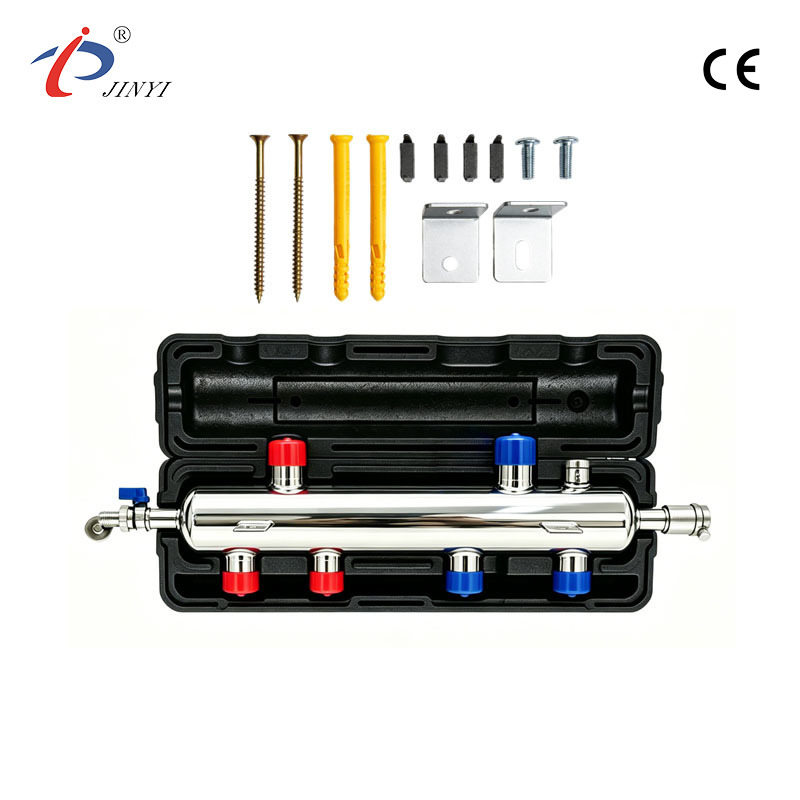
A decoupling tank, also known as a hydraulic separator or low-loss header in certain system configurations, provides a connection between primary and secondary water circuits. Its purpose is to reduce the direct hydraulic interaction between pumps serving different parts of the system.
Without suitable hydraulic separation, variations in flow demand on one side may influence circulation on the other. This can complicate system balancing, particularly when multiple heating or cooling zones operate independently.
By providing a common hydraulic connection, the tank allows primary and secondary pumps to respond to their respective circuit requirements. However, the actual result depends on system design, flow rates, pipe arrangements, and equipment selection.
Match Tank Capacity to System Flow Requirements
One of the most important purchasing considerations is whether the tank is suitable for the expected water flow. An incorrectly selected unit may create unnecessary pressure losses or fail to provide the intended hydraulic separation.
Engineers should consider the combined system design rather than selecting a tank based only on pipe connection size. Relevant information includes:
- Primary and secondary circuit flow rates
- Operating temperature range
- System pressure requirements
- Pipe connection dimensions
- Expected heating and cooling demand
- Available installation space
Providing these details to the manufacturer before ordering helps establish a more appropriate product specification and reduces the need for changes during installation.
Consider Flow Behavior Inside the Tank
The internal flow arrangement influences how water moves between the connected circuits. When primary and secondary flow rates differ, water may move vertically within the tank, depending on the direction and relative volume of each flow.
This behavior is an important part of hydraulic separation. It can help reduce pump interaction, but it also means that temperature mixing may occur under certain operating conditions.
For engineers, understanding this relationship is important when designing supply and return temperatures. A decoupling tank should not be treated as an isolated accessory; its position and connection arrangement need to correspond with the complete hydronic system.
Material and Construction Should Suit Operating Conditions
HVAC water systems operate under defined pressure and temperature conditions, and the tank must be selected accordingly. Material choice, wall construction, welding quality, connection design, and surface protection all deserve attention during procurement.
For commercial and industrial projects, buyers should confirm the specified operating pressure, design temperature, applicable material requirements, and relevant manufacturing standards.
Manufacturers should also pay attention to connection alignment and internal cleanliness. These details can influence installation convenience and help prevent avoidable problems when the tank is integrated into the pipework.
Plan Air and Dirt Management
Air and suspended particles can affect hydronic system operation. Depending on the system design, a decoupling tank may be configured with additional air separation or dirt collection features.
These functions should be evaluated according to the actual project requirements rather than assumed to be included in every model. Engineers should confirm whether separate air separators, dirt separators, or filtration components are also required.
For maintenance teams, accessible connections and suitable cleaning arrangements can make inspection more straightforward. Discussing these requirements before product selection helps buyers determine whether a standard configuration or a customized solution is more appropriate.
Installation Position Influences System Performance
Even a correctly selected tank can create difficulties if it is installed without considering the surrounding equipment and pipework. The tank should be positioned according to the hydraulic design, with suitable connections to the primary and secondary circuits.
Before installation, contractors should review:
- The direction and arrangement of inlet and outlet connections
- Pump locations relative to the tank
- Pipe support and connection clearance
- Access for inspection and maintenance
- Insulation requirements
- Space for any additional air or dirt separation equipment
Clear installation planning helps coordinate the tank with pumps, boilers, chillers, and distribution circuits.
Work With a Manufacturer That Understands Project Requirements
Selecting a Decoupling Tank requires coordination between hydraulic calculations, operating conditions, material specifications, connection dimensions, and installation planning. A product that appears suitable based only on its external dimensions may not meet the actual requirements of the project.
As a manufacturer, the focus should be on understanding the intended HVAC application before confirming the product configuration. For overseas buyers, sharing flow requirements, pressure conditions, connection details, and project drawings with the supplier can support more accurate selection. A properly specified Decoupling Tank can then become a practical part of a well-coordinated hydronic system, helping primary and secondary circuits operate according to their respective design requirements.


- 210 Jinhai Avenue, Lupu Economic Development Zone, Yuhuan City, Taizhou City, Zhejiang Province.
- +86-576-87423248 / +86-576-87499120
- +86-17769979117 / +86-13750801289
- +86-576-87425996
- [email protected] / [email protected]

