


 русский
 Español
Why Does HVAC Mounting Clamp Selection Matter
2026-02-27
A Practical, No-Fluff Guide to Choosing, Installing, and Caring for HVAC Support Hardware
Let's be blunt: a tiny piece of metal can make or break an HVAC job. We've all been on sites where big equipment works fine but a run of ducts sags, hoses shake, or a pipe joint leaks because the support was wrong. That's not glamorous, but it's where systems fail.
Why support hardware matters—short version
Think of supports as the skeleton for your piping and ductwork. If the skeleton's off, everything else gets stressed. Two quick consequences of bad support design:
- Mechanical stress — joints, flanges, and connections pay the price.
- Noise and vibration — which annoy occupants and loosen parts over time.
Fix those two and you avoid most callbacks. It's that simple.
A quick field story
On a mid-rise retrofit, the chilled-water main kept leaking at welds. Contractor blamed piping until we found eight poorly spaced straps — insulation water collected between pipe and metal, causing corrosion and fatigue. We added three more saddles, swapped to rubber-lined split clamps, re-routed an elbow by 200 mm, and the leaks stopped. The moral: small fixes, big payoff.
Common mistakes I still see (and exact fixes)
These are the repeat offenders. If you solve these, you're already above average.
Fasteners finger-tight or inconsistent torque
- Why it's bad: vibration backs out screws.
- Fix: torque wrenches on every critical fastener. Mark torque values on drawings. Use lock washers or Loctite where needed.
Clamps too close to fittings or moves
- Why it's bad: stiffer points near elbows cause stress.
- Fix: support straight runs, keep at least 150–300 mm from bends on small piping; distances grow with diameter.
One support carrying everything
- Why it's bad: multiple runs or branches concentrate load.
- Fix: distribute loads. Use trapeze hangers for groups, or add intermediate supports.
Material mismatch causing corrosion
- Why it's bad: galvanic corrosion between steel and stainless accelerates failure.
- Fix: match metals or isolate with sleeves, washers, or coatings.
Anchoring into non-structural materials
- Why it's bad: pull-through, deformation, or early failure.
- Fix: verify substrate, use backing plates, or tie into primary framing.
Ignoring thermal movement
- Why it's bad: rigid supports across long runs cause bending and stress.
- Fix: add sliding saddles, guides, or expansion loops at design intervals.
Skimping on isolation where vibration matters
- Why it's bad: chatter, noise, faster fatigue.
- Fix: rubber-lined clamps, spring hangers, or pipeto-flex connectors at equipment.
How to pick the right support — practical steps
Skip vendor catalogs until you answer these questions on the site.
What's the load per meter
- Quick calc: weigh a 1 m sample or use catalog weights. Add insulation and a 25% safety margin.
How much movement to expect
- Thermal growth on long runs? Choose sliding supports or allow an expansion loop every X meters (calculate from coefficient of thermal expansion).
What environment
- Indoor dry office vs. coastal plant vs. chemical exposure — pick materials accordingly.
Is vibration present
- Yes - add isolation. No - standard supports might do.
How often will you need access
- Frequent access - split clamps or quick-release designs.
When those are clear, select parts with ratings above your calculated loads. If in doubt, choose the next higher capacity model — the price difference is tiny compared with a service call.
Materials — what really works where
Short, honest rundown.
- Stainless steel (304/316): Go-to for coastal, chemical, or outdoor exposure. Lasts. Costs more. Worth it where replacement is hard.
- Galvanized steel: Cheap-ish and fine indoors. Not great in salt air.
- Aluminum: Light and non-rusting but not for heavy loads. Watch for galvanic contact with steel.
- Polymers/composites: Good for electrical isolation or chemical compatibility, but check temperature and load limits.
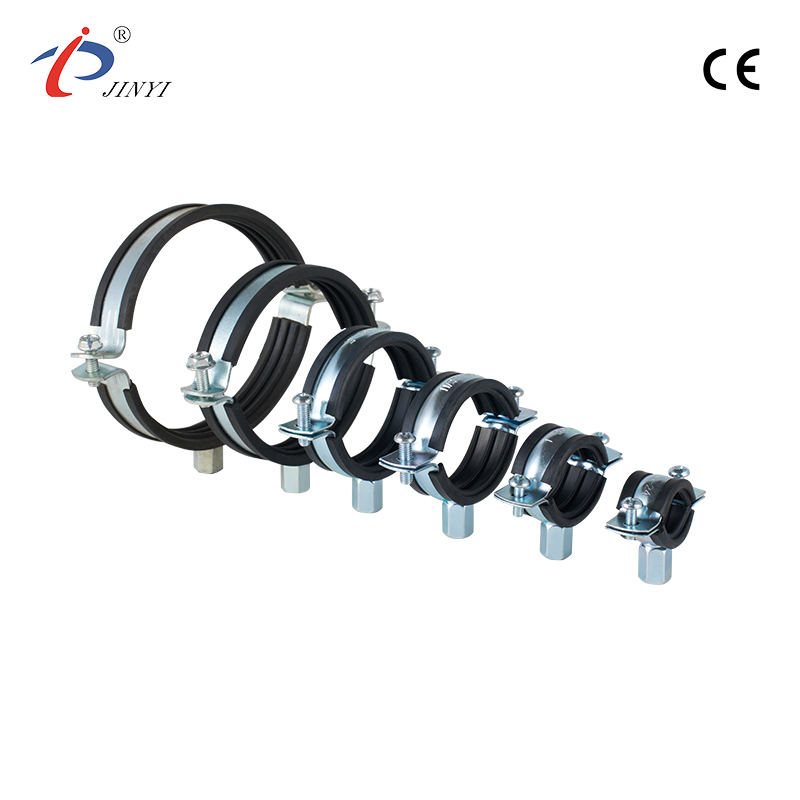
- Rubber-lined or neoprene pads: Essential for vibration dampening and to protect insulation.
A practical tip: if you're replacing failed galvanized parts in a coastal plant, upgrade to 316 stainless in the wet zones and keep galvanized on dry interior runs. That hybrid approach controls cost but fixes the weak points.
Installation tips that save time and reduce rework
Some of these are obvious, some are not. They all work.
- Pre-mark support locations on the actual installed route — not on the as-built drawing only.
- Use calibrated torque tools and record torque values on your punch list.
- For split clamps, slide the lower half under the pipe and align before tightening the top half — it saves awkward lifts.
- Always use anti-seize on stainless fasteners in high-temp zones.
- Temporary braces for overhead work: use them until the final fasteners are torqued. Don't rely on hand-tight positioning.
- If the clamp design includes a rubber liner, make sure the liner sits fully; partial liners trap water and grit.
One crew I worked with used colored paint marks on bolts after torquing — a quick visual check for inspectors that the fastener was set to spec.
Maintenance and inspection — what to actually do
A little routine goes a long way.
Frequency guide
- Harsh environments (coastal, chemical): inspect every 3–6 months.
- Normal commercial interiors: yearly.
- After events (earthquake, major overhaul): immediately.
Quick inspection checklist
- Fasteners: any backed-out or missing
- Corrosion: pitting, flaking, or deep rust
- Liners: cracked, flattened, or displaced
Movement: signs of unexpected pipe drift or new noise under operation?
If you find evidence of movement, add a temporary support and schedule a permanent fix. Don't wait.
Troubleshooting — fast fixes on site
Short problems, short solutions.
- Sagging between supports - add an intermediate saddle and verify insulation/wet weight.
- Vibration transmitted to structure - retrofit rubber-lined clamps or spring hangers; check flexible connectors.
- Corrosion at contact points - isolate dissimilar metals; consider replacing with same-alloy parts.
- Repeatedly loose fasteners - investigate thermal cycling or use locknuts/threadlocker.
If a pattern of failures shows up on multiple supports, step back and evaluate the whole route — often it's a spacing or material choice issue, not a single bad clamp.
Two short case studies from the floor
These aren't marketing blurbs — they're real and repeatable.
Retrofit office building
- Problem: sagging chilled-water with corrosion near supports.
- Fix: replaced thin metal saddles with rubber-lined split clamps and increased spacing density.
- Outcome: no sagging or leaks after 24 months.
Small coastal hotel
- Problem: brackets in mechanical room corroded within a year.
- Fix: swapped exterior-exposed brackets to 316 stainless and applied sacrificial anodes on nearby conduits.
- Outcome: bracket replacement interval extended from 12 months to 5+ years.
Quick procurement checklist (what to order)
When buying, have this ready:
- Exact pipe/duct diameter and insulation thickness.
- Total calculated load per support (include insulation and liquid).
- Environment classification (indoor dry / outdoor coastal / chemical exposure).
- Access requirement (split clamp? quick-release?).
- Any code / seismic / fire-rating requirements.
Give that to your supplier and ask for part codes for alternatives: standard, lined, split, seismic-rated.
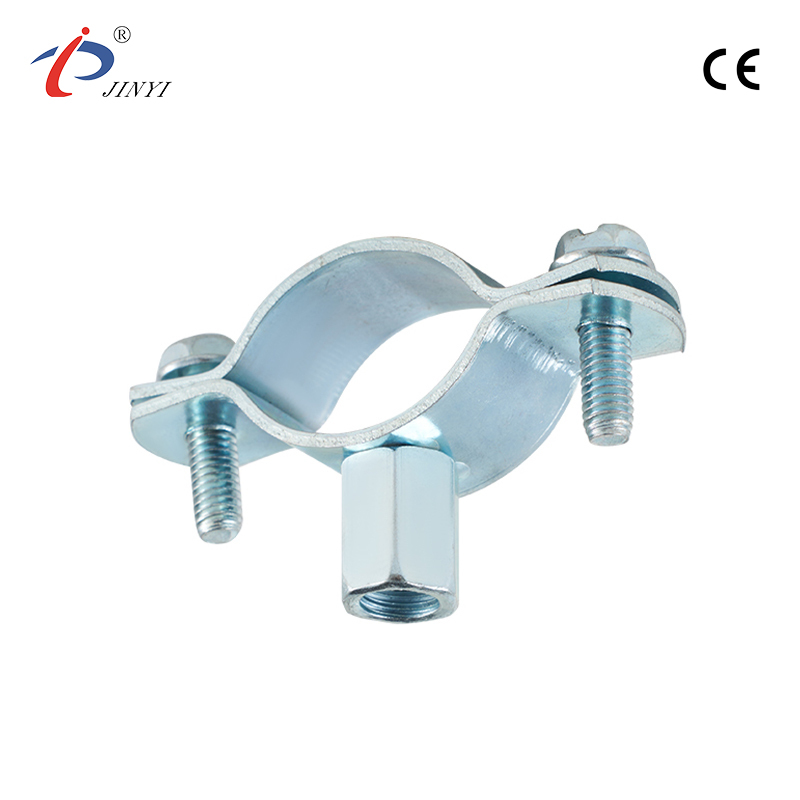
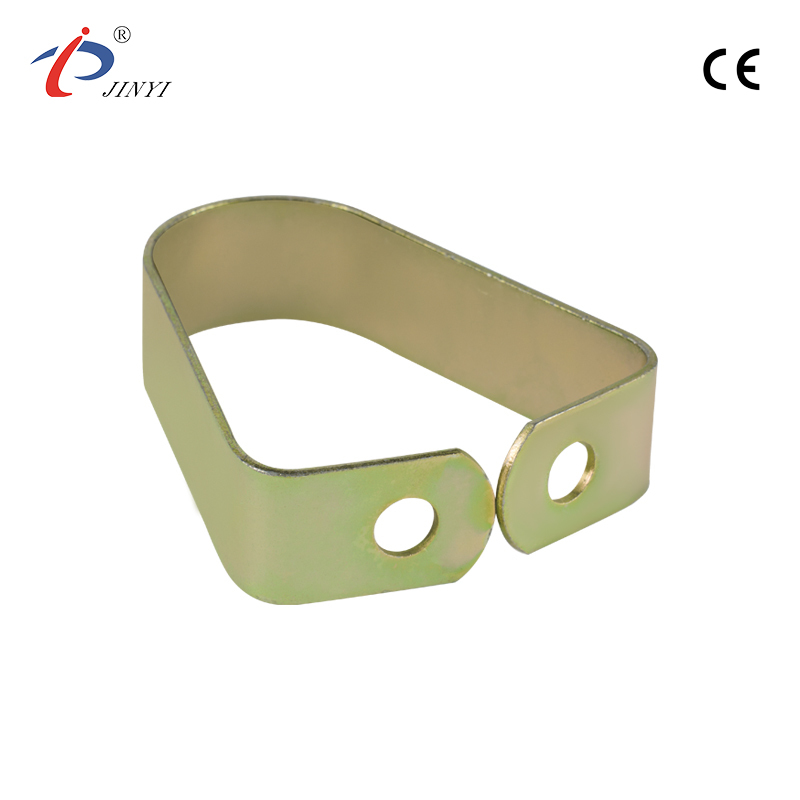
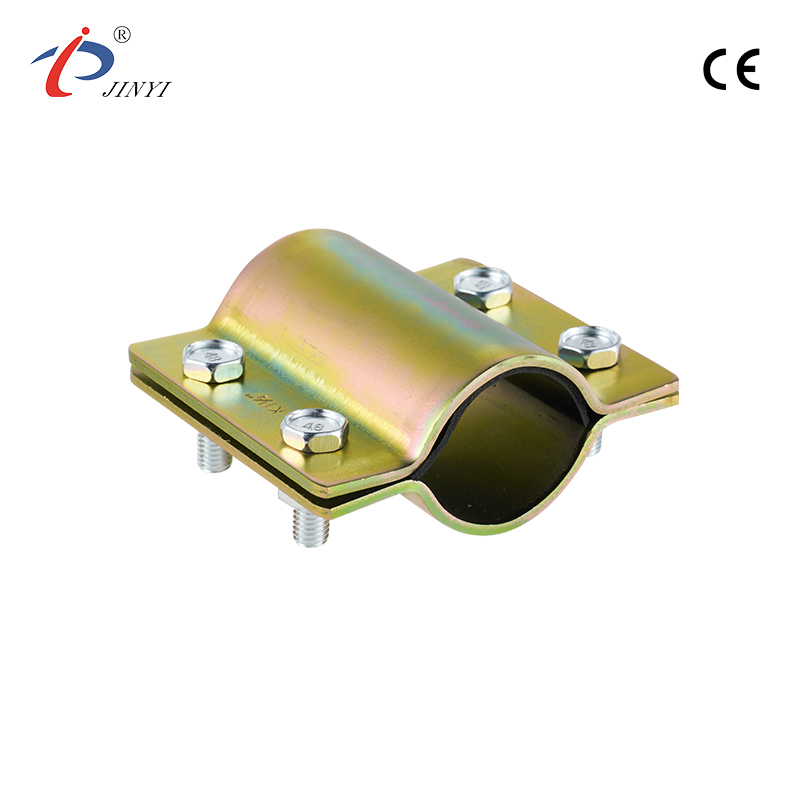
If you search suppliers, using HVAC Mounting Clamp as the part keyword gets clean matches; don't forget to cross-check for lined or split versions.
Checklist for the crew — what to do before sign-off
- Verify all specified clamps installed and torqued to spec.
- Check alignment and measure any deflection under static load.
- Re-torque after 30–90 days of operation.
- Document with photos and a brief log: part codes, torque values, and installation notes.
- Add supports where insulation or condensate could accumulate.
A one-page install log with photos saves hours when something goes wrong later.
Straight from the field
Support hardware is boring until it's not. The jobs that run quietly for years are the ones where someone paid attention to these details. If you want a single rule: design like you'll be back for maintenance. Pick durable parts where replacement is hard, use lined supports where noise or condensation is possible, and always plan for thermal movement.
And remember: a well-chosen and properly installed support is cheap insurance against call-backs. It's not glamorous. It pays.


- 210 Jinhai Avenue, Lupu Economic Development Zone, Yuhuan City, Taizhou City, Zhejiang Province.
- +86-576-87423248 / +86-576-87499120
- +86-17769979117 / +86-13750801289
- +86-576-87425996
- [email protected] / [email protected]

