


 русский
 Español
Are Multi-Zone Underfloor Heating Systems Properly Designed for Stable Water Circulation?
2026-11-27
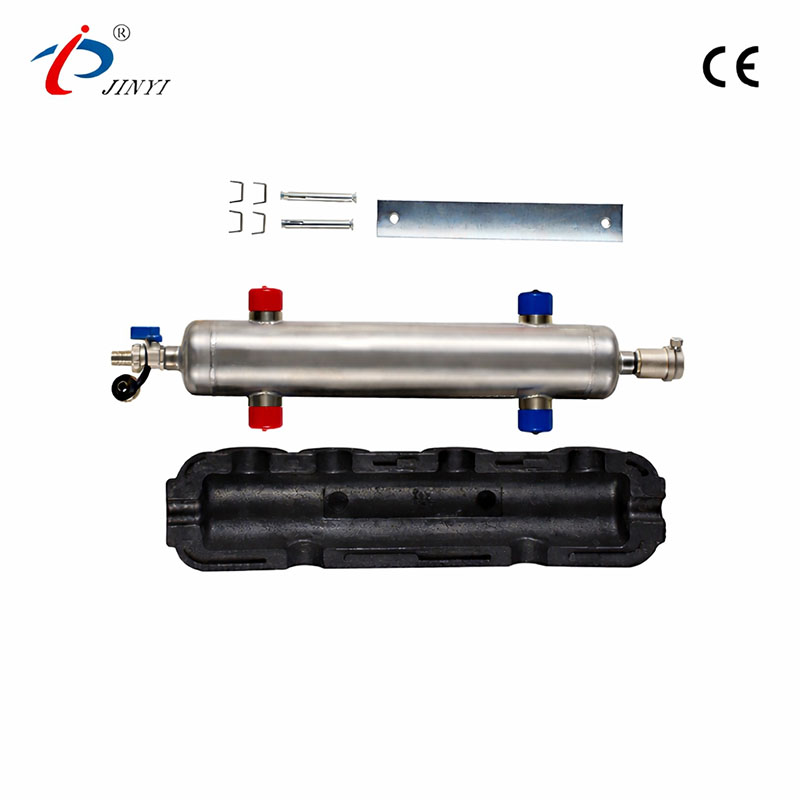
Underfloor heating systems are increasingly used in residential developments, commercial buildings, and energy-efficient renovation projects. Their ability to distribute heat across large floor areas makes them suitable for applications requiring consistent indoor temperatures. However, when a building contains multiple independently controlled heating zones, maintaining stable water circulation becomes more complicated. A Decoupling Tank can help address hydraulic interaction between different circuits, particularly when individual zones have changing flow requirements. For HVAC designers and contractors, understanding how this component fits into the overall system is essential for reliable installation.
Why Can Multi-Zone Floor Heating Create Circulation Problems?
Unlike a single-loop heating installation, a multi-zone system allows different rooms or building sections to operate independently. Each zone may have its own thermostat, manifold, control valve, or circulation requirements.
For example, a commercial building may require continuous heating in office areas while meeting rooms and storage spaces operate according to separate schedules. When several zone valves close, the total secondary-side flow rate decreases.
If the heat source continues operating under conditions that do not match the reduced demand, the system may experience:
- Changes in differential pressure across distribution circuits.
- Insufficient water circulation through certain heating zones.
- Unstable operating conditions for the heat source.
- Frequent equipment cycling when the active heating load becomes too small.
These challenges should be considered during the initial hydraulic design rather than addressed only after installation.
How Does Hydraulic Separation Improve Zone Control?
A Decoupling Tank provides a connection between the primary heat source circuit and the secondary distribution network. Its purpose is to reduce hydraulic interaction between circulation pumps operating on different sides of the system.
In a typical underfloor heating installation, the primary circuit supplies hot water from a heat pump or boiler, while secondary circuits distribute water through individual floor heating manifolds.
When zone valves open and close, secondary-side flow changes according to actual room demand. Hydraulic separation allows the primary circulation circuit to maintain its own operating conditions without being directly controlled by every change in the distribution network.
This arrangement can make multi-zone system design more flexible, especially in buildings with several independent heating areas.
What Happens When Only a Few Heating Zones Are Active?
Partial-load operation deserves particular attention in multi-zone installations. During mild weather, only a small number of rooms may require heating. The active heating load can therefore become significantly lower than the heat source's output.
In systems using fixed-output heat sources, this mismatch may cause the water temperature to rise quickly and trigger repeated shutdowns and restarts.
A correctly sized buffer tank can provide additional water volume to help reduce short cycling. When hydraulic separation is also required, an appropriately configured tank can serve both functions, depending on its design and piping arrangement.
For system designers, the distinction matters: hydraulic separation addresses circulation interaction, while additional thermal mass helps manage differences between heat generation and heat demand.
How Should Underfloor Heating Work with Other HVAC Equipment?
Modern buildings do not always rely on underfloor heating alone. Some installations combine radiant floor circuits with fan coil units, radiators, or air handling equipment.
These terminal devices may have different operating temperatures, flow rates, and control requirements. Connecting them without considering their hydraulic characteristics can complicate commissioning and temperature regulation.
A properly planned system should consider:
- Separate circulation requirements for different terminal circuits.
- Appropriate mixing arrangements where different supply temperatures are needed.
- Pump selection based on actual circuit resistance.
- Control coordination between thermostats, valves, and the heat source.
A Decoupling Tank can support the separation of primary and secondary circulation, while mixing valves and other control components manage temperature differences between individual heating circuits.
What Technical Details Matter When Purchasing a Decoupling Tank?
For contractors, distributors, and engineering procurement teams, product selection should be based on actual project conditions rather than tank appearance or nominal capacity alone.
Important considerations include:
- Flow capacity: Check the expected circulation rate and connection sizes.
- Working pressure: Confirm compatibility with the designed hydronic system pressure.
- Operating temperature: Ensure the materials and construction suit the heating or cooling application.
- Tank dimensions: Consider installation space, pipe routing, and maintenance access.
- Connection layout: Verify compatibility with the primary and secondary circuit arrangements.
- Additional water volume: Determine whether the project also requires thermal buffering.
Providing these specifications to the manufacturer helps establish a suitable product configuration before production begins.
Why Does Manufacturing Quality Matter for Long-Term Operation?
Hydronic equipment operates as part of a connected system, so product consistency is important for installation and maintenance. Tank material, welding quality, connection accuracy, surface protection, and pressure resistance all deserve attention during manufacturing and inspection.
As a Decoupling Tank manufacturer, we understand that different projects may involve different installation conditions and technical requirements. Evaluating connection positions, vessel dimensions, operating pressure, and application temperatures helps us discuss suitable configurations with HVAC contractors and equipment distributors.
Clear communication during the purchasing stage also helps reduce installation adjustments and improve compatibility with the overall piping design.
Designing More Adaptable Heating Systems
Multi-zone underfloor heating requires coordination between heat sources, circulation pumps, distribution manifolds, and room-level controls. When these components operate under changing demand, hydraulic separation can help maintain more independent circulation conditions.
Selecting an appropriate Decoupling Tank according to system flow, thermal requirements, and installation conditions gives project engineers another practical option for developing reliable hydronic heating networks.



- 210 Jinhai Avenue, Lupu Economic Development Zone, Yuhuan City, Taizhou City, Zhejiang Province.
- +86-576-87423248 / +86-576-87499120
- +86-17769979117 / +86-13750801289
- +86-576-87425996
- [email protected] / [email protected]

