


 русский
 Español
How Can a Decoupling Tank Improve Flow Stability in Modern Heat Pump Systems?
2026-11-13
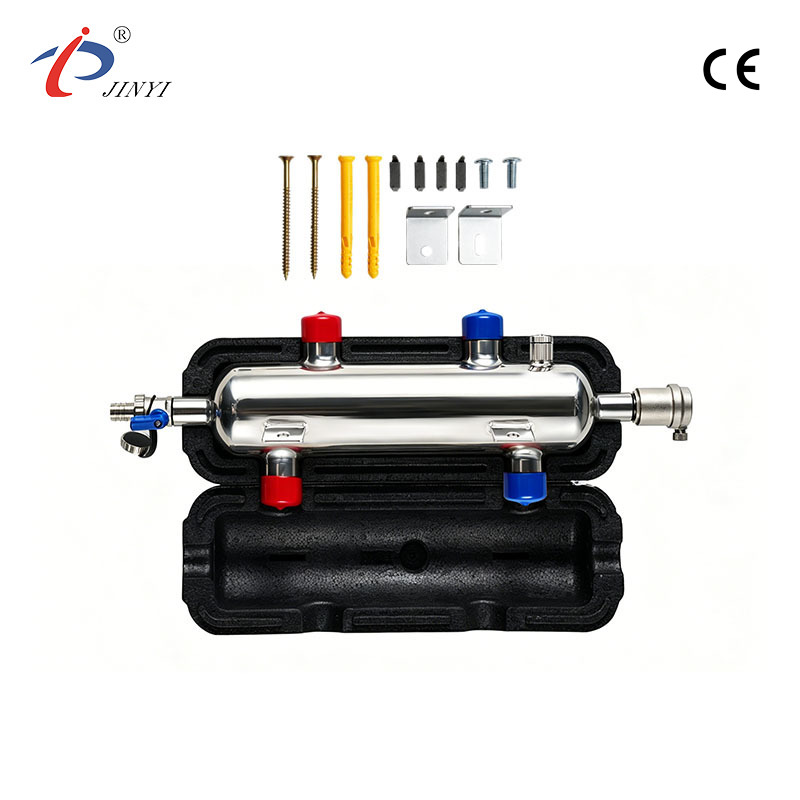
As air-to-water heat pumps become more widely considered for residential and commercial heating projects, system designers are paying closer attention to hydraulic performance. Unlike a simple single-loop installation, a system with multiple heating zones, fan coils, or underfloor heating circuits may experience frequent changes in water demand. These variations can affect equipment operation when the heat source and distribution circuits require different flow rates. A properly selected Decoupling Tank helps address this challenge by separating the primary and secondary circulation loops.
Why Do Heat Pump Systems Experience Flow Imbalances?
In a multi-zone hydronic system, individual thermostatic valves and zone controls open or close according to room temperature requirements. As a result, the flow demand on the distribution side can change throughout the day.
However, the heat pump may require a relatively stable minimum water flow to operate within its specified conditions. If the secondary circuit draws more or less water than the primary circuit supplies, the system may experience unstable circulation, temperature fluctuations, or equipment protection shutdowns.
This issue is particularly relevant in retrofit projects, where existing radiators, underfloor heating circuits, and newly installed heat pumps may have different hydraulic requirements.
How Does a Decoupling Tank Separate Two Circulation Loops?
A Decoupling Tank provides a hydraulic connection between the heat source circuit and the building distribution circuit while reducing the direct influence of one pump on the other.
The primary circuit can circulate water according to the heat pump manufacturer's requirements, while the secondary circuit operates according to the demand from terminal units. This arrangement gives engineers more flexibility when configuring pumps and control valves.
For example, a heat pump can maintain its required circulation even when several room heating zones temporarily reduce their flow demand. The tank also provides additional system water volume, depending on its design and connection arrangement.
What Should Engineers Consider When Selecting Tank Capacity?
Choosing a tank based only on its physical size can lead to an unsuitable system configuration. Engineers should evaluate several operating conditions before confirming specifications:
- Minimum equipment flow: Check the heat pump manufacturer's minimum and recommended water flow requirements.
- System water volume: Consider whether the total water content meets the equipment's minimum operating requirements.
- Primary and secondary flow rates: Evaluate the expected difference between the two circuits under different load conditions.
- Operating temperature: Confirm that the tank materials and connections are suitable for the heating or cooling application.
- Installation space: Check the available plant-room area, connection positions, and maintenance clearance.
These factors help buyers avoid selecting a tank that fits the installation space but does not support the intended hydraulic arrangement.
Why Does Tank Position Affect System Performance?
The installation position influences how water enters, leaves, and circulates through the tank. Poor connection arrangements may encourage unnecessary mixing between supply and return water, affecting the temperature delivered to the distribution circuit.
Engineers should therefore coordinate the tank location with pump positions, flow direction, piping layout, and temperature sensor placement. In systems using heat pumps with defrost cycles, the location of additional buffer volume also deserves attention because it can influence how temperature changes reach the building loads.
The final arrangement should follow the equipment manufacturer's application guidance and the system's hydraulic design rather than relying on a universal piping layout.
What Manufacturing Details Should Buyers Check?
For distributors, contractors, and equipment manufacturers, product selection also involves checking whether the tank is suitable for the intended project conditions. Important manufacturing considerations include:
- Material compatibility with the operating fluid and temperature range.
- Welding quality and inspection procedures.
- Connection dimensions and thread or flange compatibility.
- Pressure rating and relevant product documentation.
- Surface treatment and insulation requirements, where applicable.
Clear technical drawings and consistent dimensional control can also make installation and integration easier for contractors.
Can One Tank Design Suit Every Hydronic Application?
Not necessarily. Residential heat pump systems, commercial fan-coil networks, radiant floor heating, and larger plant-room installations may have different flow rates, water volumes, connection requirements, and control strategies.
A compact configuration may suit a small heating circuit, while a larger installation may require a different tank capacity and connection arrangement. Buyers should provide operating parameters and system drawings when requesting a quotation, allowing the manufacturer to evaluate the application more accurately.
A Practical Approach to Reliable Hydronic Integration
As heat pump adoption and building heating retrofits continue to bring new hydraulic design requirements, reliable flow management remains an important consideration. A well-matched Decoupling Tank can help separate circulation demands, support stable equipment operation, and simplify the integration of multiple heating zones.
Working with an experienced manufacturer and confirming the tank specifications against actual system conditions can help buyers make more informed decisions for their hydronic projects.



- 210 Jinhai Avenue, Lupu Economic Development Zone, Yuhuan City, Taizhou City, Zhejiang Province.
- +86-576-87423248 / +86-576-87499120
- +86-17769979117 / +86-13750801289
- +86-576-87425996
- [email protected] / [email protected]

