


 русский
 Español
How Does a Shower Tray Support Frame Improve Bathroom Installation and Stability
2026-05-11
Shower tray installation has gradually moved toward support systems that focus on steadiness, alignment, and easier on-site handling. In many bathroom projects, what sits underneath the tray matters just as much as the visible surface. A base that is uneven or poorly supported can affect how the tray sits, how it drains, and how it holds up over time.
Within that setting, the Shower Tray Support Frame has become a practical part of installation planning. It is not only there to carry weight. It also helps the tray stay in position, works with the floor condition, and supports the drainage layout. For installers and project planners, that makes the support structure one of the points worth checking early rather than late.
What is a Shower Tray Support Frame and how it changes modern shower installation methods
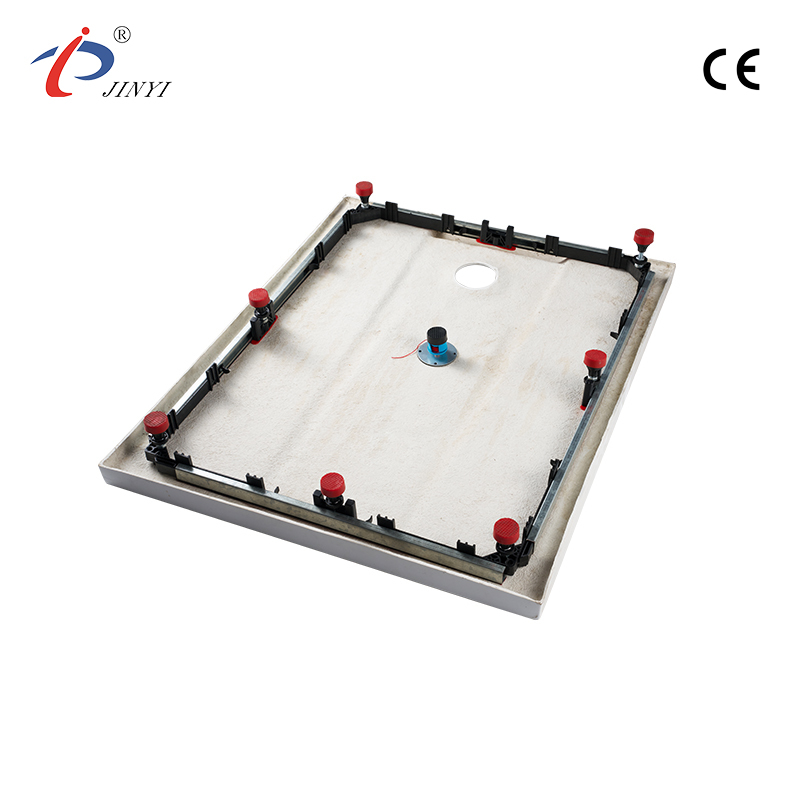
A Shower Tray Support Frame is a structural base placed under the shower tray to help hold it steady during installation and daily use. Instead of relying only on traditional bedding materials, it gives the tray a clearer structure to sit on. That can make the whole setup feel more controlled from the start.
In practice, the frame changes the way the tray is installed. The position is easier to manage, the height can be adjusted with more precision, and the tray is less dependent on manual shaping at the site. When the floor is not fully even, this kind of support can make the process smoother and reduce the back-and-forth that often comes with traditional base preparation.
Which material choices are commonly used in Shower Tray Support Frame production and what they affect
Different materials give the frame different behavior. Some are chosen for light handling and moisture resistance, while others are used when a firmer structure is needed. The material choice affects how the frame feels during installation, how it reacts to load, and how well it works with the rest of the bathroom build.
| Material Type | Practical Characteristic | Typical Effect |
|---|---|---|
| Polymer-based | Lightweight and moisture aware | Easier handling during installation |
| Metal-based | More rigid structure | Strong support behavior |
| Hybrid design | Balanced construction | Flexible fitting response |
What matters in real use is not just the material itself, but how it behaves once the tray is in place. A frame needs to stay stable, resist moisture exposure, and keep its shape under repeated use. That is why material choice often becomes part of the early discussion rather than an afterthought.
How drainage positioning helps reduce installation alignment issues
Drainage alignment is one of the parts that can create trouble if the setup is not handled carefully. Even a small shift in position can affect the way water moves through the tray. A support frame helps by keeping the tray steady while the drainage components are being connected.
- It reduces unwanted movement during setup
- It helps keep the tray level while the drain is aligned
- It gives room for small positioning changes before final fixing
- It lowers the chance of stress at the connection point
In real installation work, that kind of stability makes a difference. The tray is easier to place, the drainage parts are easier to line up, and the installer has a little more control before everything is secured.
Why adjustable legs in a Shower Tray Support Frame matter for different floor height conditions
Floor surfaces are not always as even as they should be. In renovation projects especially, the base may have slight height changes that are hard to ignore once the tray is in position. Adjustable legs help deal with that by giving the installer a way to fine tune the height at different points.
Instead of forcing the floor to match the tray, the frame can be adjusted to suit the floor conditions. That makes it easier to keep the tray level without extra correction work. When the surface has small irregularities, the frame can be brought into line step by step until the tray sits properly and feels stable.
| Condition | Frame Adjustment Response |
|---|---|
| Slight floor unevenness | Minor individual leg adjustment |
| Moderate level difference | Multi-point adjustment across frame |
| Irregular surface areas | Combined adjustment and repositioning |
A Shower Tray Support Frame is useful here because it gives a more practical way to handle real site conditions. It allows the installation to adapt without making the process overly complicated.
How weight distribution works on uneven bathroom floors during installation
In real installation conditions, floors are not always perfectly even, especially in renovation spaces where the original base has already aged or shifted slightly over time. When a tray is placed directly on such a surface, some areas may end up carrying more pressure than others. That uneven load is usually what leads to a feeling of instability when stepping into the shower area.
A Shower Tray Support Frame changes that contact pattern by spreading the load through multiple support points instead of relying on one continuous surface. The tray is held in a way that the weight is shared more evenly, even when the floor beneath has small variations. This does not eliminate the floor condition itself, but it helps the tray behave in a more controlled way once installed.
How Shower Tray Support Frame supports long term stability and reduces movement under daily use
After installation, a shower tray is exposed to repeated stepping, water exposure, and temperature changes. Over time, these conditions can cause slight movement if the base is not consistent. The issue is usually not obvious at the beginning, but it can show up later as minor shifting or a less solid feel underfoot.
A Shower Tray Support Frame helps reduce that tendency by keeping the tray supported across a fixed structure rather than a single bedding layer. Because the support points are defined, the tray tends to stay in position more consistently during daily use. In practice, this means the installation feels more settled over time, with less gradual loosening of position.
What installation steps are involved in bathroom renovation projects
In renovation work, the installation process often has to adapt to existing conditions rather than ideal ones. The frame is usually placed first so that the installer can work from a stable reference point. Once positioned, small adjustments are made until the frame sits evenly relative to the floor condition.
After that, the tray is carefully placed on top and checked for alignment. Drainage connection is completed while the position is still adjustable, which allows minor corrections before everything is fixed in place. The process is generally more controlled because the support structure gives a clearer base to work from, even when the original floor is not fully predictable.
How Shower Tray Support Frame compares with traditional bedding methods in installation efficiency and structure behavior
Traditional bedding methods rely on forming a base layer directly on the floor and shaping it manually before the tray is installed. That approach depends heavily on how evenly the material is applied and how well it sets in place. Small differences in application can lead to variations in tray positioning.
A frame-based system works differently because the support structure is already defined before the tray is placed. Instead of shaping material on site, the installer adjusts the frame and then fits the tray onto it.
| Aspect | Frame-based support | Traditional bedding approach |
|---|---|---|
| Base formation | Pre-structured support points | Manually shaped base layer |
| Adjustment process | Controlled mechanical leveling | Dependent on material handling |
| Installation behavior | More consistent positioning | Varies with site conditions |
| On-site flexibility | Easier to adapt to uneven floors | Requires more correction work |
In practical use, a Shower Tray Support Frame tends to reduce the amount of rework caused by uneven surfaces, while traditional methods rely more on achieving accuracy during the initial base formation stage.




- 210 Jinhai Avenue, Lupu Economic Development Zone, Yuhuan City, Taizhou City, Zhejiang Province.
- +86-576-87423248 / +86-576-87499120
- +86-17769979117 / +86-13750801289
- +86-576-87425996
- [email protected] / [email protected]

