


 русский
 Español
When Can a Better Manifold Bracket Make Installation More Efficient?
2026-09-11
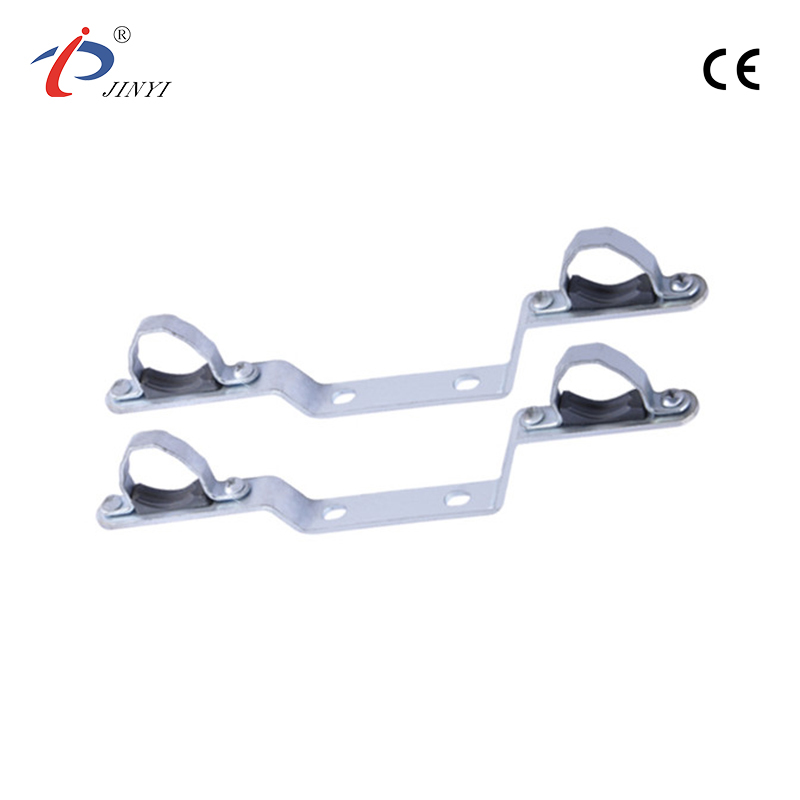
Hydronic manifold installation often involves more than connecting supply and return pipes. Installers also need to position the manifold correctly, secure it against the mounting surface, maintain access to valves and flow controls, and leave enough room for pipe connections. A well-designed Manifold Bracket can simplify these steps by creating a stable mounting point and making the manifold easier to position during installation.
The Installation Sequence Starts With Positioning
Before connecting multiple circuits, installers need to determine where the manifold will sit. The selected location affects pipe routing, cabinet space, accessibility, and the final appearance of the installation.
A dedicated bracket gives the installer a defined mounting position instead of requiring the manifold to be supported through surrounding pipework. This can make the initial layout easier to control, particularly when several circuits need to be connected in a compact area.
Stable Mounting Reduces Unnecessary Adjustment
A manifold carries several connections and control components, so its mounting arrangement needs to provide adequate support for the intended installation. If the assembly shifts during connection work, installers may need to repeatedly adjust pipe alignment or mounting positions.
A properly matched bracket helps keep the manifold stable while the individual circuits are connected. Current radiant manifold systems commonly include or use dedicated mounting brackets as part of the installation arrangement, reflecting the importance of secure positioning in practical hydronic work.
Clearance Should Be Designed Into the Bracket
A bracket does more than hold a manifold against a wall. Its shape and offset can influence the space available around the assembly.
For installers, useful clearance can make it easier to connect tubing, operate valves, read flow meters, and carry out future adjustments. When developing a manifold mounting solution, manufacturers should therefore consider the complete installation rather than focusing only on the fixing points.
Important considerations may include:
- Distance between the manifold and mounting surface
- Clearance around valves and flow meters
- Space required for pipe connections
- Access for tightening mounting hardware
- Position of adjacent pipework
- Available cabinet or wall space
Different Manifolds May Need Different Brackets
Manifolds vary in length, loop quantity, connection arrangement, and overall construction. A bracket designed around one configuration may not provide the same installation flexibility for another.
This is particularly relevant for distributors handling several manifold models. Instead of treating the bracket as a generic accessory, buyers can evaluate whether its dimensions and mounting points correspond with the actual manifold range they intend to supply.
For OEM projects, manufacturers can also review drawings and develop bracket configurations around specific manifold dimensions.
Preassembled Solutions Can Simplify Site Work
Some suppliers now offer manifolds that are already mounted on brackets, reducing the number of separate installation steps required on site. This approach can be useful where contractors want a more predictable installation sequence and fewer loose components to organize.
However, preassembly still needs to match the project. The manifold configuration, bracket position, connection direction, and available installation space should be reviewed before purchasing. A preassembled product is most useful when its configuration corresponds closely with the intended application.
Customization Helps With Difficult Installation Spaces
Standard brackets work well for common applications, but project conditions are not always standard. A manifold may need to fit inside a narrow cabinet, align with a specific wall structure, or accommodate a particular pipe-routing arrangement.
This is where custom manifold bracket manufacturing can provide additional flexibility. Depending on the production capability of the supplier, dimensions, mounting holes, offsets, material, or surface treatment can be adapted to meet project requirements.
For procurement teams, discussing these requirements before mass production can reduce the need for on-site modifications.
Manufacturing Accuracy Matters During Installation
Installation efficiency ultimately depends on whether the bracket produced in the factory matches the approved design. Mounting holes, bends, dimensions, and connection clearances need to remain consistent across production batches.
As a manufacturer, we understand that a bracket is part of a larger hydronic assembly rather than an isolated metal component. Consistent production allows installers to work with predictable mounting positions, while OEM buyers can maintain the same specifications across repeat orders.
A Small Component With a Practical Installation Role
A manifold mounting system should support the complete installation process, from initial positioning to final pipe connection and future maintenance. When stability, clearance, compatibility, and manufacturing consistency are considered together, a Manifold Bracket can help contractors create cleaner and more manageable hydronic installations. For overseas distributors and project buyers, working with a manufacturer capable of supplying both standard and application-specific Manifold Bracket solutions can make product selection easier while supporting more efficient installation across different project environments.


- 210 Jinhai Avenue, Lupu Economic Development Zone, Yuhuan City, Taizhou City, Zhejiang Province.
- +86-576-87423248 / +86-576-87499120
- +86-17769979117 / +86-13750801289
- +86-576-87425996
- [email protected] / [email protected]

