


 русский
 Español
What Should Engineers Check Before Ordering a Manifold Bracket?
2026-09-18
A Manifold Bracket may be a relatively small component in a hydronic system, but choosing the wrong specification can create compatibility and assembly problems later in the project. For engineers, distributors, and purchasing teams, the key is to evaluate more than the basic bracket shape. Manifold dimensions, mounting interfaces, material, available space, and production requirements should all be considered before placing an order.
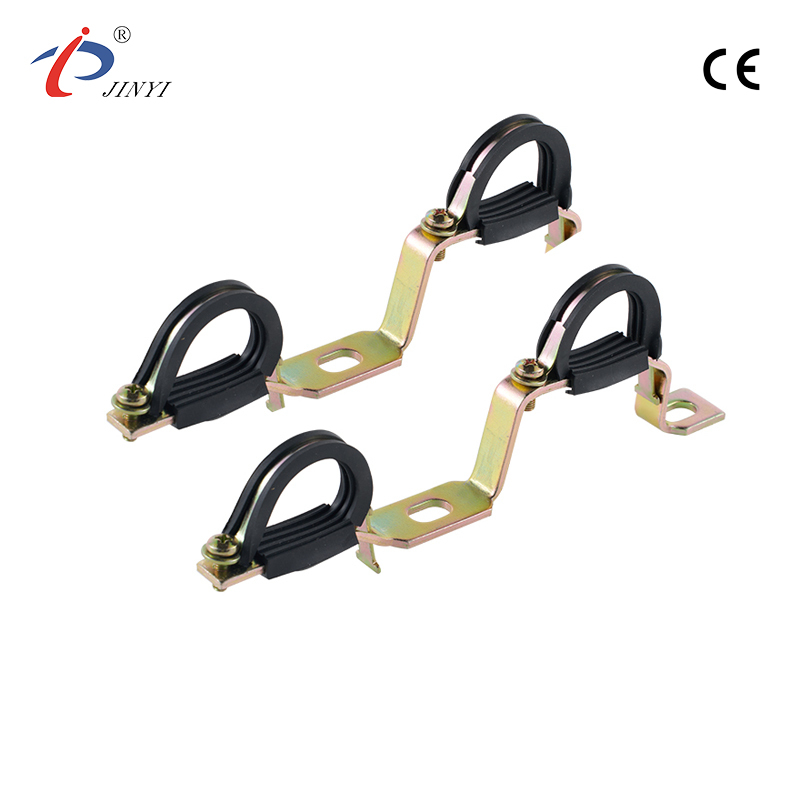
Confirm the Manifold Interface
Compatibility should be the first item on the purchasing checklist. Different manifold products can have different mounting points, diameters, connection layouts, and support requirements. For example, manufacturers offer dedicated brackets for particular manifold families, while some products are designed as universal solutions for specific manifold sizes.
Before requesting a quotation, buyers should confirm:
- Manifold diameter and overall dimensions
- Mounting-hole position and spacing
- Required number of brackets
- Bracket-to-manifold connection method
- Required offset or clearance
Providing these details helps the manufacturer evaluate compatibility before production begins.
Evaluate Material Requirements
Material selection should reflect the application environment and expected service conditions. Current manifold bracket products are available in different materials, including metal and polymer designs. Uponor specifies durable metal for several of its manifold mounting brackets, while Watts uses a flexible high-temperature polymer for certain copper manifold applications.
For OEM projects, buyers may also need to define surface treatment, corrosion protection, appearance, and material documentation. A clear specification makes it easier for the manufacturer to recommend a suitable production solution.
Engineers should therefore review:
- Overall bracket height and width
- Mounting-hole dimensions
- Distance from the supporting surface
- Available clearance around valves and connections
- Space limitations inside cabinets or service areas
These details become particularly important when the bracket is being developed for a specific manifold assembly.
Consider Standard or Custom Production
Not every project needs a completely customized bracket. Standard products can be suitable when the manifold and mounting environment already match an established design. Custom development becomes more relevant when buyers require a particular hole pattern, unusual offset, different material, or integration with an existing assembly.
For manufacturers, the goal is to determine whether an existing structure can satisfy the application or whether a modified design would provide a better fit without adding unnecessary production complexity.
Check Manufacturing and Quality Requirements
For repeated B2B orders, purchasing teams should consider how consistently the bracket can be produced. Drawings should clearly define critical dimensions, material, surface treatment, tolerances, and inspection requirements.
A professional Manifold Bracket manufacturer can also support sample development before mass production. This gives engineers an opportunity to verify the mounting interface and physical fit before committing to a larger production quantity.
Build a Clear Sourcing Specification
A well-prepared specification reduces communication gaps between engineering and purchasing teams. Instead of sending only a product name or photograph, buyers can provide manifold drawings, dimensions, mounting requirements, material preferences, expected quantities, and application information.
This approach is especially useful for overseas OEM and private-label projects, where design changes can take longer to coordinate. A clear technical brief allows the manufacturer to assess the project more efficiently and propose a bracket that matches the actual application.
For procurement teams, the right Manifold Bracket is not simply the one with the lowest unit price. Compatibility, material, geometry, manufacturing consistency, and documentation all contribute to the overall sourcing decision. Defining these requirements before ordering can make supplier communication clearer and create a more reliable foundation for long-term purchasing.


- 210 Jinhai Avenue, Lupu Economic Development Zone, Yuhuan City, Taizhou City, Zhejiang Province.
- +86-576-87423248 / +86-576-87499120
- +86-17769979117 / +86-13750801289
- +86-576-87425996
- [email protected] / [email protected]

