


 русский
 Español
Why Is Choosing the Right Wholesale Floor Drain So Important for Different Building Projects
2026-05-15
Picking a drainage part is rarely just a size match. In real projects, the floor layout, daily water use, and cleaning habits all affect how well the system works. A suitable Wholesale Floor Drain can help reduce slow drainage, keep maintenance simpler, and avoid small issues turning into repeated trouble.
Different spaces ask for different things. A bathroom may need quiet, steady flow. A kitchen may deal with more residue and faster use. A basement may have its own moisture pattern. That is why the choice should follow the space itself, not just the product appearance.
When the drain fits the project from the start, installation feels smoother and later adjustments are less likely. That is often where practical value shows up.
What Should Be Considered When Selecting a Wholesale Floor Drain for Different Building Environments
Every building area works in its own way. A drain used in a home restroom will not face the same conditions as one used in a hotel corridor or a commercial wash area. For that reason, the surrounding environment should guide the selection first.
A few points usually deserve attention:
- How often water reaches the floor area
- Whether the space is cleaned often
- How much space is available under the floor
- Whether odor control matters in daily use
- How easy it is to reach the drain for cleaning
A Wholesale Floor Drain that suits a dry guest area may not feel right in a busy service zone. The more active the space, the more attention should go to flow, access, and upkeep. In quieter areas, compact design and simple installation may matter more.
The right match is usually the one that works with the room instead of asking the room to adapt around it.
How Does Floor Drain Structure Influence Water Flow Performance in Daily Use Systems
The internal shape of a drain affects the way water moves through it. If the path is too tight or has awkward turns, water may slow down and small debris can settle more easily. A smoother path often gives the water a clearer way out.
Surface opening design also plays a role. Wider openings can help water enter more freely, while a more controlled structure may be useful where hair or small particles are a concern. The point is not to make every opening larger. The point is to make the design fit the real use case.
Some parts that often change the result include:
- The shape of the inner passage
- The way the cover sits on the body
- Whether the core can be removed for cleaning
- How well the outlet lines up with the floor pipe
In a Wholesale Floor Drain, structure is not just a technical detail. It can shape how the drain behaves after daily use starts, which is where many product differences become clear.
Which Materials Are Commonly Used in Wholesale Floor Drain Production and How They Perform in Moist or Corrosive Conditions
Material choice affects how a drain holds up over time. Moist spaces, regular cleaning, and contact with mild cleaning agents can all change how a product ages. Some materials stay steady in these settings, while others are chosen more for light weight or easy handling.
| Material type | General use feeling | Practical notes |
|---|---|---|
| Metal-based body | Firm and stable | Often chosen for regular wet use |
| Polymer-based body | Light and easy to handle | Can suit simple installation needs |
| Mixed material build | Balanced feel | Depends on the actual blend |
For a Wholesale Floor Drain, the material should match the room’s condition and the cleaning routine, not only the budget. A space that stays damp for long periods may need a more stable surface and a body that handles moisture well. A lighter solution may work in places where handling and replacement are simpler concerns.
The more closely the material fits the setting, the more natural the product tends to feel in use.
Why Do Some Floor Drains Reduce Odor More Effectively in Low Water Flow Conditions
Odor control often depends on how well the drain keeps a barrier between indoor space and the pipe system. In areas where water flows frequently, that barrier is naturally refreshed and stays more stable. In places with lighter or occasional use, the situation is different, and the sealing condition can gradually become less consistent if the structure is not designed for it.
This is why sealing methods can behave differently in real use. Some rely on a water layer that needs regular replenishment. Others use a mechanical closing structure that reacts when there is no flow. Each approach responds in its own way depending on how often the space is used and how stable the surrounding conditions are.
Odor performance is usually influenced by several practical factors working together, such as how stable the sealing element remains over time, how often fresh water passes through the system, whether air pressure in the space changes during daily use, and whether small residues collect near the opening. None of these works alone, but together they shape the overall result.
A Wholesale Floor Drain used in low flow environments needs to account for these conditions. In quieter spaces, the behavior of the drain is less about constant water movement and more about how well the structure maintains balance when there is little activity.
How Does a Dry Seal Floor Drain Compare With a Water Seal Structure in Practical Applications
Drainage systems usually rely on a separation layer between indoor air and the pipe network below. The way this separation is maintained can differ depending on structure, and in real use, the difference becomes more noticeable in spaces with uneven water usage.
A water seal structure depends on a retained water layer. When that layer stays stable, it forms a simple barrier. In practice, this works better in places where water flows regularly, since the water level is naturally refreshed.
A dry seal structure behaves differently. Instead of relying on stored water, it uses a mechanical closure that reacts when water is not flowing. When the system is idle, it returns to a closed state, which makes it less dependent on usage frequency.
In actual projects, the choice is often shaped by daily conditions rather than theory alone. A Wholesale Floor Drain may use either structure depending on how the space is used and how often maintenance can be expected.
What Design Features Help Reduce Clogging in High Traffic Spaces Like Kitchens and Hotels
In busy areas, drainage systems rarely deal with clean water alone. Small particles, grease residue, and frequent flow changes all influence how easily the system stays open over time. Because of that, internal design details become more noticeable during long-term use.
Some design choices that often help reduce clogging include:
- A removable inner section that allows direct cleaning access
- A wider internal passage that reduces early blockage points
- A surface opening layout that slows down debris entry before deeper flow
- A structure that avoids sharp internal corners where residue tends to settle
Beyond structure, daily use conditions also matter. In kitchens or hotel service areas, cleaning routines are usually frequent but not always immediate, so the system needs to tolerate short periods of buildup without losing function.
A Wholesale Floor Drain used in these environments is not only judged by how it works on installation day, but more by how it behaves after repeated cycles of use and cleaning.
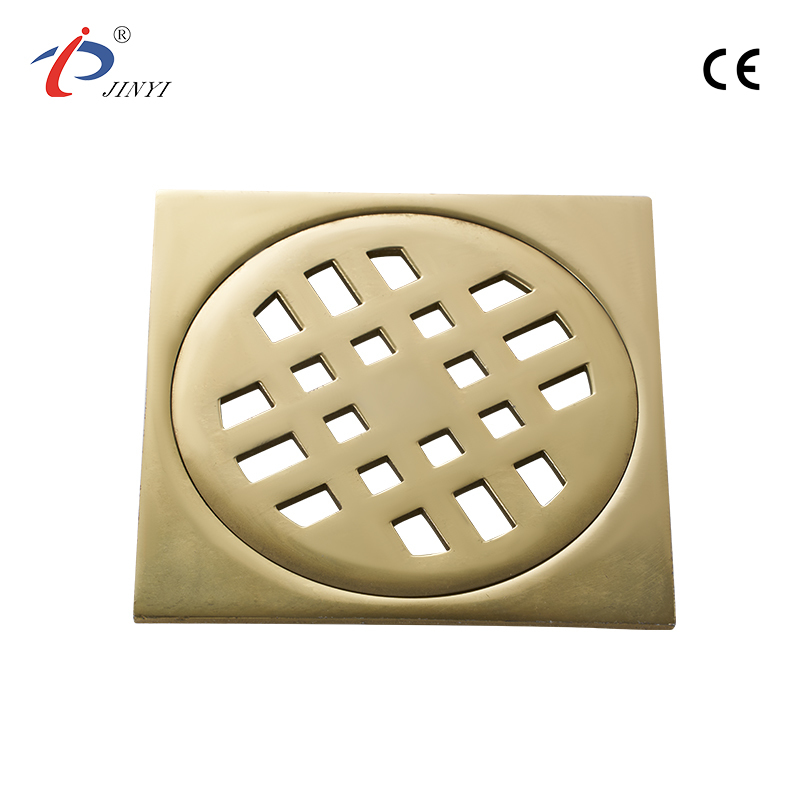
How Can Wholesale Buyers Evaluate Floor Drain Durability for Long Term Project Planning
Durability is not always visible at first glance. In project planning, it is usually closer to how the product behaves after repeated exposure to water, cleaning agents, and physical handling during maintenance.
Instead of focusing on appearance alone, buyers often look at how stable the structure remains after repeated use. Parts that stay aligned and do not loosen easily tend to support more consistent performance.
A few practical points often used in evaluation:
- Whether removable parts stay stable after repeated installation and removal
- Whether surface condition changes noticeably after regular cleaning
- Whether internal structure keeps its alignment under continuous use
- Whether water flow remains steady after extended use cycles
| Practical check | What it usually reveals |
|---|---|
| Reassembly behavior | Ease of maintenance over time |
| Surface response | Resistance to routine cleaning wear |
| Structural fit | Long term stability of components |
| Flow consistency | Overall system behavior in daily use |
A Wholesale Floor Drain for long term planning is often selected based on these practical signals rather than only technical descriptions.
Which Installation Details Have the Most Impact on Floor Drain Sealing and Leakage Prevention
Installation quality often affects drainage performance just as much as product design. Even a well structured unit can show weak points if the surrounding setup is not handled carefully.
One key area is the contact between the drain body and the floor surface. If the connection is not even or tightly supported, small gaps can form over time, especially after repeated water exposure.
Another important factor is pipe alignment. When the outlet does not match the drainage pipe direction properly, water flow may become uneven, which can gradually affect sealing stability.
Waterproof layer handling is also critical. If the membrane is not properly integrated with the drain edge, moisture can slowly move into surrounding layers, particularly in areas with frequent washing or rinsing.
In practical installation work, a Wholesale Floor Drain depends heavily on how these small but important details are managed on site. The product design provides the base, but the final performance is often shaped during installation.


- 210 Jinhai Avenue, Lupu Economic Development Zone, Yuhuan City, Taizhou City, Zhejiang Province.
- +86-576-87423248 / +86-576-87499120
- +86-17769979117 / +86-13750801289
- +86-576-87425996
- [email protected] / [email protected]

