


 русский
 Español
Can a Standardized Manifold Bracket Strategy Simplify Hydronic Product Sourcing?
2026-09-25
For distributors, system integrators, and hydronic equipment brands, managing several manifold configurations can make component sourcing more complicated than expected. A Manifold Bracket is closely connected to the manifold design, mounting method, and overall assembly, so adding too many bracket variations can increase SKU pressure and make repeat purchasing harder. A more structured sourcing strategy can help buyers balance product compatibility, customization, and inventory control.
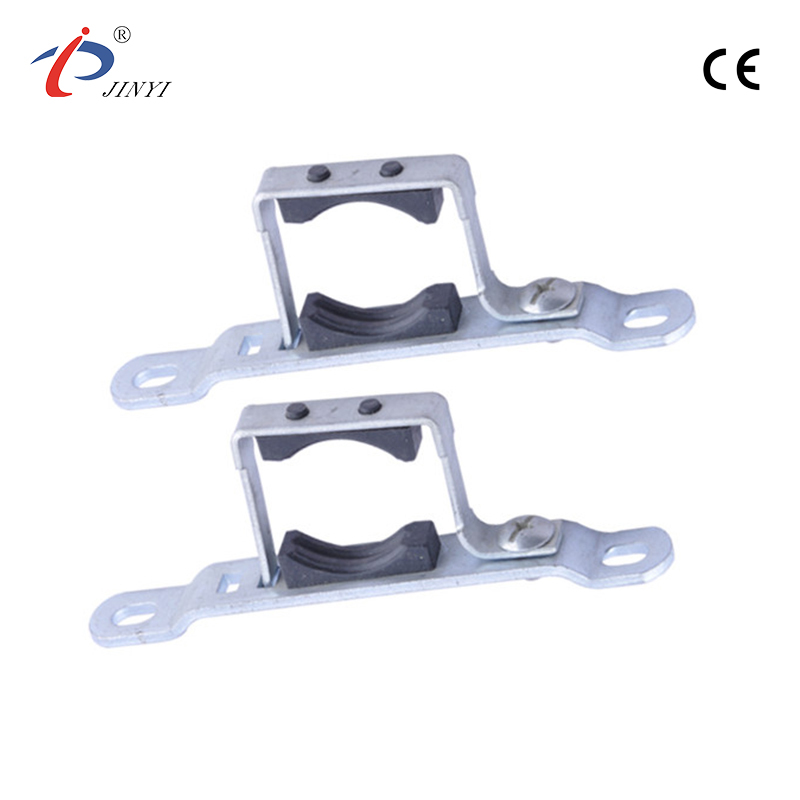
Different Manifolds Create Different Sourcing Needs
Hydronic manufacturers do not always use one universal manifold configuration. Products can vary by loop quantity, body design, mounting interface, and application. These differences can create different requirements for supporting hardware, making bracket compatibility an important consideration for distributors and system integrators.
For distributors handling multiple product families, this creates a practical question: should every manifold configuration have its own bracket, or can some products share a common mounting solution?
The answer depends on actual dimensions, connection points, load requirements, and installation conditions.
Where Standardization Makes Sense
Standardization can be useful when several manifold models have similar mounting requirements. Instead of developing a completely different bracket for every product, an engineering team can evaluate whether selected dimensions or mounting features can be shared.
Potential benefits include:
- Fewer component numbers to manage
- Easier quotation and purchasing processes
- Simpler production planning
- More consistent replacement-part management
- Easier communication between engineering and purchasing teams
However, standardization should be based on verified compatibility rather than simply using one bracket for every application.
Customization Has Its Own Value
A customized Manifold Bracket becomes more relevant when a standard product cannot meet the requirements of a particular manifold or installation system. Customization may involve mounting-hole patterns, bracket dimensions, offsets, material, surface treatment, or the way the bracket connects to the manifold.
For OEM customers, this can be especially useful when the bracket forms part of a private-label manifold assembly. The manufacturer can develop the component around the buyer's existing product structure instead of forcing the assembly to follow a generic bracket design.
Think Beyond the Bracket Itself
The bracket should also be considered as part of the complete manifold package. In some hydronic product designs, mounting hardware is supplied together with the manifold or developed specifically for a particular cabinet or mounting arrangement. This means the bracket can influence how the complete assembly is packaged, installed, and maintained.
For purchasing teams, several questions are worth clarifying:
- Is the bracket supplied separately or with the manifold?
- Does each manifold size require a different bracket?
- Can replacement brackets be ordered independently?
- Does the bracket need to fit a cabinet or panel system?
- Should the bracket carry its own part number?
Clarifying these points early can prevent confusion when products move from development to regular purchasing.
Reduce Unnecessary SKU Complexity
Too many similar components can create problems throughout the supply chain. Purchasing teams have to track more part numbers, distributors need to maintain more inventory, and production departments have to control more individual components.
A manufacturer with sheet-metal forming, stamping, bending, welding, and surface-treatment capabilities can evaluate whether selected bracket features can be shared across a product family. The objective is not to eliminate customization, but to identify where common manufacturing processes and dimensions can be used without compromising the required fit.
Support Future Product Development
A good bracket strategy should leave room for product expansion. If a hydronic brand plans to introduce additional manifold sizes or configurations, designing the mounting system with future compatibility in mind may reduce development work later.
This is where communication between the buyer and manufacturer becomes important. Sharing product drawings, existing specifications, target applications, and expected order structures allows the manufacturer to consider both current requirements and potential future variants.
Build a More Flexible Supply Model
For overseas buyers, a reliable Manifold Bracket sourcing strategy is not simply about finding the lowest-cost component. It involves deciding where standardization is practical, where customization creates value, and how both approaches affect inventory and repeat production.
By combining standardized bracket platforms with controlled customization, manufacturers can support different manifold configurations while helping distributors and OEM customers keep their product systems easier to manage. This approach can make Manifold Bracket sourcing more flexible without adding unnecessary complexity to the supply chain.


- 210 Jinhai Avenue, Lupu Economic Development Zone, Yuhuan City, Taizhou City, Zhejiang Province.
- +86-576-87423248 / +86-576-87499120
- +86-17769979117 / +86-13750801289
- +86-576-87425996
- [email protected] / [email protected]

