


 русский
 Español
-
What Challenges Do HVAC Distributors Face When Sourcing Aluminum Radiator Brackets for Global Markets?

Jul 31, 2026
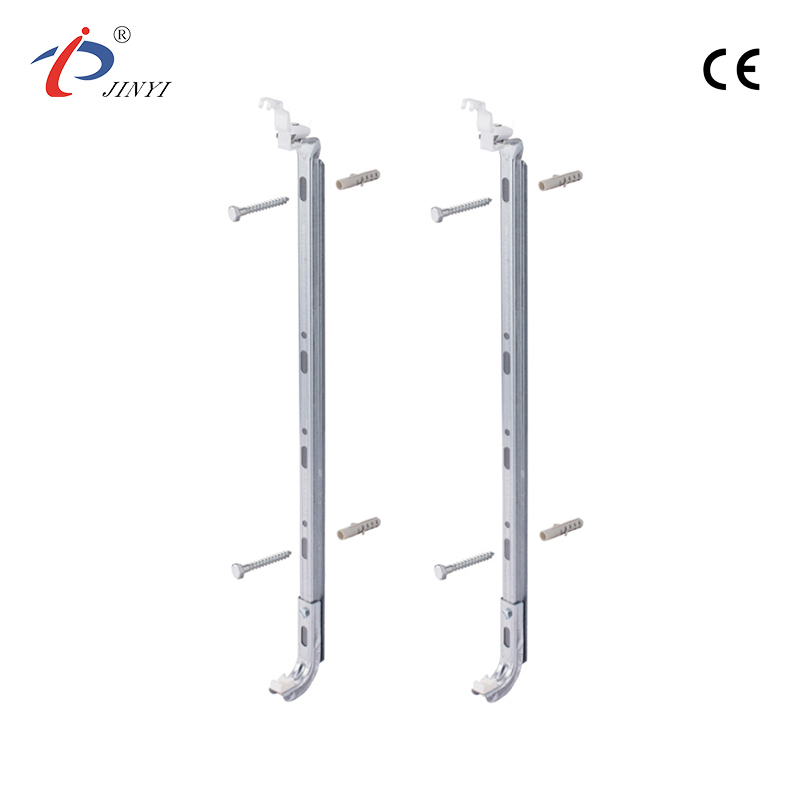
The development of modern heating systems has increased expectations for every supporting component, including radiator mounting accessories. For HVAC distributors, engineering contractors, and building material suppliers, a radiator bracket is not simply a fixing part but an important element that affects installation efficiency, product reliability, and customer experience. As global buyers look for stronger supply chain partnerships and more adaptable hardware solutions, companies searching for aluminum radiator bracket in China are paying closer attention to product design, manufacturing processes, and supplier capabilities.
Why Are Installation Problems Often Related to Small Hardware Components?
In many heating projects, the focus is usually placed on radiator performance and energy efficiency, while supporting accessories receive less attention. However, brackets directly influence how securely and accurately a radiator is installed.
Common challenges faced by installers include:
- Difficulty achieving accurate positioning during installation
- Inconsistent product quality between different batches
- Limited compatibility with various radiator models
- Increased labor time caused by unsuitable mounting structures
These problems can affect project schedules and increase communication costs between suppliers, contractors, and end users. Selecting a professionally designed bracket solution helps create a smoother installation process and improves overall system reliability.
How Does Aluminum Material Improve Radiator Bracket Performance?
Material selection is one of the most important factors considered by professional buyers. Aluminum has become increasingly popular in hardware applications because it provides a practical combination of lightweight construction and functional durability.
For radiator bracket applications, aluminum offers benefits such as:
- Reduced component weight for easier transportation and handling
- Good resistance to corrosion in indoor environments
- Flexible processing possibilities for different designs
- A clean appearance suitable for modern interior applications
With proper manufacturing control, aluminum components can provide stable support while meeting the requirements of different heating system projects.
What Should Procurement Teams Evaluate Before Choosing a Supplier?
For overseas buyers, finding a suitable aluminum radiator bracket supplier requires more than checking product catalogs. A reliable supplier should understand engineering requirements and provide consistent production support.
Important evaluation points include:
Production capability:
Manufacturers should have suitable equipment and processes to handle both standard orders and customized requirements.
Quality management:
Stable inspection procedures help maintain product consistency and reduce unexpected issues during installation.
Technical communication:
Professional suppliers should be able to discuss design details, application conditions, and improvement suggestions.
Export experience:
Understanding international packaging, documentation, and customer requirements can make cooperation more efficient.
How Can Custom Manufacturing Support Different Market Needs?
Different countries and regions may have different preferences for radiator systems, installation methods, and product specifications. Standard products may not always meet every application requirement.
At Yuhuan JINYI Hardware Co., Ltd., we focus on providing flexible hardware manufacturing solutions based on customer needs. Our team supports product development from design discussion to production, helping customers achieve better compatibility between brackets and radiator systems.
Customized services may include:
- Adjusting bracket structures for different radiator types
- Developing specific dimensions based on technical drawings
- Selecting suitable surface treatments
- Supporting customized packaging for distributors
This approach allows international partners to build product solutions that better match their local markets.
Why Is Supplier Manufacturing Background Important for Long-Term Cooperation?
For many HVAC companies, supplier selection is part of a broader business strategy. A manufacturer with long-term experience can provide more stable cooperation, especially when customers require continuous supply and product improvement.
Yuhuan JINYI Hardware Co., Ltd. is a comprehensive hardware manufacturer established in 1995 and located in Yuhuan. The company specializes in the design, development, production, and sales of high-quality hardware products. Supported by advanced production equipment, scientific management, and skilled technical professionals, the company provides products that meet international standards and are well received in markets such as Europe.
This manufacturing foundation enables the company to support different customer requirements while maintaining reliable production efficiency.
What Future Trends Are Influencing Radiator Accessory Development?
The HVAC industry continues to move toward more efficient installation methods, improved material utilization, and better product adaptability. As construction projects become more focused on quality and sustainability, supporting components such as radiator brackets are also receiving greater attention.
Future buyers will likely continue to prioritize suppliers that can combine material expertise, manufacturing flexibility, and responsive service. Hardware components that improve installation convenience and system stability will remain valuable for global heating projects.
For distributors, contractors, and engineering companies seeking a dependable aluminum radiator bracket in China, choosing an experienced manufacturer can help reduce sourcing risks and improve project outcomes. Yuhuan JINYI Hardware Co., Ltd. continues to provide professional hardware solutions through reliable production processes, customized support, and a commitment to meeting international customer expectations.
-
Why Decoupling Tanks Are Becoming a Regular Wholesale Line Item
Jul 29, 2026
Distributors stocking HVAC and plumbing hardware are seeing steadier repeat orders for decoupling tanks as multi-zone heating and hydronic cooling installations become standard in both new-build and renovation projects. Unlike seasonal items, demand for hydraulic separators tracks commercial construction and boiler-replacement cycles, which makes it a comparatively stable SKU to add to a plumbing or HVAC hardware catalogue.
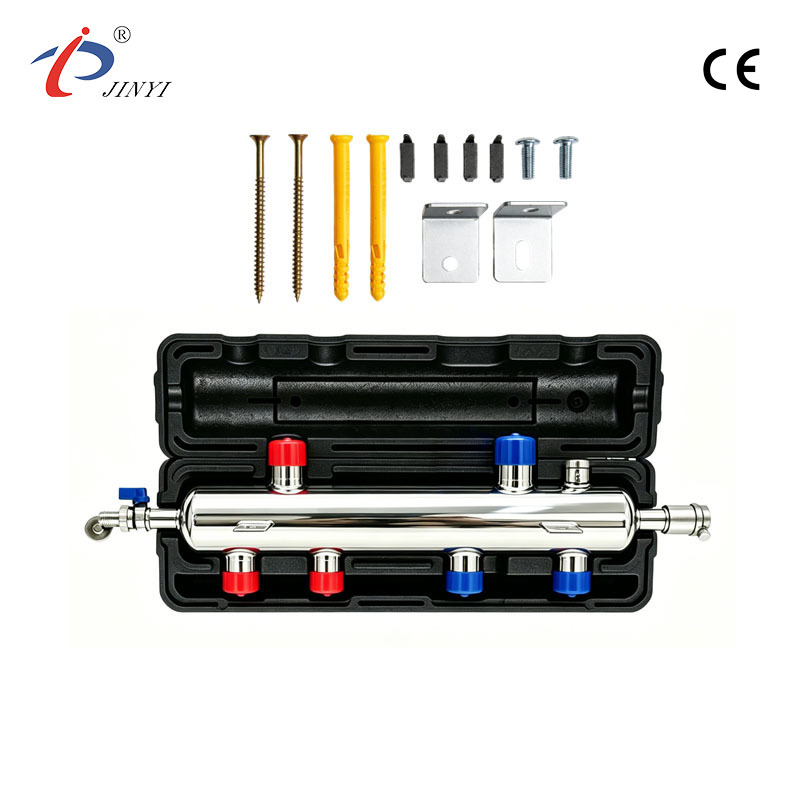
Because the product sits alongside clamps, manifold brackets, floor drains, and valves in a typical plant-room bill of materials, wholesalers already carrying those lines can often add decoupling tanks with minimal new supplier onboarding — provided the factory can produce the full range under one roof.
What to Check Before Placing a Bulk Order
● Manufacturing scope: confirm the factory actually produces the tank body, not just assembles imported components — this affects lead time consistency at volume.
● Material traceability: steel, brass, or stainless-steel wetted parts should be documented, especially for buyers re-exporting to markets with plumbing-material regulations.
● MOQ and tiered pricing: ask for pricing breaks at container-load quantities versus mixed-pallet trial orders.
● Private-label readiness: check whether the supplier can apply your brand markings, packaging, and documentation without a large tooling fee.
● Certifications and test reports: pressure rating and quality certificates should be available per batch, not only per product line.
Why Jinyi Fits a Multi-Line Wholesale Order
Yuhuan JINYI Hardware Co., Ltd. has manufactured plumbing and heating hardware since 1995 from its facility in Zhejiang Province, producing pipe clamps, radiator brackets, floor drains, stainless steel manifolds and manifold brackets, valves, and decoupling tanks under the same roof. For a distributor building or expanding an HVAC/plumbing hardware line, that range means decoupling tanks can be combined with other frequently co-ordered items — brackets, clamps, valves — into a single container shipment, reducing per-unit freight cost.
Frequently Asked Questions
What is a typical MOQ for wholesale decoupling tank orders?
MOQs vary by tank size and body material; Jinyi can quote both trial-order and container-load pricing tiers on request.
Can the factory produce under our own brand?
Yes — private-label body markings, packaging, and documentation can be arranged for qualifying order volumes.
Can decoupling tanks be shipped in the same container as other hardware lines?
Yes — since Jinyi manufactures clamps, brackets, valves, and manifolds alongside decoupling tanks, mixed-product container consolidation is routinely available.
Request a wholesale price list and MOQ breakdown for the JY-6001–JY-6005 series via the Decoupling Tank product page.
-
Are Poor Radiator Mounting Components Affecting Installation Results? A Guide to Choosing Better Aluminum Brackets
Jul 24, 2026
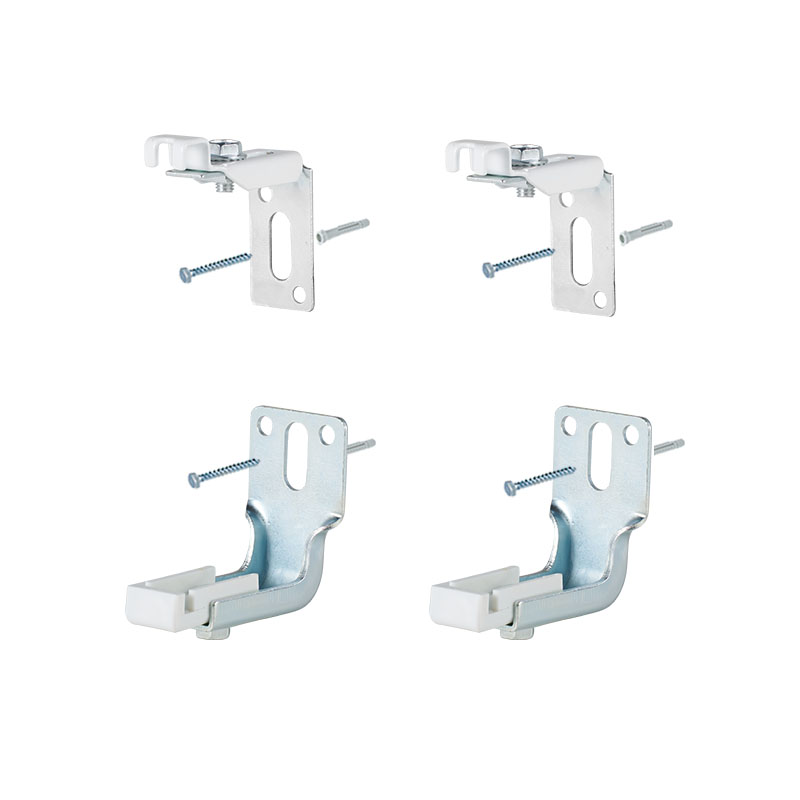
In heating system projects, many installation problems do not come from the radiator itself but from the supporting components that keep it securely positioned. For HVAC distributors, construction companies, and engineering teams, selecting the right mounting accessories has become an important part of improving installation efficiency and reducing future maintenance concerns. With growing demand for lightweight, durable, and corrosion-resistant hardware solutions, buyers searching for aluminum radiator bracket in China are increasingly focusing on manufacturing capability, material performance, and customization support rather than only comparing prices.
Why Are Radiator Brackets Becoming an Important Topic in HVAC Projects?
Radiator brackets play a key role in maintaining the correct position and stability of heating equipment. During installation, an unsuitable bracket may create challenges such as poor alignment, difficult adjustment, or insufficient support for different radiator designs.
As modern buildings require more efficient installation processes, contractors prefer components that are easier to handle while still providing reliable mechanical performance. Aluminum has become a practical material choice because it offers a balance between strength, weight reduction, and resistance to environmental factors.
For overseas buyers, the selection of radiator accessories is no longer only a technical detail. It has become part of improving project quality, installation workflow, and customer satisfaction.
What Makes Aluminum a Suitable Material for Radiator Bracket Manufacturing?
Material selection directly influences the service performance of hardware components. Compared with some traditional metal solutions, aluminum provides several advantages that meet the needs of modern HVAC applications.
Key considerations include:
- Lightweight structure: Aluminum components are easier to transport and install, helping reduce handling difficulties during construction.
- Corrosion resistance: Properly processed aluminum can maintain stable performance in various indoor environments.
- Design flexibility: Aluminum is suitable for precision manufacturing and supports different structural designs.
- Appearance quality: A clean surface finish helps create a professional appearance in visible installation areas.
These characteristics make aluminum radiator brackets a suitable option for residential heating systems, commercial buildings, and customized HVAC projects.
How Can Manufacturers Help Buyers Avoid Common Product Selection Problems?
Many international buyers face similar challenges when sourcing radiator hardware. A supplier may provide standard products, but the products might not fully match local installation requirements or specific radiator models.
A professional manufacturer can help solve these issues through:
- Engineering communication – Understanding application requirements before production.
- Material and structure optimization – Improving bracket design according to practical use conditions.
- Quality control during production – Maintaining consistency for repeat orders.
- Flexible customization services – Supporting different sizes, finishes, and packaging requirements.
Yuhuan JINYI Hardware Co., Ltd. applies this manufacturing approach by combining product development, production experience, and technical expertise to provide hardware solutions for international customers.
Why Does Manufacturing Experience Matter for Overseas Procurement?
For global buyers, supplier selection is closely connected with long-term business stability. A manufacturer with strong production experience can provide more than individual products; it can offer continuous support throughout product development and supply processes.
Established in 1995 and located in Yuhuan, Yuhuan JINYI Hardware Co., Ltd. specializes in the design, development, production, and sales of high-quality hardware products. With advanced production equipment, scientific management systems, and skilled technical professionals, the company has developed products that meet international market requirements and are well accepted in regions including Europe.
This manufacturing foundation allows the company to support different customer needs while maintaining consistent product standards.
How Do Customized Brackets Support Different HVAC Applications?
Every project has different requirements. A residential renovation project may focus on easy installation, while a commercial building project may require stable supply and consistent specifications across multiple locations.
Customized aluminum radiator brackets can help meet various application needs, including:
- Different radiator sizes and installation structures
- Specific mounting positions required by engineers
- Special surface treatment requirements
- Bulk packaging solutions for distributors
By working directly with experienced manufacturers, buyers can reduce communication costs and improve product compatibility with their target markets.
What Should Global Buyers Look for in a Reliable Aluminum Bracket Supplier?
Beyond product specifications, overseas procurement teams increasingly evaluate supplier reliability from multiple perspectives. Factors such as production history, export experience, technical communication, and after-sales support can influence the success of long-term cooperation.
A trustworthy supplier should understand the challenges faced by distributors, installers, and engineering companies. This means providing products that are practical, stable, and adaptable to changing market requirements.
As demand for efficient heating solutions continues to grow, choosing the right hardware partner becomes increasingly important. For businesses looking for aluminum radiator bracket in China, Yuhuan JINYI Hardware Co., Ltd. combines decades of manufacturing experience, professional production capability, and customer-focused service to deliver reliable radiator mounting solutions for global markets.
-
How Can the Right Aluminum Radiator Bracket Improve Heating System Reliability and Installation Efficiency?
Jul 17, 2026
In modern heating, cooling, and energy-efficient building projects, small installation components often determine the long-term performance of the entire system. For engineers, distributors, and HVAC procurement teams, choosing a reliable mounting solution is not only about product cost but also about load stability, corrosion resistance, installation convenience, and compatibility with different radiator systems. As demand grows for durable and lightweight components, buyers searching for aluminum radiator bracket in China are paying closer attention to manufacturing quality, customization capability, and supply chain reliability.

Why Are HVAC Buyers Rethinking Traditional Radiator Mounting Solutions?
Many traditional radiator brackets are made from materials that may become less suitable for modern building environments. With increasing attention on energy efficiency, smart buildings, and sustainable construction, HVAC professionals are looking for components that can provide stable support while reducing unnecessary weight and maintenance requirements.
Aluminum radiator brackets are becoming an attractive option because aluminum combines lightweight characteristics with good mechanical strength and corrosion resistance. For commercial buildings, residential projects, and renovation applications, a properly designed bracket can help prevent installation issues such as uneven positioning, excessive vibration, or long-term deformation.
For overseas buyers, the challenge is finding a supplier that understands both product performance and practical installation requirements.
What Factors Should Engineers Consider When Selecting Aluminum Radiator Brackets?
A radiator bracket may appear simple, but its design directly affects safety and user experience. Professional buyers usually evaluate several technical aspects before placing orders:
- Material quality: High-quality aluminum provides stable performance and helps resist corrosion in different indoor environments.
- Structural design: The bracket shape, thickness, and fixing points should match the radiator’s weight distribution.
- Surface treatment: Proper finishing improves appearance and protects the product during transportation and installation.
- Manufacturing consistency: Accurate production processes reduce differences between batches and support large-scale projects.
At Yuhuan JINYI Hardware Co., Ltd., we focus on integrating product design, material selection, and production control to create hardware solutions that meet the practical needs of international customers.
How Does Manufacturing Capability Influence Product Reliability?
For global distributors and engineering companies, selecting an aluminum radiator bracket supplier is also a decision about long-term cooperation. A professional manufacturer should not only provide finished products but also support product improvement, customization, and quality management.
Established in 1995 and located in Yuhuan, Yuhuan JINYI Hardware Co., Ltd. is a comprehensive manufacturer specializing in the design, development, production, and sales of high-quality hardware products. With scientific management, advanced production equipment, and experienced technical professionals, the company develops products that meet international standards and serve customers in markets including Europe.
From material processing to final inspection, manufacturing experience helps ensure that every component can perform consistently in real installation conditions.
Can Customized Aluminum Radiator Brackets Solve Different Project Requirements?
Different markets and building projects often require different mounting solutions. Standard products may not always meet the needs of specific radiator models, installation spaces, or architectural designs.
Customization has become an important consideration for overseas buyers looking for reliable hardware suppliers. Manufacturers with engineering support can help optimize:
- Bracket dimensions for different radiator structures
- Mounting positions according to installation conditions
- Surface finishes according to customer requirements
- Packaging methods for international transportation
This flexibility allows distributors and contractors to develop product lines that better match local market demands.
Why Are Overseas Buyers Paying More Attention to Supply Chain Stability?
Recent changes in global manufacturing and logistics have encouraged companies to work with suppliers that provide stable production capability and clear communication. For HVAC component buyers, a reliable supplier can reduce project delays and simplify inventory management.
Beyond product quality, buyers are increasingly considering factors such as production experience, export capability, response speed, and the ability to support repeat orders. A manufacturer that understands international requirements can become a valuable partner throughout the product lifecycle.
What Trends Are Shaping the Future of Radiator Hardware Components?
The HVAC industry continues to move toward lighter materials, improved installation efficiency, and more adaptable system components. Aluminum solutions are gaining attention because they support these trends while offering practical benefits for installers and end users.
As building standards continue to evolve, radiator accessories will require better engineering and more flexible manufacturing approaches. Companies that invest in material technology and production improvement will be better positioned to support future market needs.
For companies searching for a dependable aluminum radiator bracket in China, Yuhuan JINYI Hardware Co., Ltd. provides professional manufacturing experience, customized hardware solutions, and quality-focused production capabilities to support global HVAC projects. By combining technical expertise with customer-oriented service, we help overseas partners develop reliable radiator mounting solutions for different applications.
-
From the Factory Floor to Your Bathroom: How Jinyi Redefines What a Shower Supplier Should Be
Jul 10, 2026
Yuhuan JINYI Hardware Co.,Ltd.
When international buyers search for a dependable shower channel drain and shower head supplier, they are not just looking for a product catalog — they are looking for a partner who understands quality, consistency, and the pressure of delivering on time. That is exactly what Jinyi Sanitary Ware has been doing since 2008.
Crafted for the Modern Bathroom, Built for Global Standards
Jinyi's shower channel drains are more than functional — they are a design statement. Manufactured from premium SUS 304 and 316L stainless steel, our linear floor drains feature anti-odor traps, height-adjustable bodies, and a curated range of grate finishes — from matte black to brushed gold. Whether destined for a boutique hotel in Dubai or a residential development in Sydney, every drain leaves our factory fully tested to EN1253, AS3740, and CUPC standards.
Our shower heads range spans 8" to 24" rainfall panels, wall-mounted arms, handheld sets, and thermostatic combination systems. Multi-function spray modes, water-saving aerators, and a full palette of surface finishes — chrome, rose gold, gunmetal, brushed nickel — make it easy for buyers to source a complete, cohesive collection from a single supplier.
The Jinyi Difference: More Than Just a Price List
We know that sourcing decisions go far beyond unit cost. Here is what our partners tell us keeps them coming back:
- Factory-direct pricing with no intermediaries — your margin stays yours.
- Low MOQ from 50 units, ideal for importers testing new SKUs or launching private label lines.
- Full OEM/ODM support — custom logo, bespoke packaging, and tailored specifications available.
- Reliable lead times of 25–35 days and experienced export logistics to the USA, EU, UK, Australia, and the Middle East.
Ready to Elevate Your Product Range?
The best bathroom collections start with the right manufacturing partner. If you are a distributor, contractor, or brand looking for a trusted shower channel drain and shower head supplier who can grow with your business, we would love to hear from you. Explore our full range and request a sample or quote directly:
Explore Jinyi Shower Products → www.yh-jinyi.com
-
How Can You Choose a Reliable Aluminum Radiator Bracket in China for Automotive Projects?
Jul 10, 2026
As electric vehicles, high-performance aftermarket upgrades, and lightweight automotive components continue to gain momentum, procurement priorities are shifting from simply finding low-cost parts to securing reliable manufacturing partners. Buyers are increasingly searching for aluminum radiator bracket in China together with long-tail keywords such as CNC aluminum radiator bracket supplier, custom automotive aluminum bracket, and OEM radiator mounting bracket manufacturer. They want products that deliver dimensional accuracy, corrosion resistance, and stable production quality for long-term vehicle performance. As a manufacturer, we understand that selecting the right supplier is just as important as choosing the right material.
Lightweight Design Is Driving New Purchasing Decisions
Reducing vehicle weight remains an important objective across both OEM and aftermarket applications. Aluminum radiator brackets help lower overall component weight while maintaining the structural support required for cooling systems.
Compared with traditional steel brackets, properly engineered aluminum components provide several practical advantages:
- Lower overall vehicle weight
- Better corrosion resistance
- Easier machining for custom applications
- Attractive surface finishing options
- Good compatibility with modern engine bays
For buyers developing performance vehicles or electric mobility solutions, these characteristics make aluminum a practical engineering choice.
Precision Manufacturing Matters More Than Ever
A radiator bracket may appear simple, but dimensional consistency directly affects installation efficiency and cooling system reliability. Even small deviations can create alignment issues during assembly.
Professional buyers now pay close attention to manufacturing capabilities such as CNC machining accuracy, fixture consistency, and inspection procedures. Stable production processes help ensure that every bracket fits correctly without requiring additional modification during installation.
As manufacturers, we invest in precision machining and quality verification because repeatability is essential for large-volume orders.
Surface Treatment Extends Product Service Life
Radiator brackets are continuously exposed to vibration, moisture, road debris, and changing temperatures. Selecting the appropriate surface treatment can significantly improve long-term durability.
Common customer requirements include anodizing, powder coating, sandblasting, and customized surface finishes depending on the application environment.
Rather than focusing only on appearance, buyers increasingly evaluate how each finishing process contributes to corrosion resistance, scratch protection, and product longevity throughout the vehicle's operating life.
Custom Manufacturing Is Becoming the Industry Standard
Automotive platforms continue to diversify, creating demand for customized mounting solutions instead of universal components.
Many international buyers request:
- OEM and ODM manufacturing
- Customized dimensions based on drawings
- Prototype sampling before mass production
- Multiple aluminum grades for different applications
- Laser engraving or customized identification
- Tailored packaging for private-label programs
Supporting these requirements helps manufacturers become long-term development partners rather than simple component suppliers.
Supply Chain Stability Influences Procurement Strategy
In recent years, purchasing teams have become more focused on supply reliability than ever before. Stable delivery schedules, transparent communication, and consistent production quality reduce operational risks throughout the supply chain.
When evaluating manufacturing partners, buyers often compare much more than pricing. Production capacity, engineering support, inspection procedures, packaging protection, and export experience all influence purchasing decisions.
Manufacturers capable of supporting continuous production planning provide greater confidence for distributors, wholesalers, and automotive brands managing long-term inventory.
Engineering Support Creates Added Value
Many successful projects begin long before production starts. Technical discussions regarding material selection, machining feasibility, tolerance optimization, and installation methods help reduce development time while improving product performance.
Our engineering team works closely with customers throughout product development, reviewing drawings and recommending practical manufacturing solutions that balance quality, efficiency, and production feasibility.
This collaborative approach helps customers shorten project timelines while minimizing unnecessary revisions during manufacturing.
Building Long-Term Partnerships Through Manufacturing Excellence
Today's automotive buyers are looking beyond individual components—they want dependable suppliers capable of supporting future product development. Whether sourcing aftermarket upgrades or OEM vehicle components, selecting an experienced manufacturer reduces purchasing uncertainty and improves overall project efficiency.
For companies searching for aluminum radiator bracket in China, choosing a manufacturing partner with precision machining capabilities, customization experience, stable quality control, and responsive engineering support provides a stronger foundation for long-term cooperation. By combining advanced manufacturing processes with customer-focused service, we help global buyers develop reliable aluminum radiator bracket solutions that meet the evolving needs of the international automotive market.
-
Why Are Automotive Cooling System Buyers Focusing More on Lightweight Mounting Solutions?
Jul 03, 2026
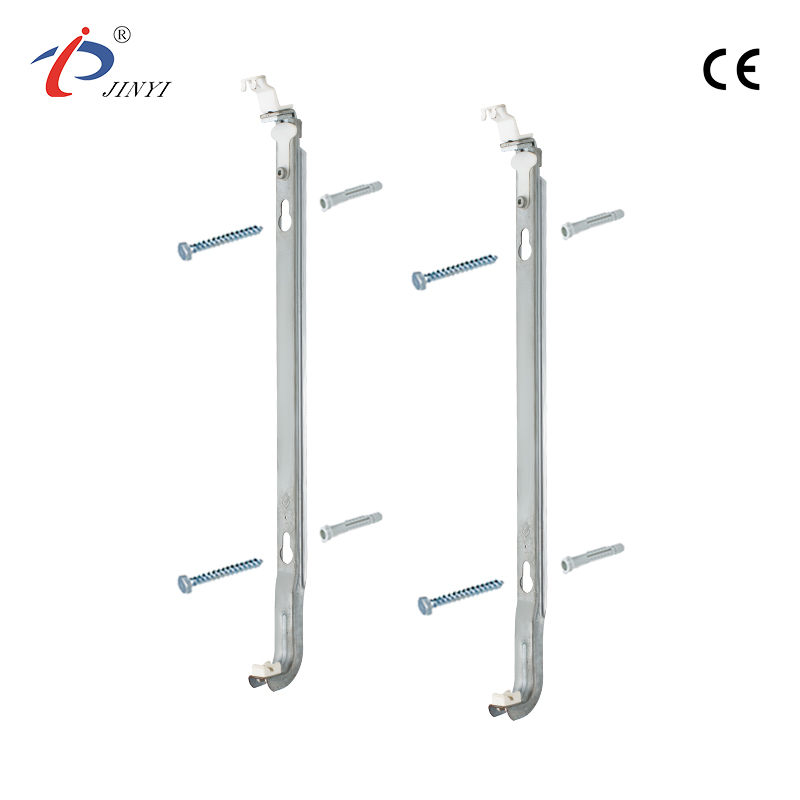
As automotive thermal management systems evolve alongside electric vehicles, performance tuning, and high-efficiency engine design, supporting components such as radiator mounting systems are receiving increased attention from engineers and procurement teams. An aluminum radiator bracket in China has become a frequently searched sourcing keyword among global buyers looking for lightweight, corrosion-resistant, and cost-effective mounting solutions. Recent discussions across automotive engineering forums and aftermarket communities highlight growing demand for aluminum radiator mounting brackets for EV cooling systems, custom CNC radiator support brackets, and lightweight automotive heat dissipation components. Buyers are no longer evaluating brackets as simple structural parts—they are assessing vibration resistance, thermal stability, material strength, and compatibility with modern cooling modules. As a manufacturer, we observe that thermal efficiency and structural optimization are now closely linked in vehicle design decisions.
Lightweight Engineering Is Driving Material Transition
One of the strongest trends in automotive manufacturing is the shift toward lightweight structural materials. Reducing vehicle weight directly improves fuel efficiency in combustion engines and extends driving range in electric vehicles.
Aluminum has become a preferred material due to its strength-to-weight ratio, corrosion resistance, and thermal stability. As a result, radiator support systems are increasingly redesigned using aluminum components instead of traditional steel structures.
Thermal Efficiency Requires Stable Mounting Systems
Radiator performance is closely connected to the stability of its mounting system. Any vibration or misalignment can reduce cooling efficiency and increase system wear over time.
Engineers evaluating mounting brackets typically focus on:
- Structural rigidity under engine vibration conditions
- Heat resistance in high-temperature engine bays
- Secure radiator positioning during vehicle operation
- Resistance to long-term fatigue and deformation
- Compatibility with different radiator core sizes
These factors directly influence overall cooling system reliability and performance consistency.
CNC Manufacturing Improves Precision and Fitment
Modern automotive components require high dimensional accuracy to ensure proper installation and long-term stability. CNC machining has become a standard process for producing radiator brackets with precise tolerances.
Common manufacturing expectations include:
- Accurate hole positioning for bolt alignment
- Smooth surface finishing for corrosion resistance
- Consistent dimensional repeatability across batches
- Compatibility with OEM and aftermarket cooling systems
- Reduced installation adjustment requirements
Precision manufacturing helps reduce installation errors and improves assembly efficiency in production lines.
Corrosion Resistance Is Essential for Engine Bay Environments
Engine compartments expose components to heat, moisture, oil, and chemical contaminants. Without proper material selection, mounting brackets can degrade over time and affect system stability.
Aluminum offers strong resistance to corrosion, especially when treated with anodizing or surface coating processes. This makes it suitable for long-term use in demanding automotive environments.
Manufacturers typically enhance durability through:
- Anodized surface treatment
- Anti-oxidation coatings
- Heat-resistant finishing processes
- Protective layering for harsh environments
These improvements extend product lifespan and reduce maintenance concerns.
OEM Customization Supports Diverse Vehicle Platforms
Automotive platforms vary significantly across manufacturers, especially between passenger vehicles, trucks, and electric vehicles. As a result, OEM customization has become a key requirement for radiator bracket sourcing.
Buyers often request:
- Custom bracket geometry based on radiator design
- Vehicle-specific mounting hole patterns
- Adjustable bracket configurations for multiple models
- Private labeling for aftermarket distribution
- Engineering support for prototype development
This flexibility allows suppliers to serve both OEM production lines and aftermarket channels.
Installation Efficiency Impacts Production and Repair Costs
Ease of installation is an important consideration for both automotive assembly plants and repair service providers. Poorly designed brackets can increase labor time and reduce efficiency.
Key installation-focused design elements include:
- Pre-aligned mounting points for faster assembly
- Lightweight structure for easier handling
- Modular design for simplified replacement
- Clear compatibility with standard cooling systems
- Reduced need for additional modification during installation
Efficient installation design supports lower overall operational costs.
Choosing a Reliable Manufacturing Partner Ensures System Stability
Automotive cooling systems depend on consistent component quality to maintain long-term performance. Variations in bracket strength or fitment accuracy can lead to system instability and reduced cooling efficiency.
As a manufacturer, we focus on strict production control, including material inspection, CNC machining accuracy, assembly verification, and surface treatment quality checks. This ensures consistent performance across all production batches and supports reliable integration into different vehicle platforms.
As global automotive design continues to emphasize efficiency, lightweight structures, and thermal optimization, selecting a trusted supplier for an aluminum radiator bracket in China becomes increasingly important. A well-engineered aluminum radiator bracket in China supports improved cooling system stability, better installation efficiency, and long-term durability in modern vehicle applications.
-
Reliable Radiator Bracket Supplier — Why Global Buyers Choose Jinyi
Jul 03, 2026
Yuhuan JINYI Hardware Co.,Ltd.
When it comes to sourcing high-quality radiator brackets for HVAC, automotive, or industrial heating systems, finding a dependable manufacturer makes all the difference. Jinyi has established itself as a trusted radiator bracket supplier, delivering precision-engineered solutions to buyers across Europe, North America, Australia, and beyond.
What Is a Radiator Bracket and Why Does Quality Matter?
A radiator bracket is a structural mounting component designed to securely fix radiators to walls, frames, or vehicle chassis. Whether used in residential heating installations, commercial HVAC systems, or automotive applications, the bracket must withstand constant thermal expansion, vibration, and mechanical stress. Poor-quality brackets can lead to radiator misalignment, leaks, noise, and costly maintenance. This is why procurement managers and engineers consistently prioritize suppliers with strict quality control standards.
Jinyi's Radiator Bracket Product Advantages
As a specialized radiator bracket manufacturer, Jinyi offers a comprehensive product range built to international standards:
• Material Options: Carbon steel, stainless steel, and galvanized steel — each treated for corrosion resistance and long service life.
• Custom Manufacturing: OEM and ODM services available. Buyers can submit drawings or specifications for tailored bracket designs to fit any radiator model or installation environment.
• Surface Treatment: Powder coating, zinc plating, and electrophoresis options to meet varied climate and application demands.
• Load Capacity: Engineered to support heavy-duty radiators in demanding environments, from residential units to industrial heat exchangers.
• Compliance & Certifications: Products meet CE, RoHS, and ISO quality management requirements — essential for importing into European and North American markets.
Serving Global Procurement Needs
Jinyi's radiator brackets are exported to over 30 countries. The company supports full B2B procurement workflows — from sample requests and prototype confirmation to bulk production and export documentation (CO, packing list, commercial invoice). Minimum order quantities are flexible, making Jinyi equally accessible to distributors, wholesalers, and large-scale contractors.
Why Source Radiator Brackets from China?
China remains the world's leading source for competitively priced, high-volume metal components. Chinese radiator bracket suppliers like Jinyi combine advanced stamping, welding, and surface-treatment technology with cost-efficient manufacturing, enabling buyers to reduce per-unit costs without compromising on structural integrity or finish quality. Factory audits and third-party inspections are always welcome.
Request a Quote or Product Catalog Today
Whether you are a heating system distributor, construction contractor, or automotive parts importer, Jinyi's engineering team is ready to support your sourcing needs. Browse the full radiator bracket product range and submit your inquiry at: https://www.yh-jinyi.com/product/radiator-bracket/
Fast response, competitive pricing, and reliable quality — that is the Jinyi promise to every international buyer.
Jinyi Hardware — Professional Radiator Bracket Supplier | www.yh-jinyi.com
-
Manifold Bracket Manufacturer in China: A Guide for HVAC and Plumbing Buyers
Jun 26, 2026
In modern HVAC and plumbing systems, the manifold plays a key role in distributing water or fluid to multiple pipelines. To ensure stability and safety during installation, a reliable manifold bracket is essential. A well-designed bracket helps secure the manifold in place, keeps pipelines organized, and reduces vibration or stress on pipe connections.
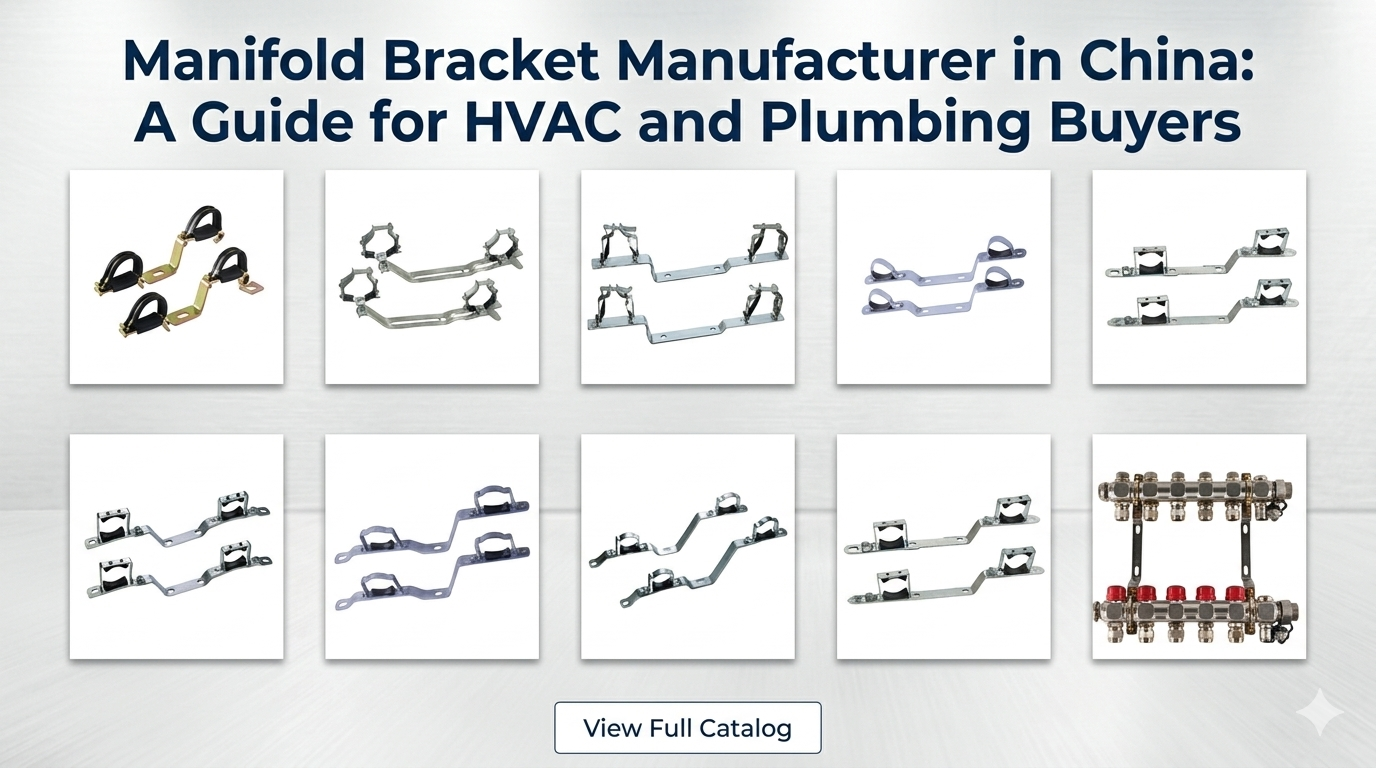
For distributors, wholesalers, and project contractors, sourcing manifold brackets from a reliable manufacturer can improve product quality while controlling procurement costs. China has become one of the main manufacturing centers for HVAC and plumbing hardware components due to its mature supply chain and strong manufacturing capabilities.
This guide explains the importance of manifold brackets, their common applications, and how international buyers can choose a reliable supplier.
What Is a Manifold Bracket?
A manifold bracket is a mounting component used to support and secure a plumbing or HVAC manifold to a wall, frame, or cabinet. The manifold distributes water or fluid to different zones, especially in systems such as underfloor heating, radiator heating, or water supply networks.
Because manifolds often connect multiple pipelines, proper support is required to keep the system stable. A strong manifold bracket ensures that the manifold remains aligned, reduces mechanical stress on connections, and helps maintain the overall reliability of the installation.
Common Applications of Manifold Brackets
Manifold brackets are widely used in many HVAC and plumbing applications, including:
- Underfloor heating systems
- Radiator heating distribution systems
- Residential and commercial plumbing systems
- Water supply installations
- Industrial fluid distribution systems
Key Features of a High-Quality Manifold Bracket
1. Strong Structural Support
A well-designed manifold bracket provides strong support for the manifold assembly and keeps the pipes properly aligned.
2. Corrosion-Resistant Materials
Many manifold brackets are made of stainless steel or galvanized steel to ensure durability and resistance to corrosion in humid or demanding environments.
3. Easy Installation
Pre-drilled holes and adjustable positions allow installers to mount the manifold quickly and efficiently.
4. Reduced Vibration
Some designs include rubber insulation or protective coatings to minimize vibration and noise during system operation.
How to Choose a Reliable Manifold Bracket Supplier
When sourcing manifold brackets internationally, buyers often evaluate the following factors:
- Manufacturing experience
- Product quality and material standards
- OEM customization capability
- Export experience and stable supply
Working with a manufacturer that has long-term experience in HVAC hardware production can ensure consistent product quality and reliable delivery.
About JINYI – Manifold Bracket Manufacturer in China
Yuhuan JINYI Hardware Co., Ltd. is a professional manufacturer specializing in HVAC and plumbing installation hardware. The company has been engaged in metal hardware manufacturing since 1995 and has accumulated extensive experience in serving international OEM clients.
JINYI focuses on producing a range of installation components used in heating and plumbing systems, including:
- Manifold brackets
- Radiator brackets
- Water meter brackets
- Stainless steel manifolds
- Plumbing installation hardware
With advanced manufacturing equipment and stable production capacity, JINYI provides OEM and ODM solutions for international distributors, HVAC brands, and plumbing system suppliers. The company works closely with European clients and understands the quality and consistency requirements of the European market.
Official Website: https://www.yh-jinyi.com/
Why Many Buyers Choose Chinese Manifold Bracket Manufacturers
China offers several advantages for global buyers sourcing HVAC installation hardware:
- Competitive manufacturing costs
- Mature metal fabrication supply chain
- Flexible OEM customization
- Large-scale production capacity
By partnering with an experienced manufacturer such as JINYI, international buyers can achieve both cost efficiency and reliable product quality.
Conclusion
Although small in size, manifold brackets play an important role in maintaining the stability and efficiency of HVAC and plumbing systems. Choosing a high-quality bracket ensures safe installation, better system performance, and long-term durability.
For distributors, contractors, and HVAC equipment suppliers looking for reliable sourcing options, working with an experienced manufacturer like Yuhuan JINYI Hardware Co., Ltd. can provide dependable supply and OEM manufacturing support.
-
What Makes a Shower Tray Installation Truly Reliable in High-Traffic Bathrooms?
Jun 26, 2026
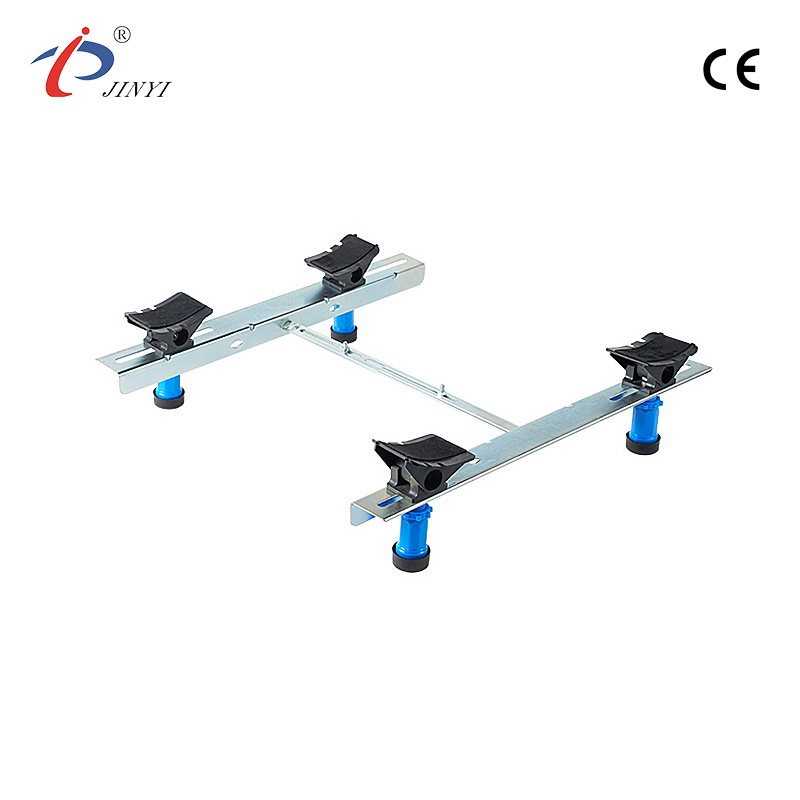
As modern bathroom design continues to evolve, project owners are no longer evaluating products based solely on appearance. Whether in hotels, apartment developments, healthcare facilities, or residential renovations, long-term reliability has become a major purchasing factor. Industry discussions increasingly highlight the importance of the structure beneath the shower tray, leading more buyers to pay attention to the Shower Tray Support Frame. While often hidden after installation, this component plays a critical role in stability, drainage performance, and overall bathroom durability.
Why Do Some Shower Trays Lose Stability Over Time?
A common issue reported by installers is gradual movement after months or years of use. Even when the shower tray itself is manufactured to a high standard, inadequate support underneath can create pressure points that weaken the installation.
Daily foot traffic, temperature changes, and moisture exposure place continuous stress on bathroom structures. Without proper weight distribution, small movements can eventually affect seals, surrounding tiles, and drainage systems. This is why professional contractors increasingly prefer engineered support systems rather than relying solely on traditional installation methods.
The Shift Toward Adjustable Installation Solutions
Construction projects today demand greater flexibility. Floors are not always perfectly level, and bathroom layouts vary significantly between projects.
An adjustable support frame allows installers to compensate for uneven surfaces without extensive corrective work. This not only saves labor time but also improves installation precision. Buyers searching for shower tray installation accessories frequently prioritize products that can adapt to different site conditions while maintaining structural integrity.
As project timelines become tighter, installation-friendly solutions are becoming a competitive advantage.
Drainage Problems Often Start with Poor Support
When water does not flow efficiently toward the drain, users quickly notice the issue. However, drainage performance is not always caused by the tray itself.
If a shower tray is not properly supported, subtle changes in alignment may occur over time. These shifts can affect water flow and create areas where water accumulates.
A well-designed support frame helps maintain the intended slope and positioning of the tray, contributing to more reliable drainage performance throughout the life of the installation.
Growing Demand from Commercial Projects
Commercial bathrooms typically experience significantly higher usage than residential installations. Hotels, fitness centers, student housing, and healthcare facilities all require products capable of handling frequent daily traffic.
For these applications, procurement teams often focus on:
- Long-term structural stability
- Corrosion-resistant materials
- Consistent load distribution
- Reduced maintenance requirements
- Compatibility with large-format shower trays
These priorities reflect the increasing focus on lifecycle cost rather than upfront purchase price alone.
Why Material Quality Is Receiving More Attention
Recent market trends show that buyers are paying closer attention to material specifications. In humid environments, inferior materials may experience corrosion, weakening the support structure over time.
Galvanized steel, protective coatings, and precision-manufactured components are often preferred because they help maintain performance under demanding conditions.
As manufacturers, we recognize that durability starts with material selection. A support frame is expected to remain hidden, but its performance must remain dependable throughout years of service.
How Customization Supports Modern Bathroom Projects
Not every bathroom project follows standard dimensions. Architects and developers increasingly incorporate unique layouts, larger shower areas, and accessibility-focused designs.
For this reason, customization capabilities are becoming an important factor when selecting suppliers. Buyers often request:
- Adjustable frame dimensions
- Support for oversized trays
- Height customization options
- Project-specific structural configurations
Manufacturers that can provide flexible solutions are often better positioned to support large-scale and specialized projects.
Investing in Performance Before Problems Appear
Successful bathroom installations depend on more than attractive fixtures and modern finishes. The hidden structural elements frequently determine whether a project delivers lasting performance or recurring maintenance issues.
As the market continues to prioritize quality, efficiency, and durability, the role of a Shower Tray Support Frame becomes increasingly significant. For distributors, contractors, and developers seeking dependable installation solutions, selecting the right Shower Tray Support Frame can help improve project outcomes, reduce future repair costs, and create bathrooms designed to perform reliably for years to come.
-
OEM Manifold Bracket Manufacturer in China:What Buyers Should Know
Jun 19, 2026
A manifold bracket (also called a manifold fixing bracket or manifold mounting bracket) is a structural hardware component designed to securely hold a manifold in place on walls or other surfaces. Manifolds are central to modern plumbing and radiant heating systems — they distribute water or fluid evenly across multiple circuits. Without a reliable bracket, even the best manifold can shift, vibrate, or fail over time.
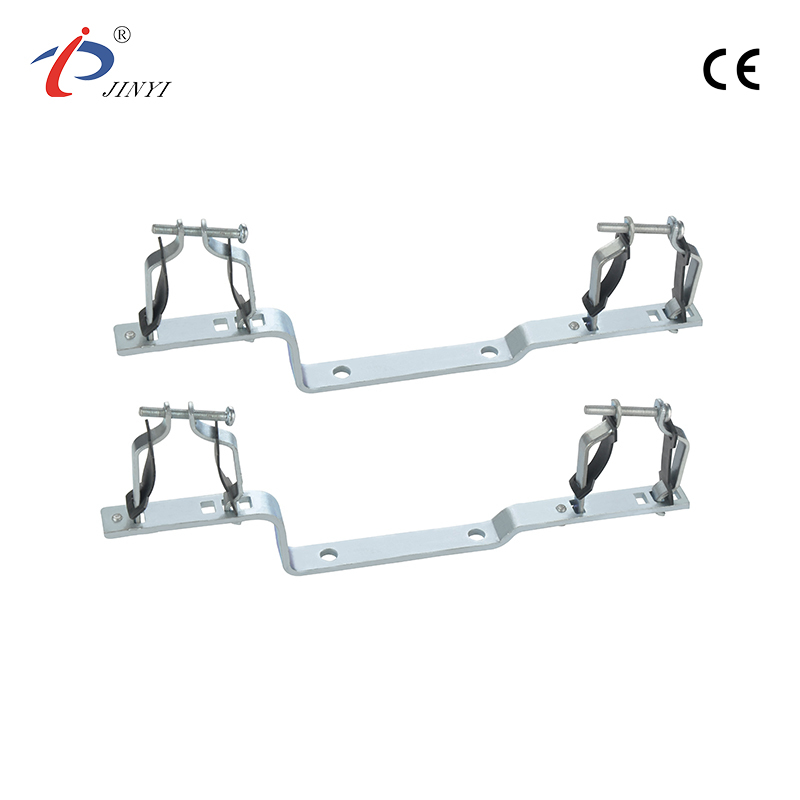
Common applications include:
• Underfloor heating systems (UFH manifold brackets)
• Domestic hot and cold water distribution
• Radiant heat manifold mounting
• Commercial HVAC installations
• Bathroom and concealed plumbing setups
Why Source Manifold Brackets from China?
China remains the world's leading source for precision hardware components, offering a combination of advanced manufacturing capability, material versatility, and competitive pricing that few other regions can match. For buyers in Europe, North America, and Australia, Chinese OEM suppliers provide:
• Cost-effective bulk production without sacrificing quality
• Full OEM/ODM customization — from dimensions to surface finish
• Short tooling and sampling lead times
• International compliance — CE marking, ISO standards, RoHS
The key is finding a manufacturer with the experience and infrastructure to deliver consistently.
About JINYI: 30 Years of Hardware Manufacturing
Yuhuan JINYI Hardware Co., Ltd., based in Yuhuan, Zhejiang Province, has been producing high-quality hardware components since 1995. Located in one of China's most established hardware manufacturing hubs, JINYI specializes in:
• Stainless steel manifold brackets
• Pipe clamps and pipe straps
• Radiator brackets
• Floor drains and water meter brackets
• Valves and shower hardware
With a strong in-house R&D team, dedicated testing lab, and advanced inspection equipment, JINYI designs and manufactures products that meet international standards — and supplies clients across Europe, America, Japan, and beyond.
JINYI Stainless Steel Manifold Bracket: Key Features
The JINYI Stainless Steel Manifold-Manifold Bracket is engineered for performance in real-world plumbing and heating environments. Here's what sets it apart:
Durability and Corrosion Resistance
Crafted from high-quality stainless steel, this bracket resists rust, humidity, and temperature fluctuation — making it ideal for both concealed and exposed installations, including bathrooms, utility rooms, and underfloor heating closets.
Easy, Tool-Friendly Installation
The bracket's compact, pre-drilled design simplifies mounting. Adjustable positioning options allow precise manifold alignment, saving time on-site for both professional installers and contractors.
Compact and Space-Saving
Designed with concealed installations in mind — behind walls, inside cabinets, or in tight utility spaces — the bracket's slim profile maximizes usable space without compromising structural support.
Long-Lasting Finish
The stainless steel surface maintains its clean, polished appearance even in high-moisture environments, resisting staining and discoloration over years of use.
OEM Customization Options
JINYI offers full OEM and ODM services, meaning buyers can specify:
- Custom dimensions to match specific manifold sizes
- Material selection: stainless steel, carbon steel, brass, or aluminum
- Surface treatments: polished, powder-coated, or zinc-plated
- Private labeling and packaging for resellers and distributors
- Drawing-based or sample-based production
Whether you need a standard manifold bracket for a residential project or a tailored solution for a large commercial build, JINYI's engineering team can turn your specifications into production-ready parts.
What Buyers Should Verify Before Ordering
When evaluating any OEM manifold bracket supplier from China, experienced procurement teams typically check:
1. Factory certifications — ISO quality management systems, CE compliance
2. Material traceability — raw material sourcing and incoming inspection records
3. Load capacity specs — ensure the bracket is rated for your manifold weight and system pressure
4. MOQ and sampling policy — reputable suppliers offer pre-production samples
5. Export track record — look for suppliers with documented shipments to your target region
JINYI meets all of these criteria, with nearly three decades of export experience and a quality-first production culture.
Ready to Request a Quote?
If you're looking for a reliable manifold bracket manufacturer in China — one that combines engineering capability, material quality, and OEM flexibility — JINYI is ready to support your project from prototype to full production run.
Website: www.yh-jinyi.com/product/manifold-bracket-1/
Location: Yuhuan, Zhejiang Province, China | Est. 1995
-
Could Your Bathroom Project Be Failing Because of an Inadequate Support System?
Jun 19, 2026
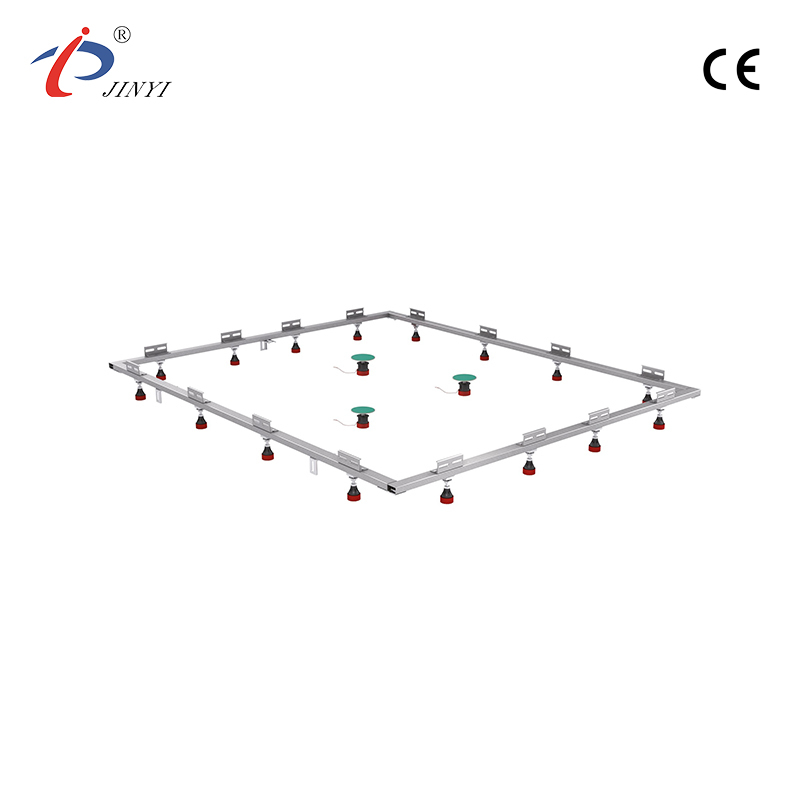
In today's construction and bathroom renovation market, durability has become just as important as aesthetics. Contractors, developers, and bathroom product distributors are increasingly focusing on hidden structural components that directly affect installation quality and long-term performance. One product receiving growing attention is the Shower Tray Support Frame, as professionals seek reliable solutions to prevent movement, drainage issues, and costly maintenance after installation. As modern bathrooms adopt larger shower trays and walk-in designs, selecting the right support structure has become a key factor in project success.
Why Are Installation Callbacks Becoming a Major Concern?
Across residential and commercial projects, installers frequently encounter issues caused by inadequate support beneath shower trays. Even slight movement can weaken seals, create uneven drainage, and eventually lead to water leakage.
For project developers, these problems often result in customer complaints and expensive repair work. A properly engineered support frame helps distribute weight evenly, reducing stress on both the tray and surrounding surfaces. This is one reason why buyers are increasingly searching for adjustable shower tray support systems that offer greater stability from the beginning.
Larger Shower Spaces Require Better Structural Support
Walk-in showers continue to gain popularity across Europe, North America, and the Middle East. While these designs create a more open and accessible bathroom environment, they also introduce new engineering challenges.
Larger trays experience greater load distribution across their surface area. Without adequate support underneath, gradual deformation may occur over time, potentially affecting drainage performance and installation integrity.
For builders working on hotels, apartments, and premium residential projects, a reinforced support frame helps maintain structural consistency throughout the product's service life.
Faster Installation Is Driving Purchasing Decisions
Labor shortages and tighter construction schedules are influencing product selection throughout the building industry. Installers are looking for solutions that simplify installation while maintaining quality standards.
A modern support frame can help reduce installation complexity by offering:
- Adjustable height settings
- Easier tray leveling on uneven floors
- Simplified drainage alignment
- Reduced floor preparation requirements
- Improved consistency across multiple installations
These advantages allow contractors to complete projects more efficiently without compromising reliability.
Corrosion Resistance Matters in Wet Environments
Bathrooms are constantly exposed to moisture, temperature fluctuations, and cleaning chemicals. As a result, material selection plays a significant role in long-term performance.
Procurement teams are increasingly asking about galvanized steel construction, protective coatings, and corrosion-resistant finishes. These features help maintain structural integrity in demanding environments such as hotels, gyms, healthcare facilities, and multi-family housing developments.
A support frame that performs well under humid conditions can significantly reduce future maintenance concerns.
What Questions Are Professional Buyers Asking?
Yuhuan JINYI Hardware Co.,Ltd. as a manufacturer, we regularly receive inquiries from distributors, contractors, and project managers seeking dependable installation solutions.
Common Evaluation Criteria
- Is the frame compatible with different shower tray sizes?
- Can installers easily adjust the height during installation?
- Does the structure support heavy daily usage?
- What anti-corrosion measures are incorporated?
- Are customized dimensions available for project-specific requirements?
- Can the product be used in both residential and commercial applications?
These questions reflect a growing shift toward lifecycle value rather than simply focusing on the initial purchase cost.
Why Manufacturing Quality Should Not Be Overlooked
Not all support systems deliver the same level of performance. The strength of welds, dimensional accuracy, and overall structural design all influence how effectively a frame supports the tray over time.
As manufacturers, we understand that consistency is critical for large-scale projects. Reliable production processes help ensure that every frame meets the same standards, giving distributors and contractors greater confidence in installation outcomes.
Technical support and customization capabilities are also becoming increasingly important for buyers managing diverse project requirements.
Building Bathrooms That Last
The bathroom industry continues to move toward higher installation standards, smarter construction practices, and longer-lasting products. While shower trays remain one of the most visible features in a bathroom, the structure beneath them often determines whether the installation performs as expected for years to come.
For distributors, contractors, and developers seeking dependable bathroom solutions, investing in a well-designed Shower Tray Support Frame can help improve installation efficiency, reduce maintenance risks, and support long-term project quality. As expectations for bathroom performance continue to rise, choosing the right Shower Tray Support Frame is becoming an increasingly important part of successful bathroom construction.


- 210 Jinhai Avenue, Lupu Economic Development Zone, Yuhuan City, Taizhou City, Zhejiang Province.
- +86-576-87423248 / +86-576-87499120
- +86-17769979117 / +86-13750801289
- +86-576-87425996
- [email protected] / [email protected]

